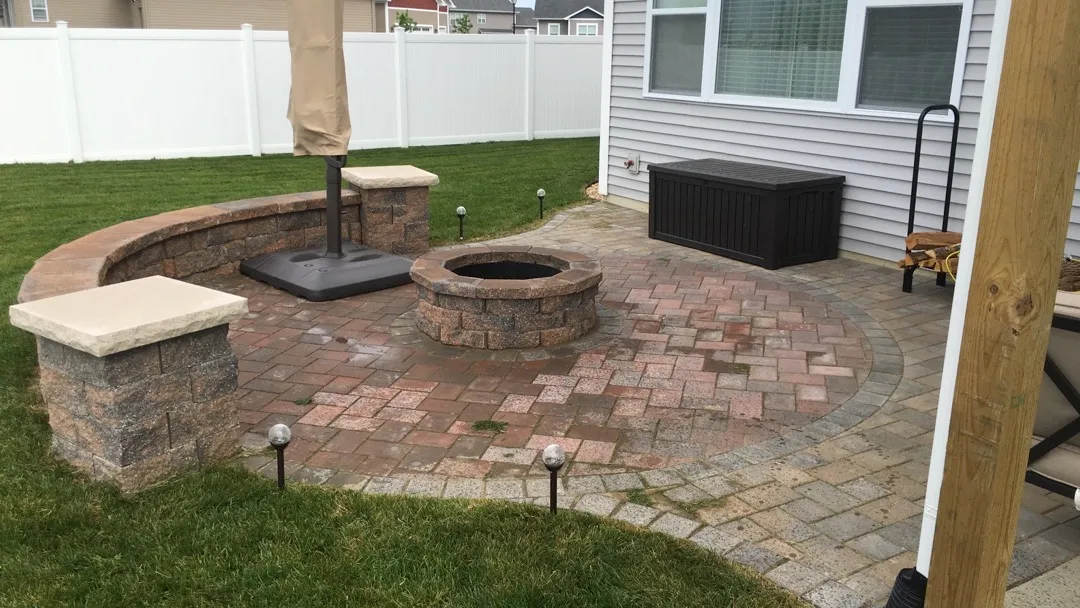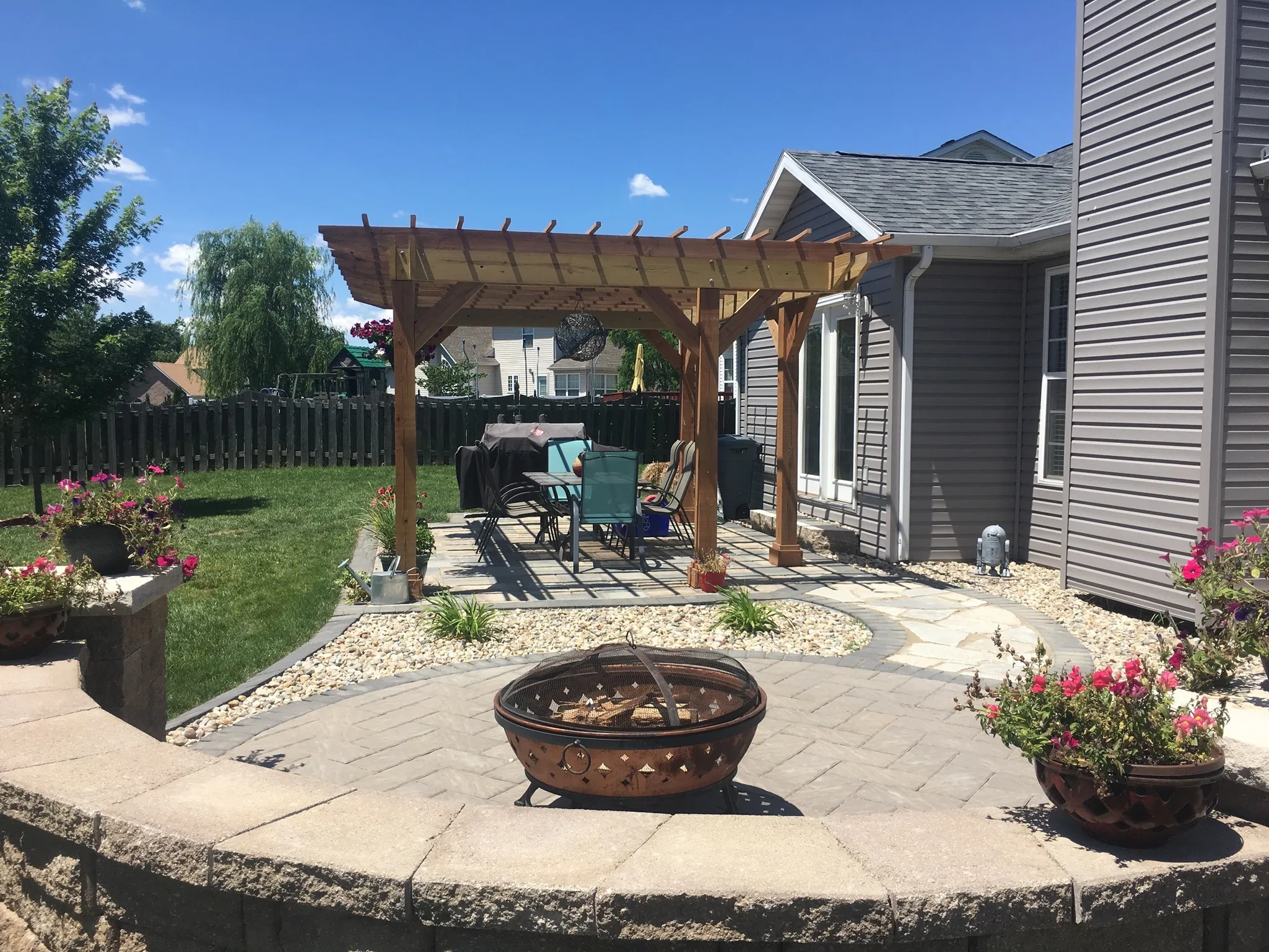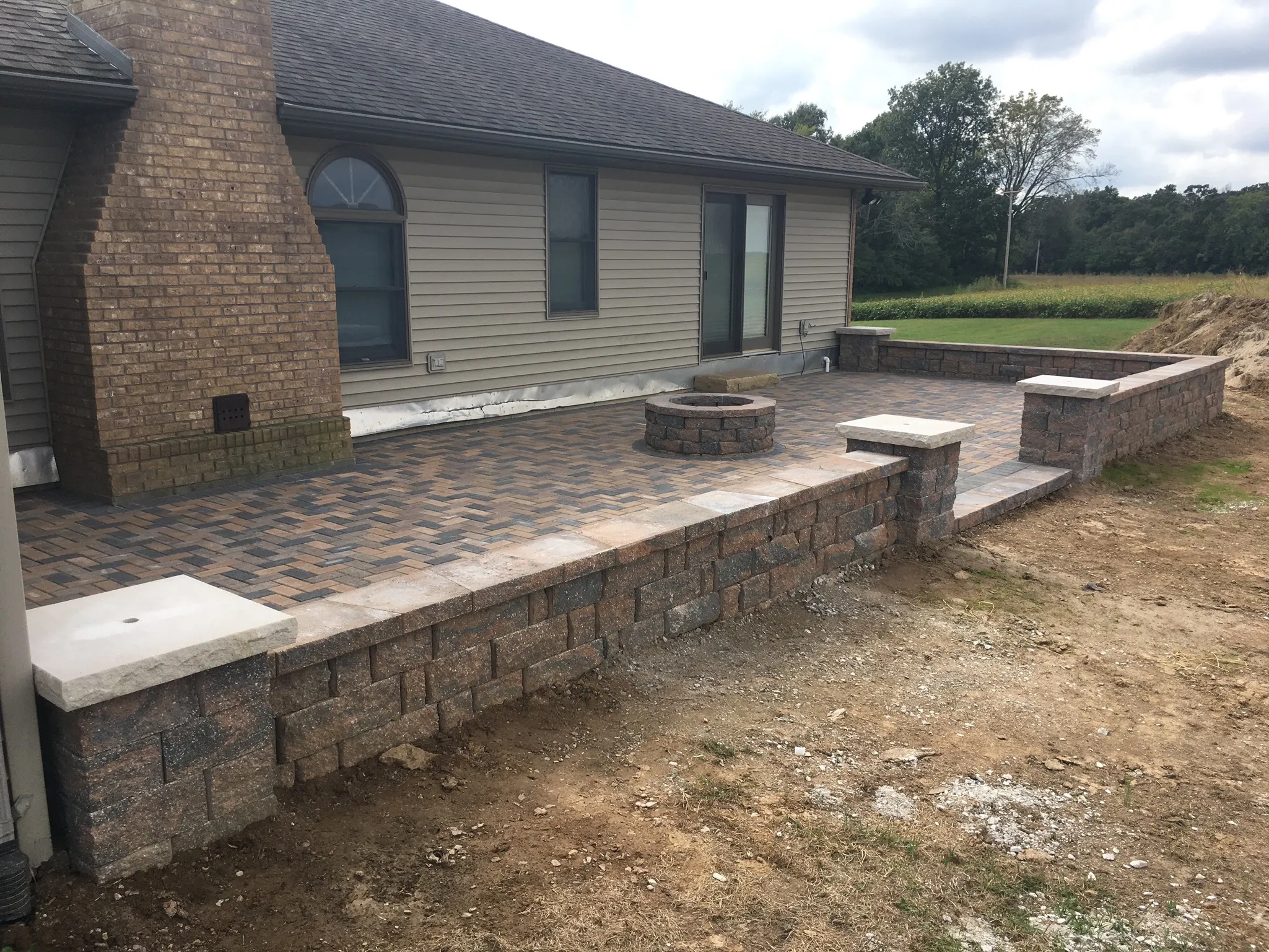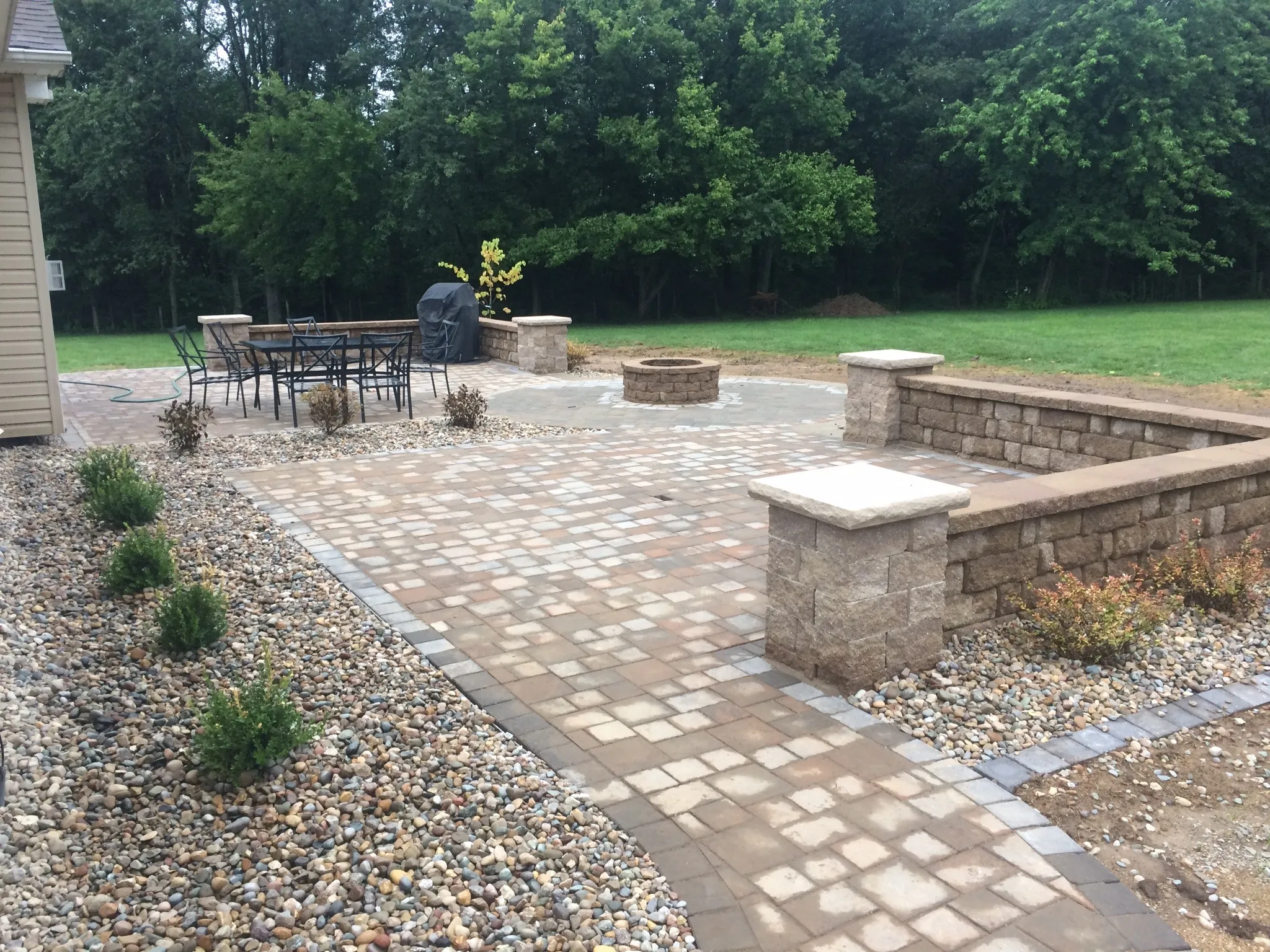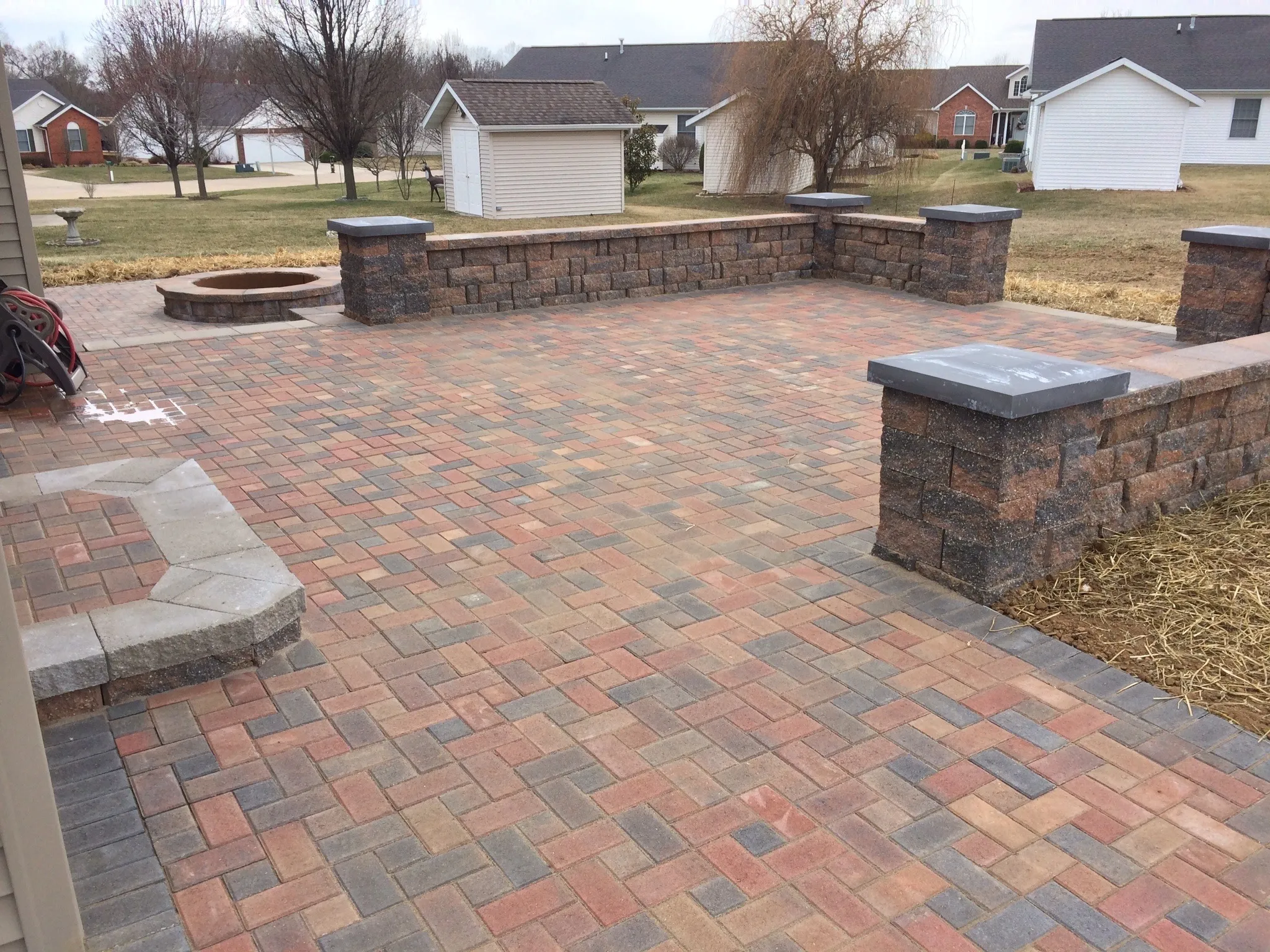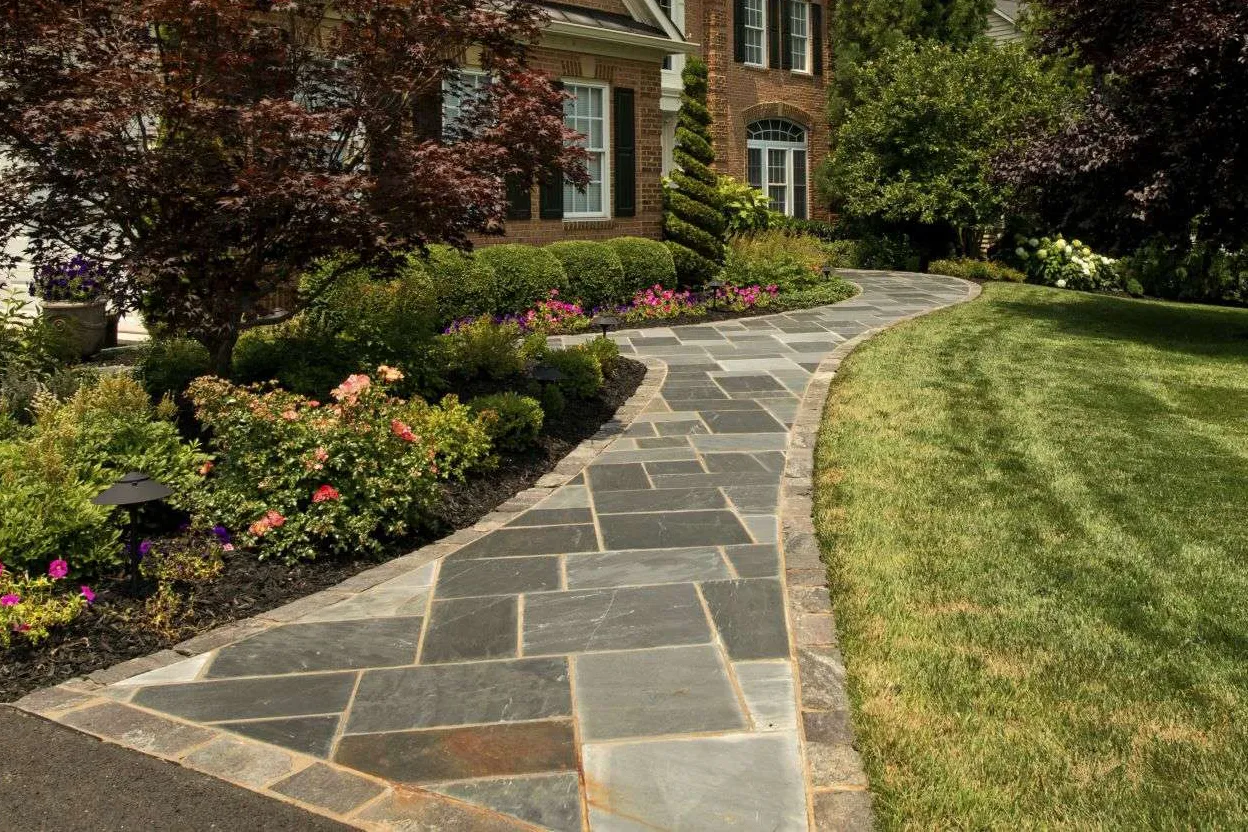

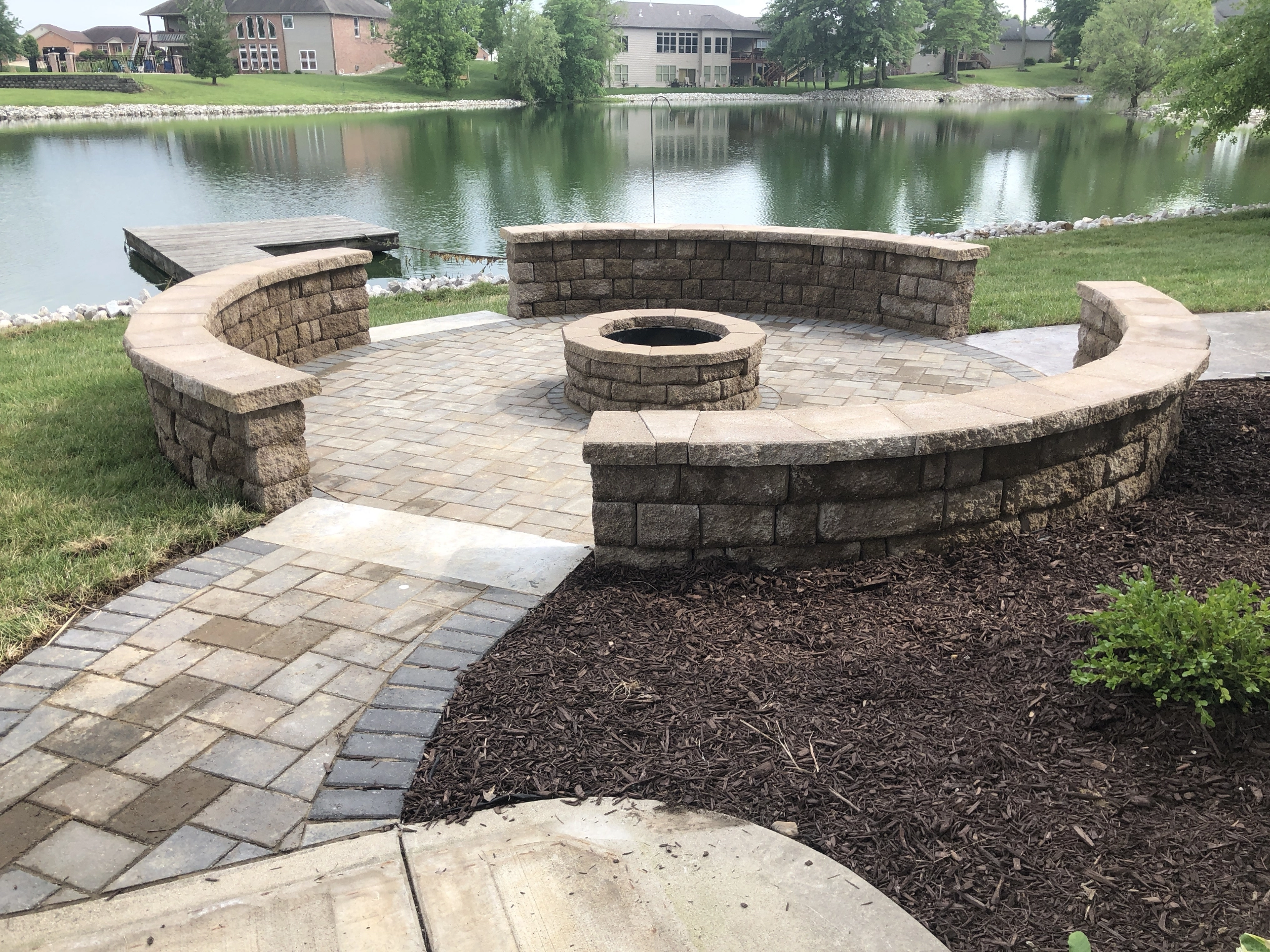
Seating walls are built at sitting height, but their main job isn’t seating. It’s definition.
They create edge around a patio. They guide movement. They give a space weight without fully enclosing it. You might lean on them. You might sit on them. But mostly, they’re there to shape the space.
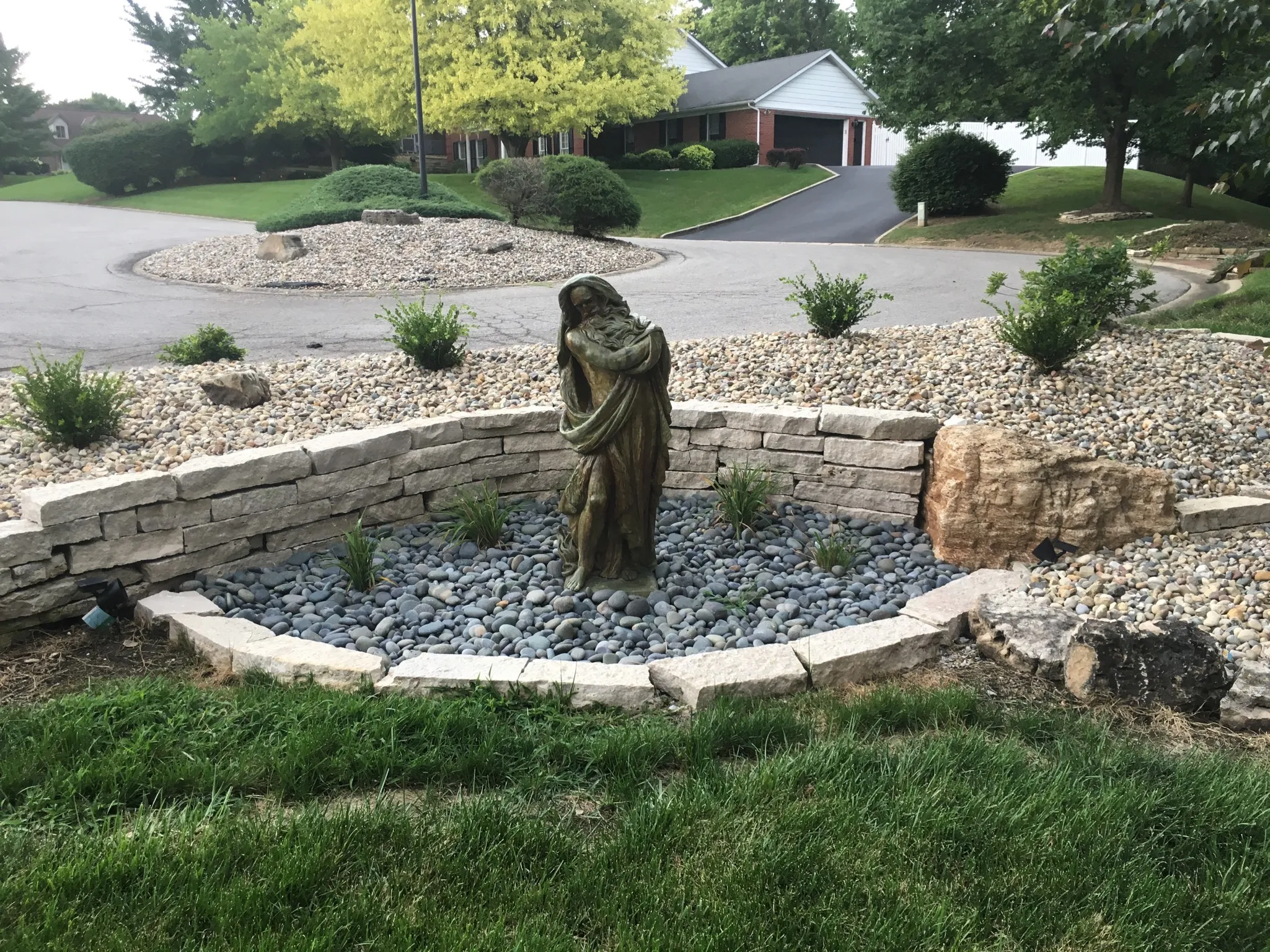
Seating walls shape how a patio feels without fully enclosing it. These walls work best when they’re part of a composed edge—patio, wall, and surrounding landscape beds—so the space feels finished rather than empty at the perimeter.
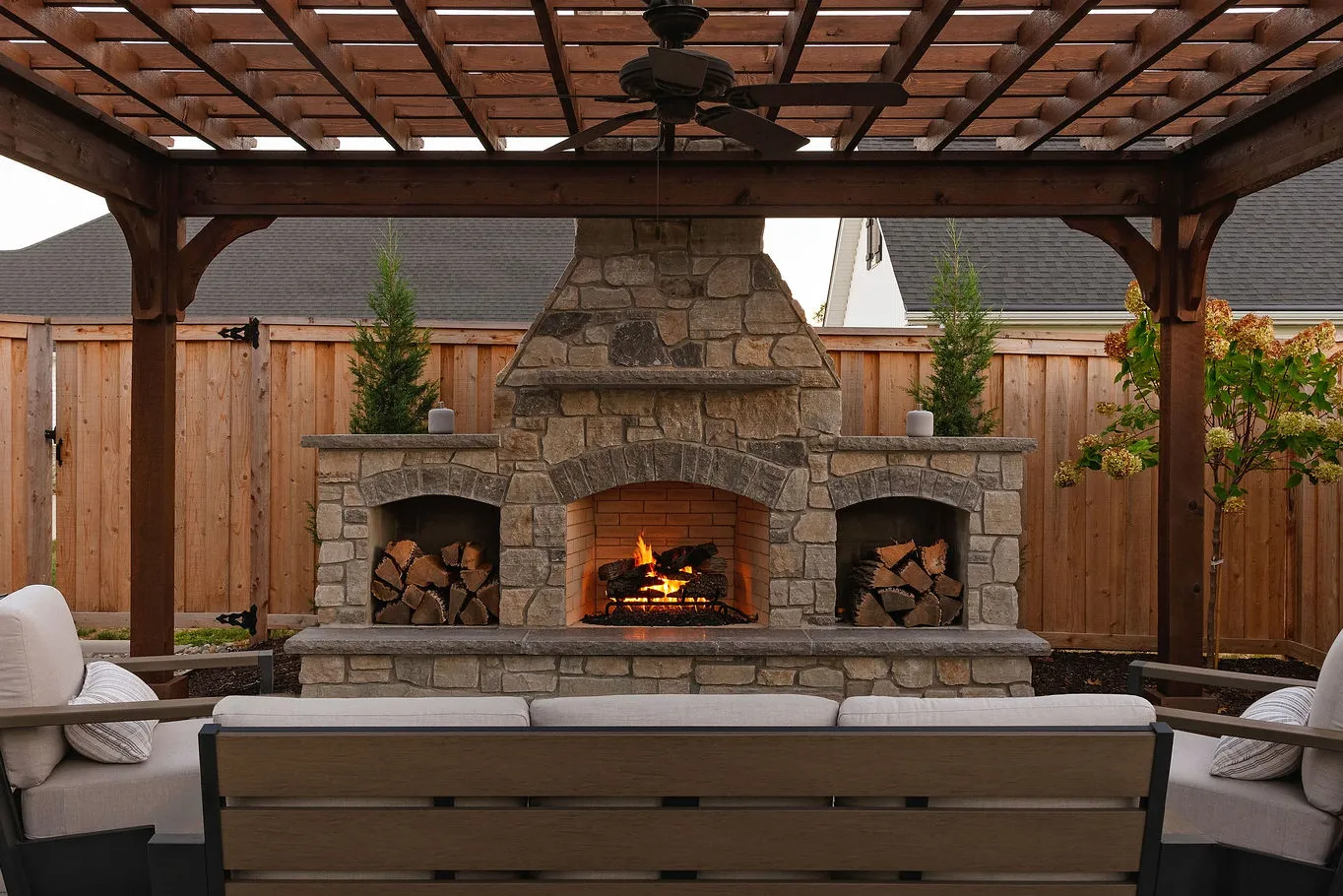
Columns can anchor transitions or wrap around structure posts of pavilions, pergolas or arbors. Seating walls can connect into these columns or between them if it serves the design. Integrated lighting — under-cap ledge lights or column cap lamps — adds visibility and glow at night. When paired with surrounding landscape beds, the patio–wall–plant composition feels timeless.
Seating walls are built using either a masonry system or a segmental retaining wall (SRW) system. Both serve the same purpose at sitting height, but their construction differs.
For masonry seating walls, we install a concrete footing that extends below the frost line — typically 30–34 inches in our region. The footing isolates the wall from seasonal movement and provides a rigid base. The wall is then constructed using masonry units and finished with cut caps secured using exterior-rated adhesive. This system is appropriate where rigidity, alignment with structural elements, or integration with steps and grade transitions require a fixed foundation.
For SRW seating walls, we build on a properly compacted aggregate base similar to retaining wall construction. The base allows slight movement and accommodates freeze-thaw cycles without forcing stress through a rigid footing. Clean aggregate is used beneath and behind the wall so moisture can drain freely rather than building pressure within the system. Caps are cut to fit and adhered once alignment is confirmed.
In both systems, the first course must be perfectly level. Any deviation compounds as the wall rises. Integration with adjacent patios, lighting, and grade transitions is coordinated before final setting so loads are distributed properly and movement points are minimized.
Most seating wall projects begin around $8,000–$12,000 for shorter segmental wall installations integrated into a patio.
Mid-sized seating walls that define space, include curves or columns, or transition grade typically range from $15,000–$30,000 depending on length and height.
Full masonry seating walls built on concrete footings with veneer, caps, and integrated columns often fall between $25,000–$45,000+ depending on structure and finish selection.
Primary cost drivers include wall length and height, column count, whether the system is segmental or full masonry, footing requirements, and integration with adjacent patios, lighting, or grade transitions.
Design Considerations
Consider where people naturally gather, how it shapes the edge of a patio, and whether it defines space without feeling closed in.
Common Pairings
Patios, pavilions, pergolas, and landscape lighting.
Pricing Factors
Typically $8k–$35k+. Length, stone choice, and integrated features influence cost.
Service hero background image only maybe vh67 and since the content overlaps it some making it the level
Similar look where it looks like a page that overlaps the hero some. background black. Contains a left side for a rich text element for the content, a section for service specific FAQ, and on the right side a "at a glance" card with a rich text element. We need to find a way to show projects that feature this service. I added service tags to the portfolio cms.
H1 within the second section. hero only has image. so H1 is still first words on the page.
Rich Text for:
"What is it"
intro description explaining the problems the service solves, situations where it makes sense. Functinoal improvements, clarifies use cases and the value it brings to a space.
"Design Considerations" + Oten paired with
this talks about how its used and design in a space. other elements to consider mixiing this with. typical site constraints, scale etc. Talk about the kinds of materials used.
"How it's built"
talk about what goes into building this element. This could be as simple as describing the trenching for the gas line or complicated as the steps to a pool build. Talk about the the base that makes it last, the framing that gives it shape, and the finishes that make details count. Things like utilities, code restrictions and typical permiting requirements.
"Pricing Factors"
Talk about typical pricing ranges, what conditions affect the price more or less than others. Things that people "think is expensive but isnt" and "what peopled dont think is expensive but is." Scale obviously impacts price but so does installation complexity. talk about what that complexity looks like for each service.
"Service FAQ"
a service specific faq based on the faq cms filtered to the service. include the featured faqs at the end. I plan to have 2-3 featured ones about getting started.
"At A Glance"
floating card on the right
- Considerations: 2-3 sentences about its value, use in designs, and pairings.
- Pricing: 2 ranges with descriptions
- Featured projects: Is there a way to make a mini slider with the project name? Is that too much and just list 3-4 project names with the arrow icon?
- CTA to portfolio & get Started
"Photos of Service"
Condense the current 3 photos into a multi photo
"Related projects"
Some kind of ribon or grid showing related projects. The projects cms have a multi-picklist to tag services used on that project and can be used to filter matching projects here. The challenge