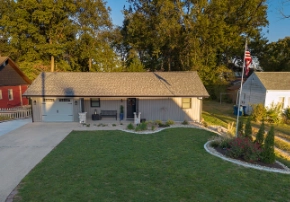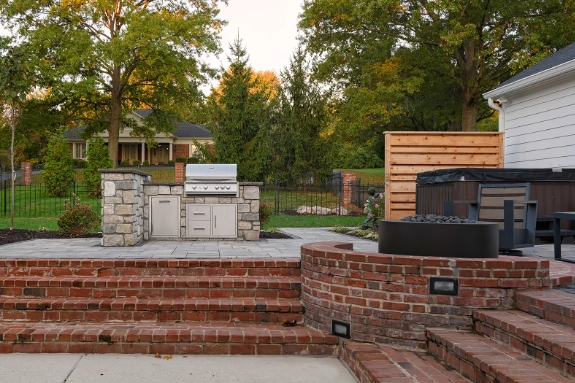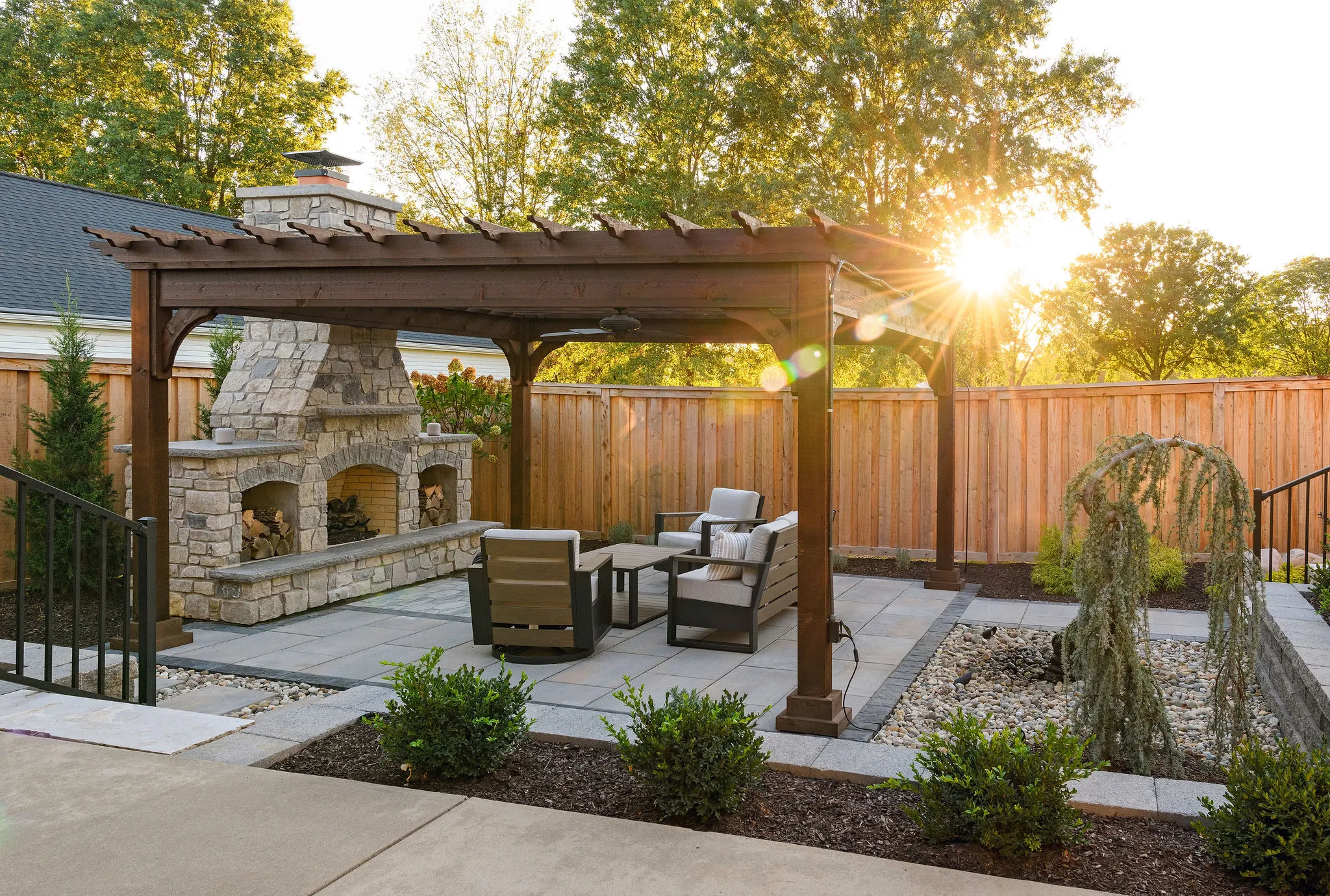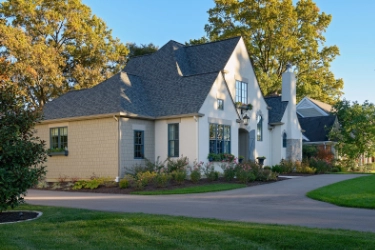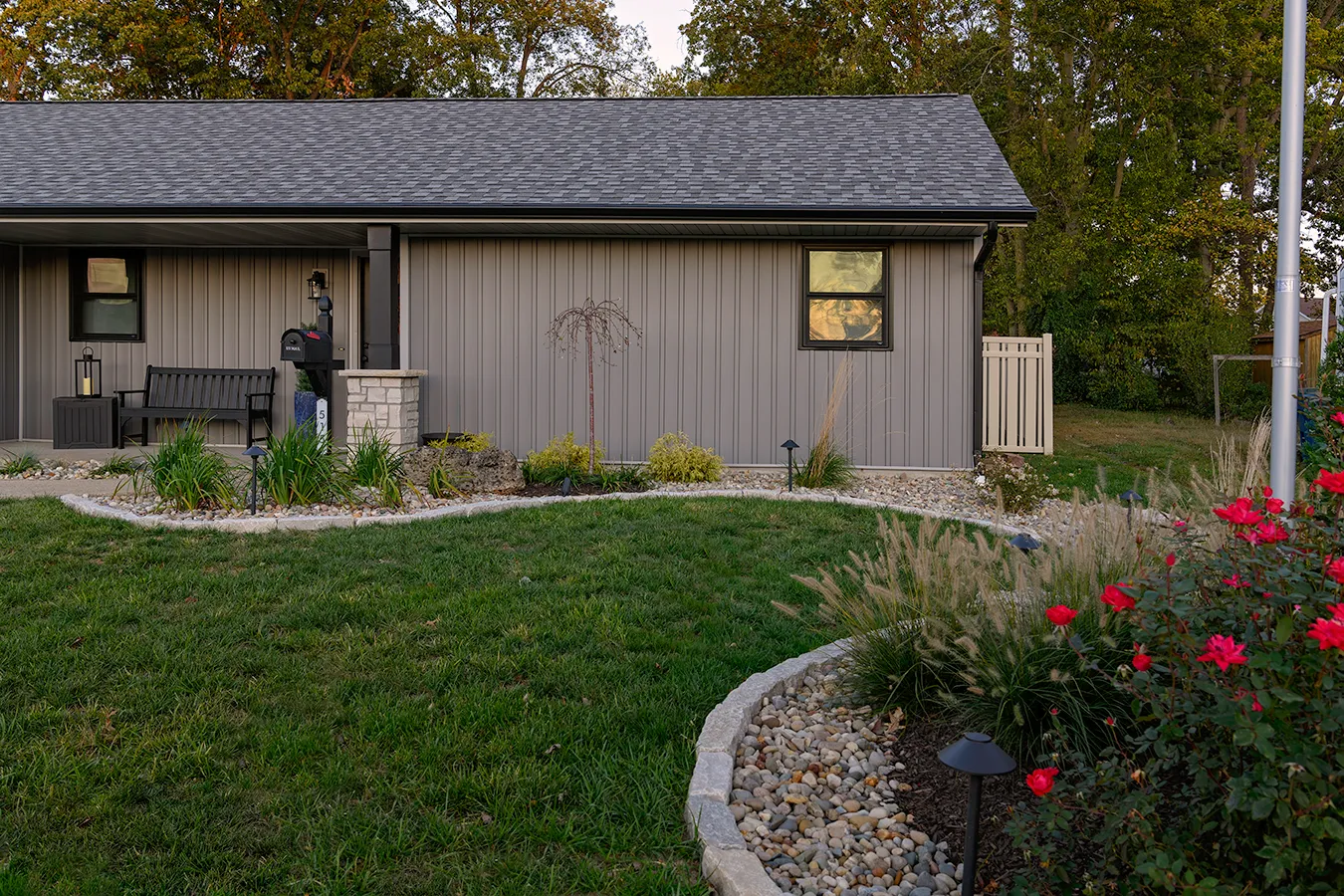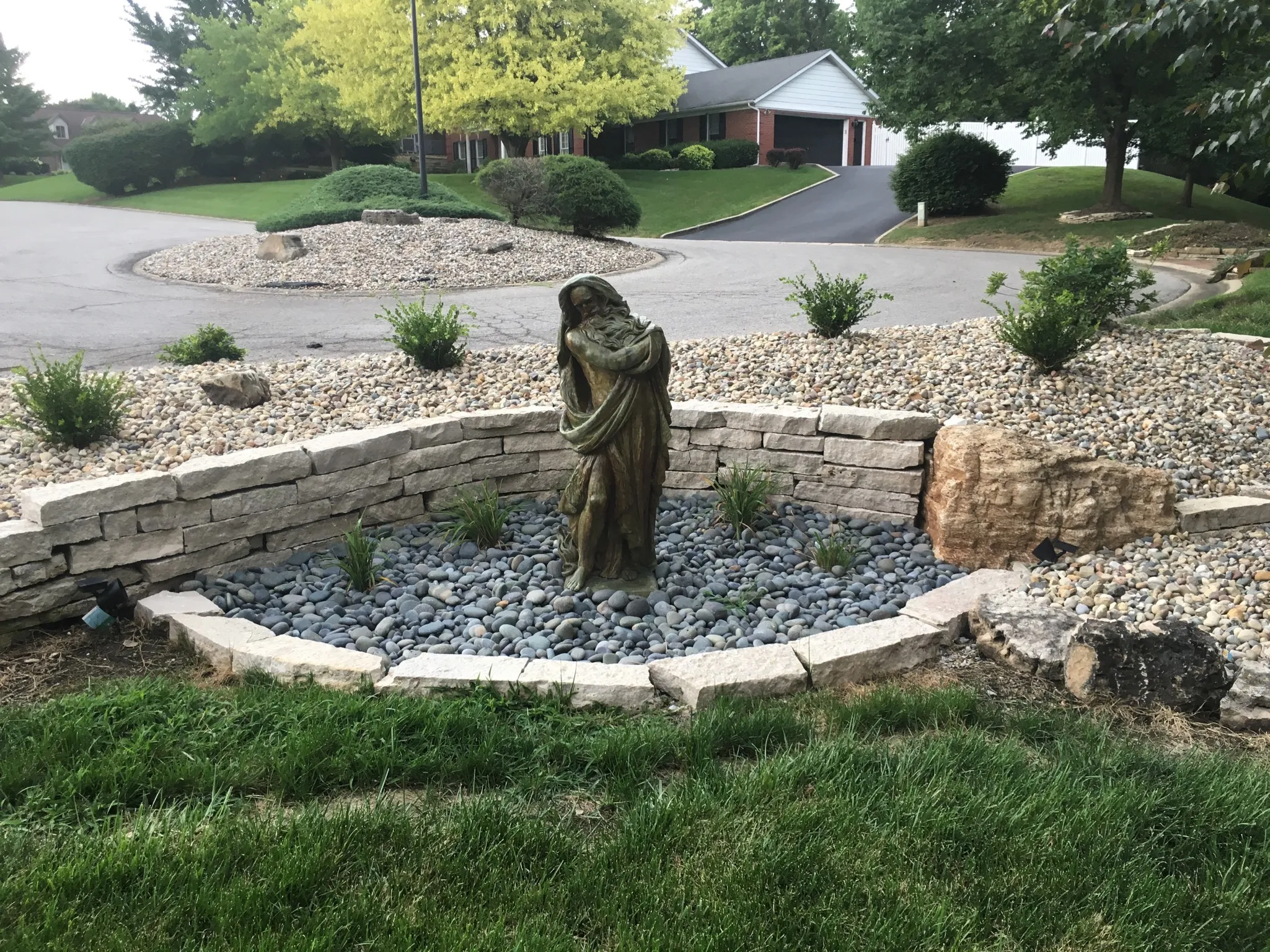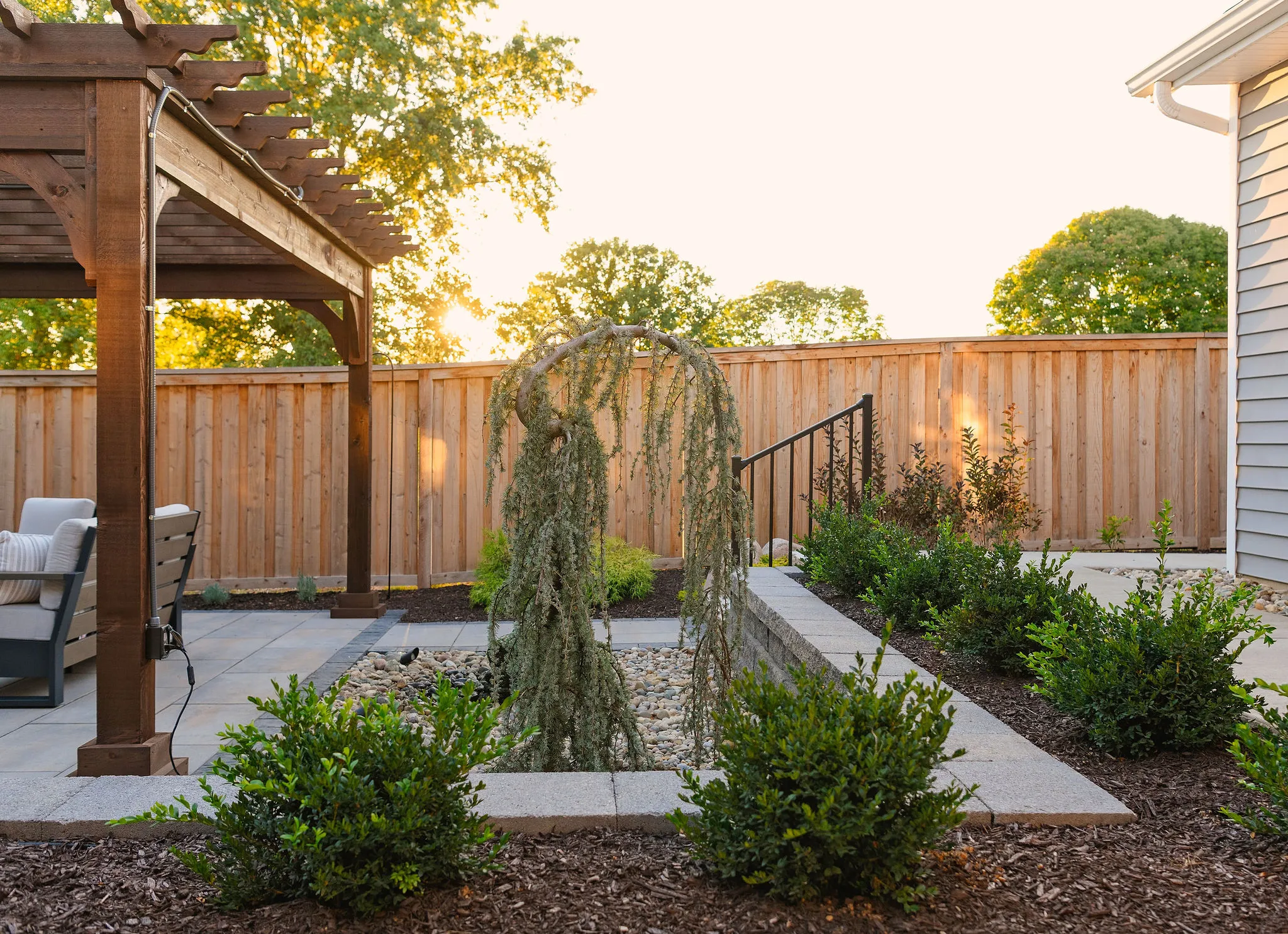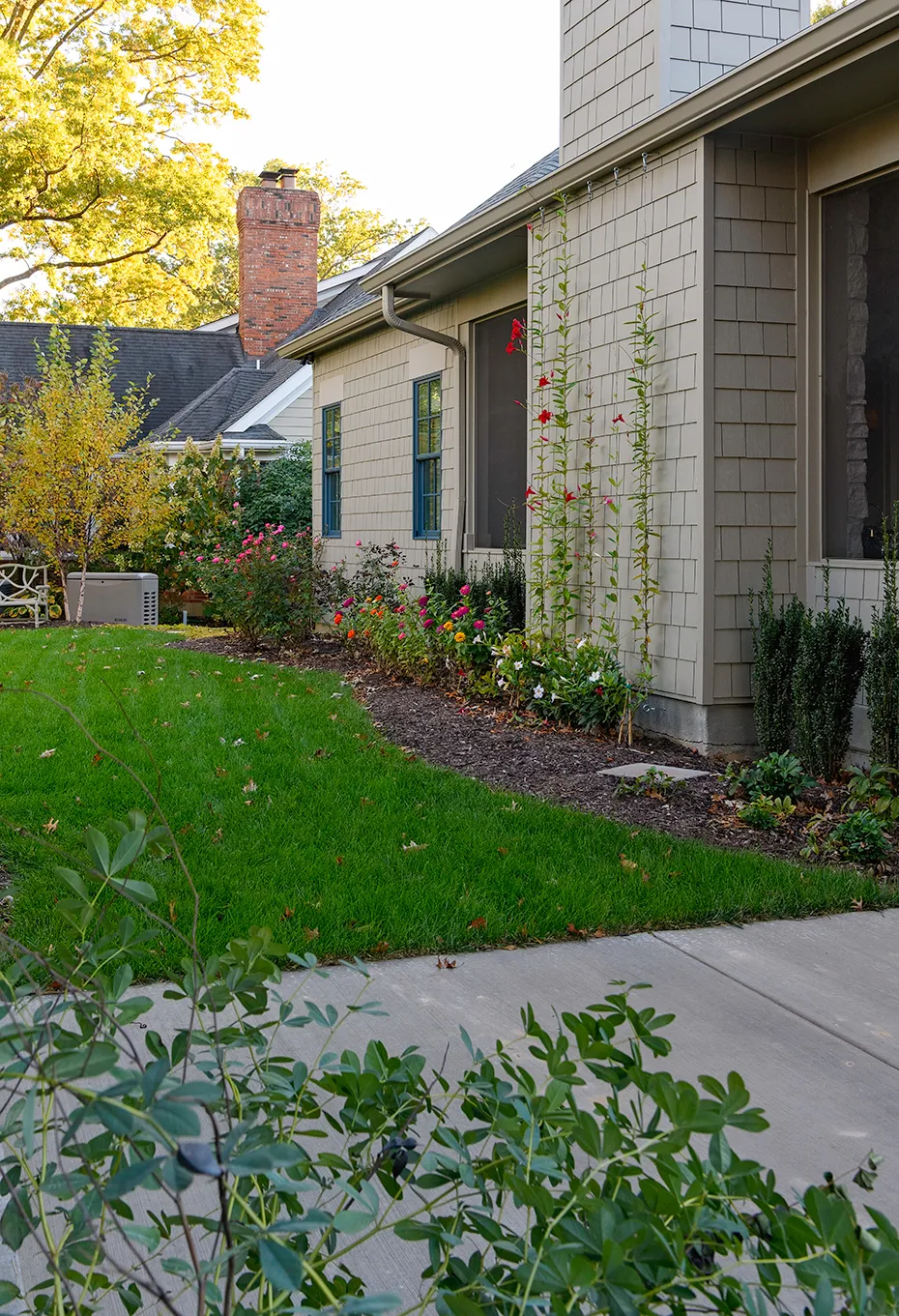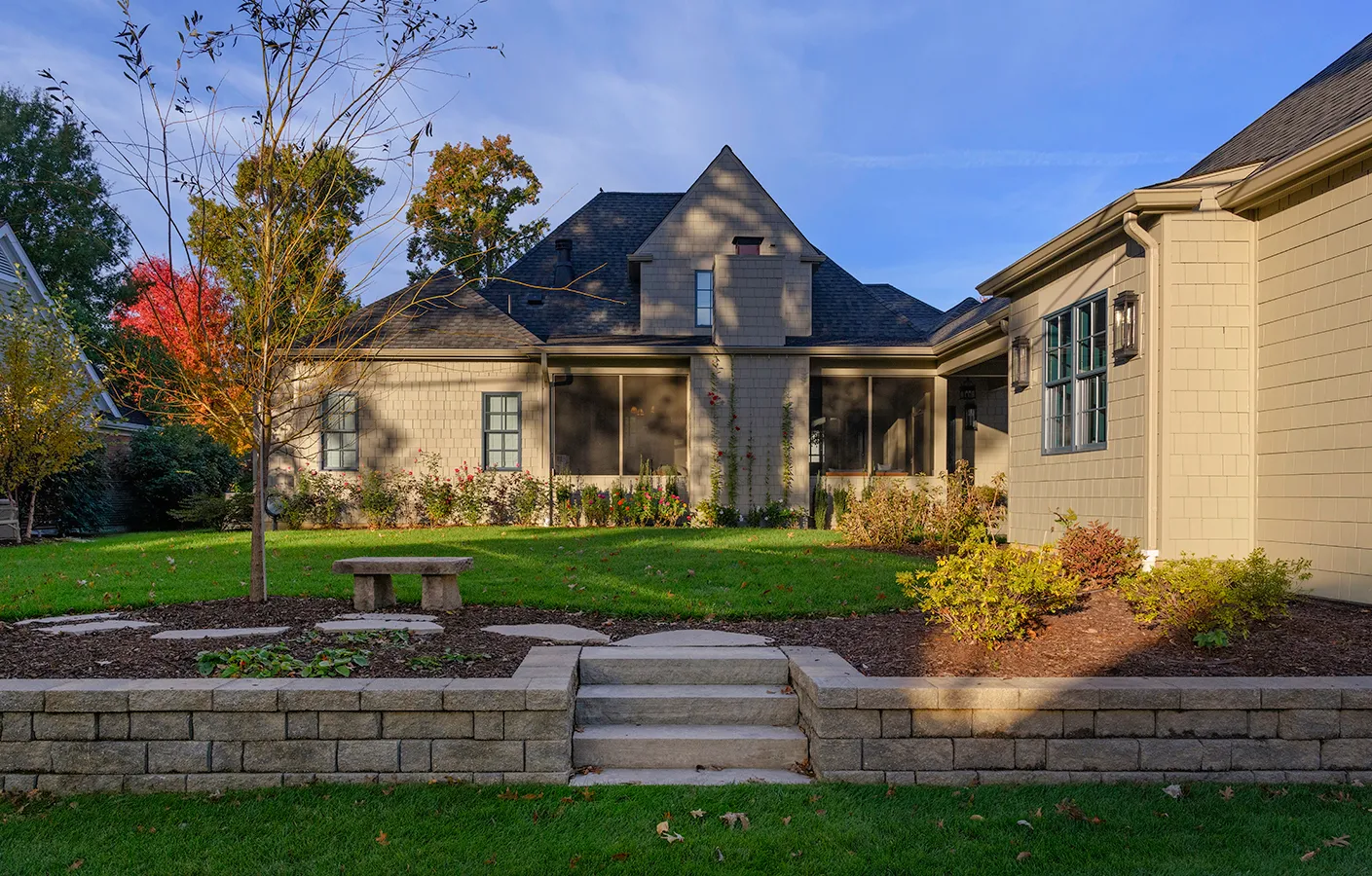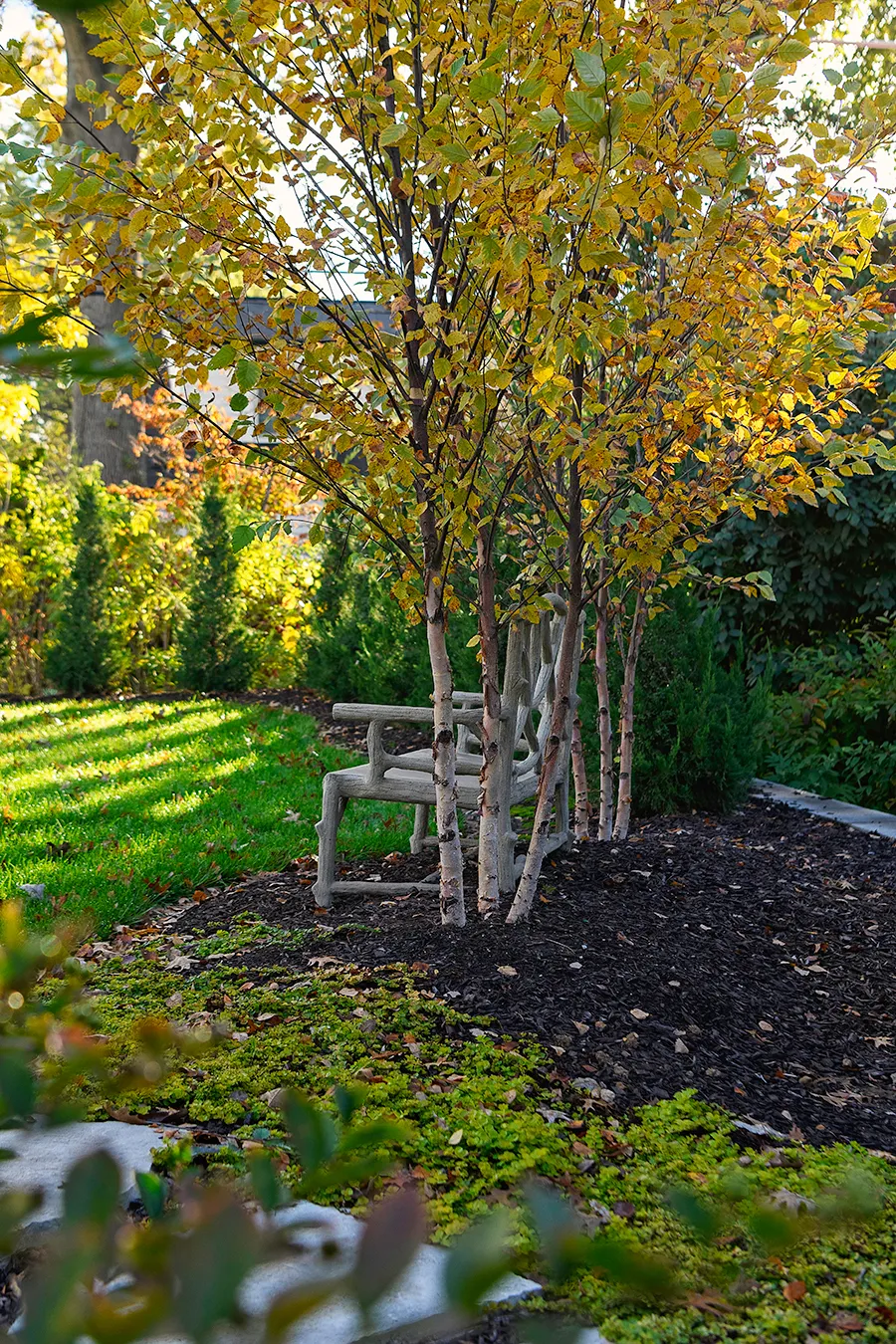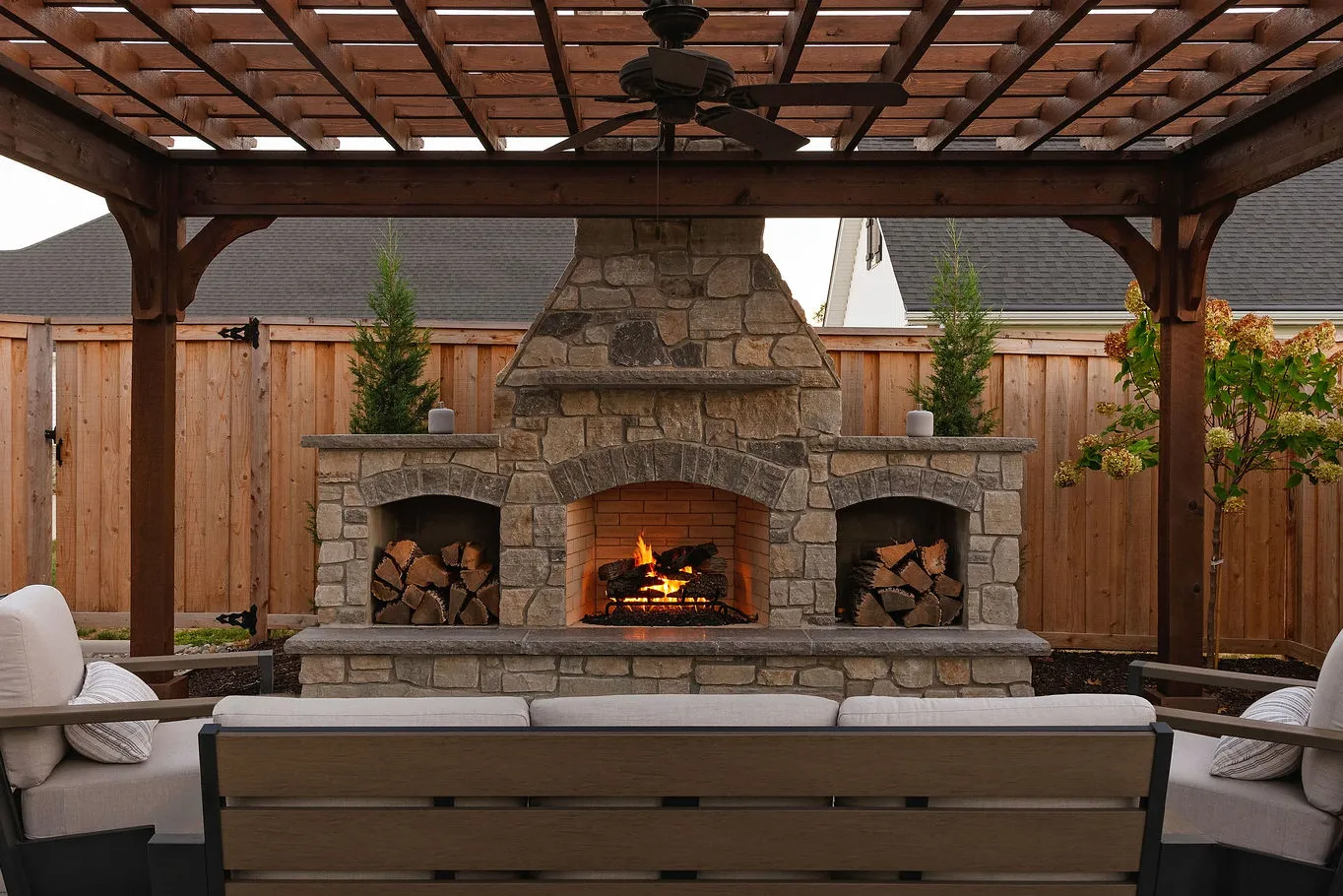

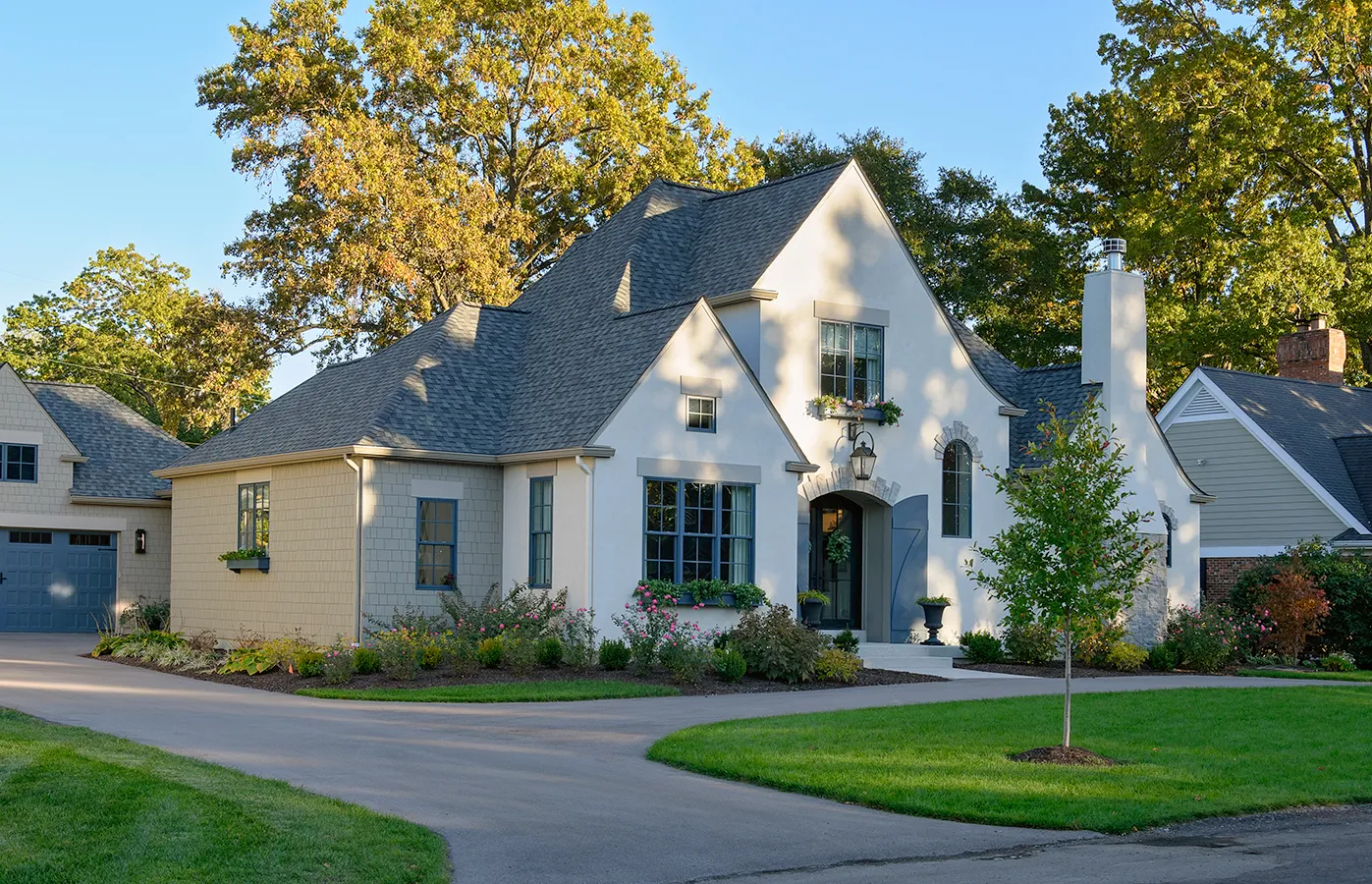
Landscape beds shape the soft edges of a space and property. They frame patios, soften structures, introduce privacy, and add seasonal variation.
They aren’t filler. They define transitions — from patio to lawn, from house to yard, from one elevation to another. Over time, they influence maintenance, drainage, and how the space matures.
Planting design begins with layout—not plant selection. Evergreens establish structure, shrubs create rhythm and scale, and perennials provide seasonal variation. The significat difference between designing other elements vs. plantings is that plantings are alive. It grows and matures and cycles through the seasons. It's a unique paint brush.
Mulch and rock change both the look and the maintenance of a bed. Mulch has a softer character and supports plant health as it breaks down into soil over time. Refreshing mulch keeps beds feeling new each season.
Decorative rock has a higher upfront investment but often balances out over time—commonly around six to seven years compared to repeated mulch refresh. Rock beds include filter fabric beneath the stone layer to reduce weed pressure, though no system is completely weed-proof. Nature finds a way.
Landscape beds pair especially well with landscape lighting and irrigation planning for long-term performance.
Landscape beds start with removal — existing turf, debris, and poor soil conditions are cleared before anything new goes in. The edge is defined first, because that line determines how the bed reads against lawn, patio, or structure.
Soil preparation matters more than plant selection. We amend and improve the soil to depth rather than just scratching the surface. Root balls are loosened and set at proper height so they don’t settle too deep over time. Planting depth is deliberate — burying a root flare is one of the most common long-term plant failures.
Mulch is installed at a consistent depth, typically around 2–3 inches. Too little offers no benefit. Too much suffocates roots and holds excess moisture.
Drainage is addressed where needed. In areas near foundations, we may bury downspouts or redirect runoff so stormwater doesn’t discharge directly into planting beds against the house. Beds shouldn’t become water collection zones.
Landscape beds aren’t filler around hardscape. They’re living systems. When soil prep, grading, and drainage are handled correctly, they mature well.
Most professionally designed and installed planting projects begin around $8,000–$12,000 for defined bed areas with soil preparation, edging, plant material, and mulch or stone.
Mid-sized planting renovations — including expanded bed areas, layered planting design, privacy screening, and irrigation adjustments — typically range from $15,000–$35,000 depending on plant size and density.
Larger landscape transformations involving substantial grading corrections, mature plant material, tree installation, and full-property bed redesign often fall between $35,000–$75,000+ depending on scale and access conditions.
Primary cost drivers include total bed area, plant size and quantity, soil preparation depth, edging type, mulch versus decorative stone selection, irrigation modifications, and site accessibility.
Design Considerations
Consider how planting frames the home, guides movement through the yard, and evolves through the seasons.
Common Pairings
Walkways, landscape beds, retaining walls, and landscape lighting.
Pricing Factors
Typically $6k–$40k+. Bed size, plant material, and site prep drive range.
Service hero background image only maybe vh67 and since the content overlaps it some making it the level
Similar look where it looks like a page that overlaps the hero some. background black. Contains a left side for a rich text element for the content, a section for service specific FAQ, and on the right side a "at a glance" card with a rich text element. We need to find a way to show projects that feature this service. I added service tags to the portfolio cms.
H1 within the second section. hero only has image. so H1 is still first words on the page.
Rich Text for:
"What is it"
intro description explaining the problems the service solves, situations where it makes sense. Functinoal improvements, clarifies use cases and the value it brings to a space.
"Design Considerations" + Oten paired with
this talks about how its used and design in a space. other elements to consider mixiing this with. typical site constraints, scale etc. Talk about the kinds of materials used.
"How it's built"
talk about what goes into building this element. This could be as simple as describing the trenching for the gas line or complicated as the steps to a pool build. Talk about the the base that makes it last, the framing that gives it shape, and the finishes that make details count. Things like utilities, code restrictions and typical permiting requirements.
"Pricing Factors"
Talk about typical pricing ranges, what conditions affect the price more or less than others. Things that people "think is expensive but isnt" and "what peopled dont think is expensive but is." Scale obviously impacts price but so does installation complexity. talk about what that complexity looks like for each service.
"Service FAQ"
a service specific faq based on the faq cms filtered to the service. include the featured faqs at the end. I plan to have 2-3 featured ones about getting started.
"At A Glance"
floating card on the right
- Considerations: 2-3 sentences about its value, use in designs, and pairings.
- Pricing: 2 ranges with descriptions
- Featured projects: Is there a way to make a mini slider with the project name? Is that too much and just list 3-4 project names with the arrow icon?
- CTA to portfolio & get Started
"Photos of Service"
Condense the current 3 photos into a multi photo
"Related projects"
Some kind of ribon or grid showing related projects. The projects cms have a multi-picklist to tag services used on that project and can be used to filter matching projects here. The challenge