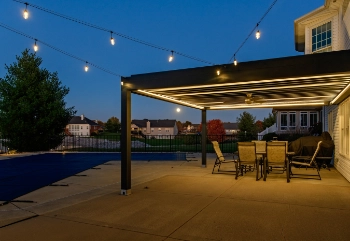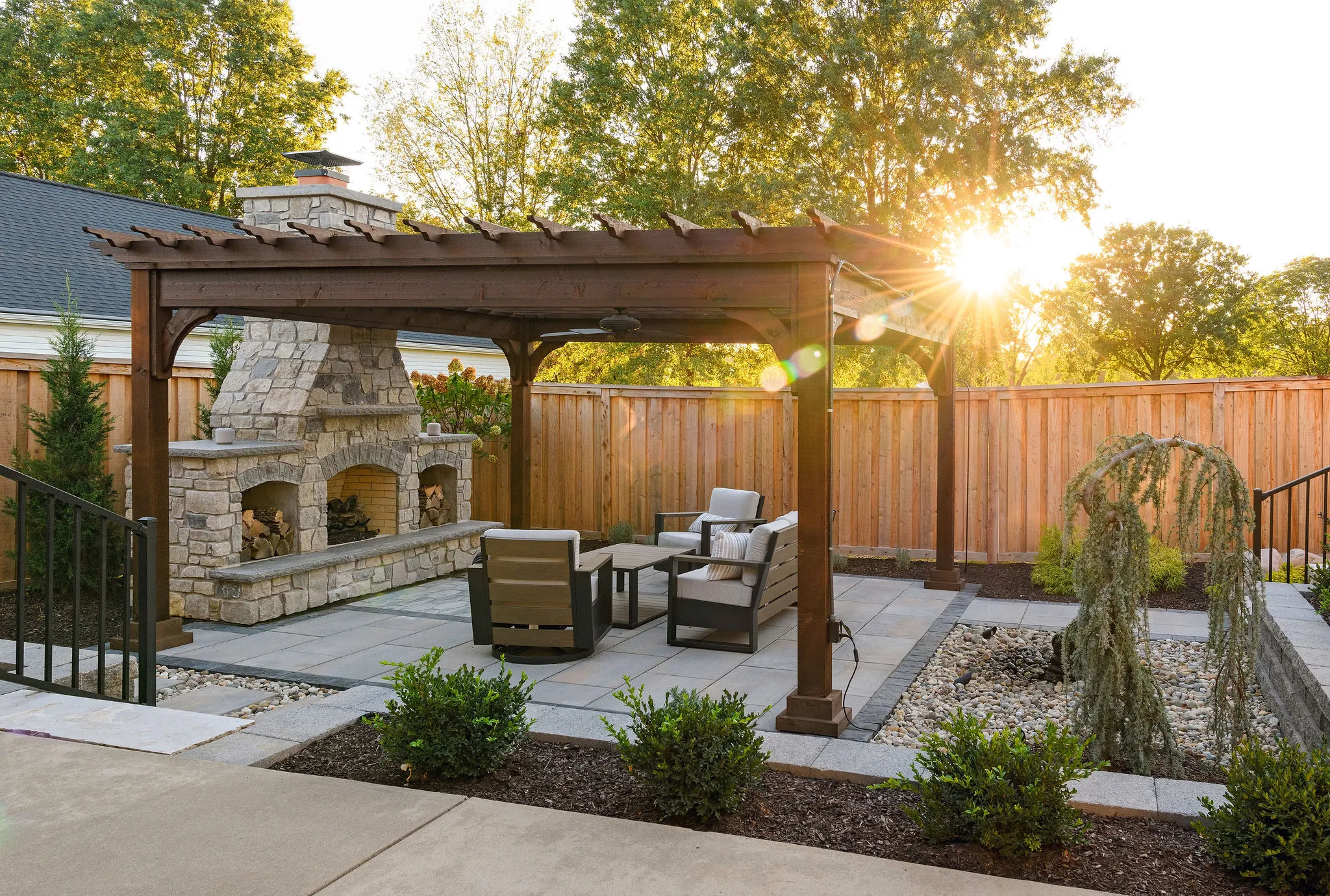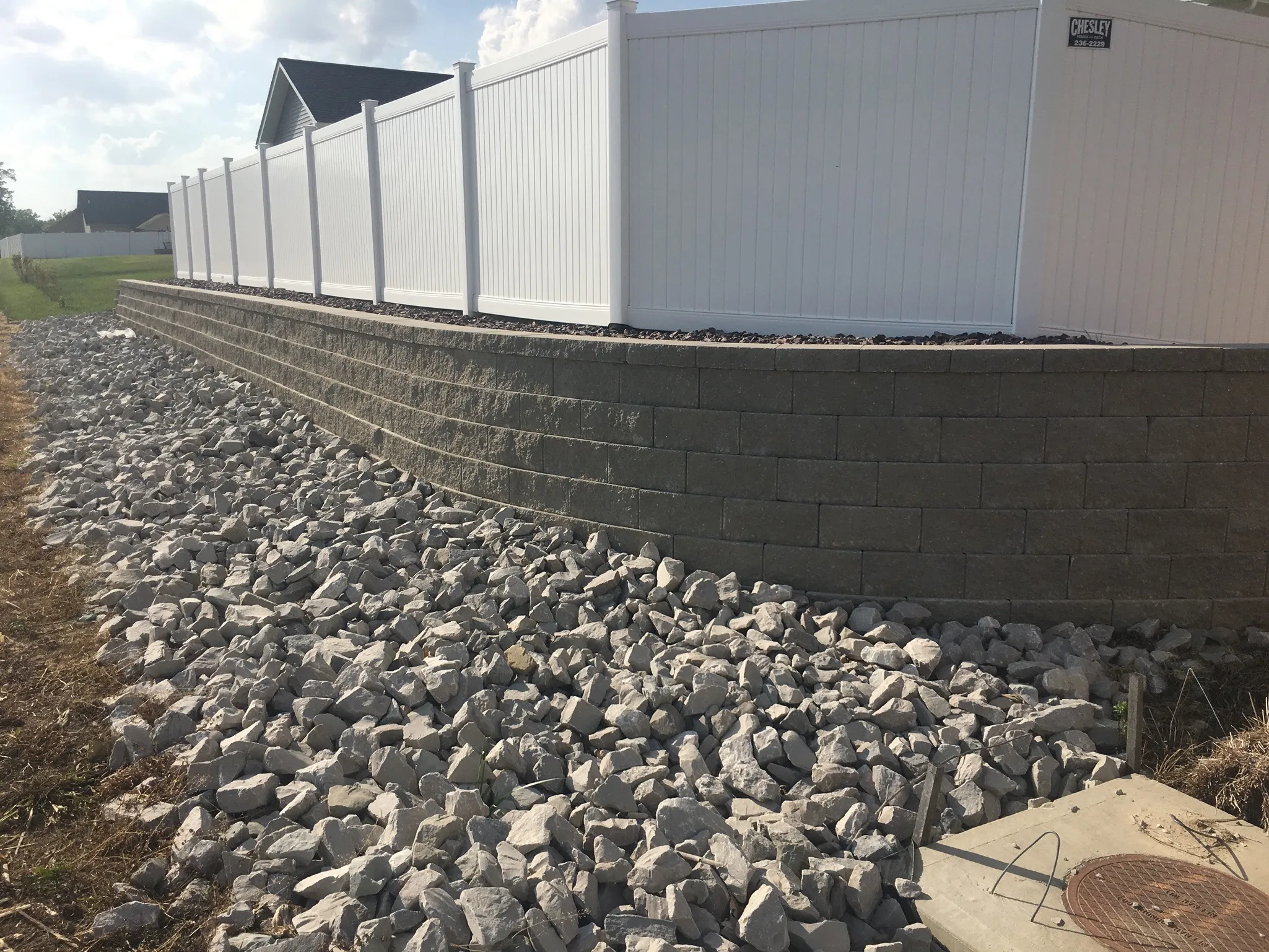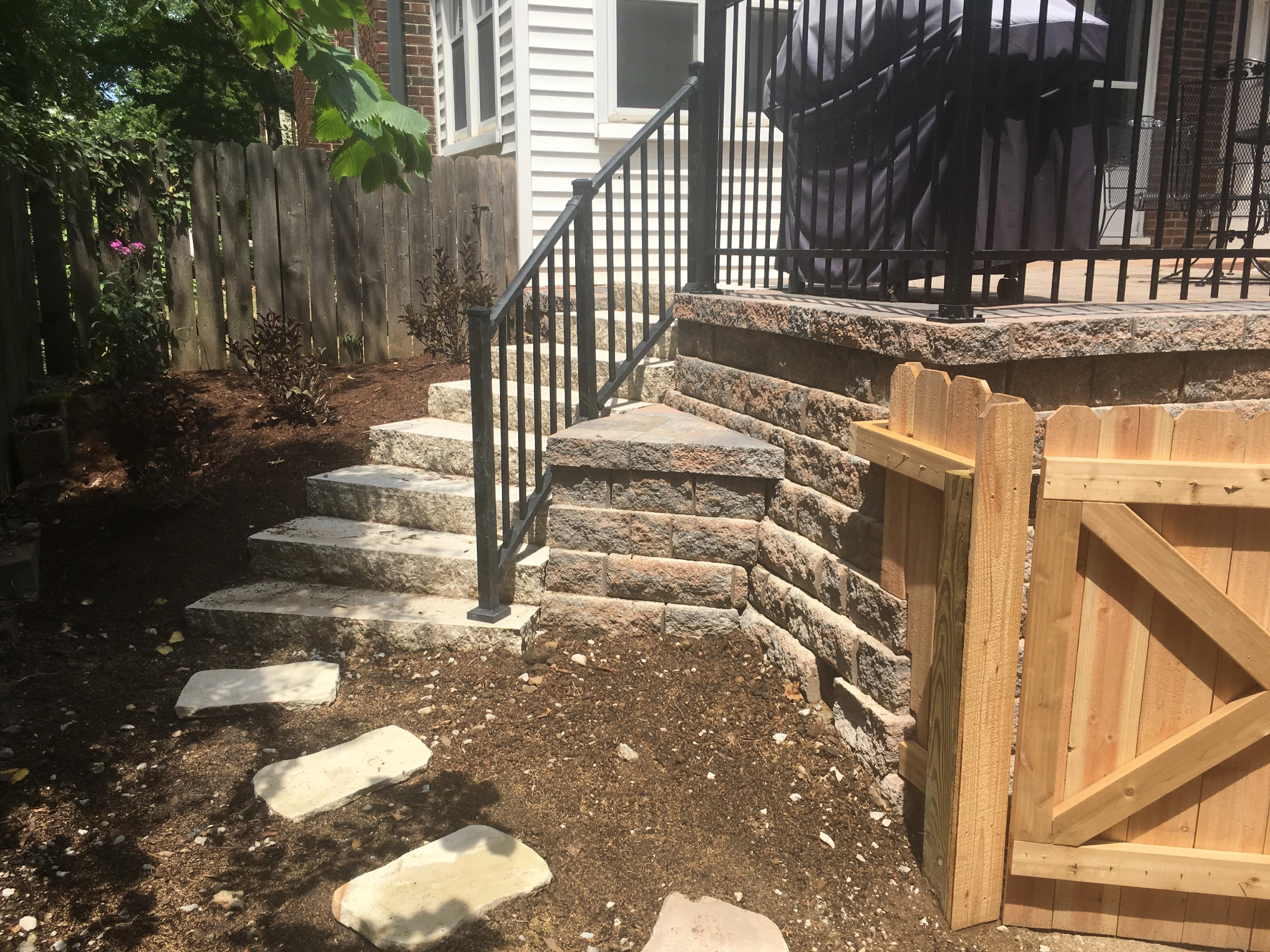


Fencing defines boundaries, creates privacy, and satisfies code requirements — particularly around pools.
We primarily install aluminum and privacy-style cedar fencing. Aluminum is the standard for pool enclosures and clean property lines. Cedar fencing is often selected when privacy is the goal and when the material needs to align with the overall aesthetic of the project.
We also install vinyl fencing and wrought iron fencing or handrails when the design calls for it — particularly in projects with masonry elements or historic styling.
Material selection is the first decision.
Aluminum is durable, low maintenance, and visually light — making it the norm for pool fencing.
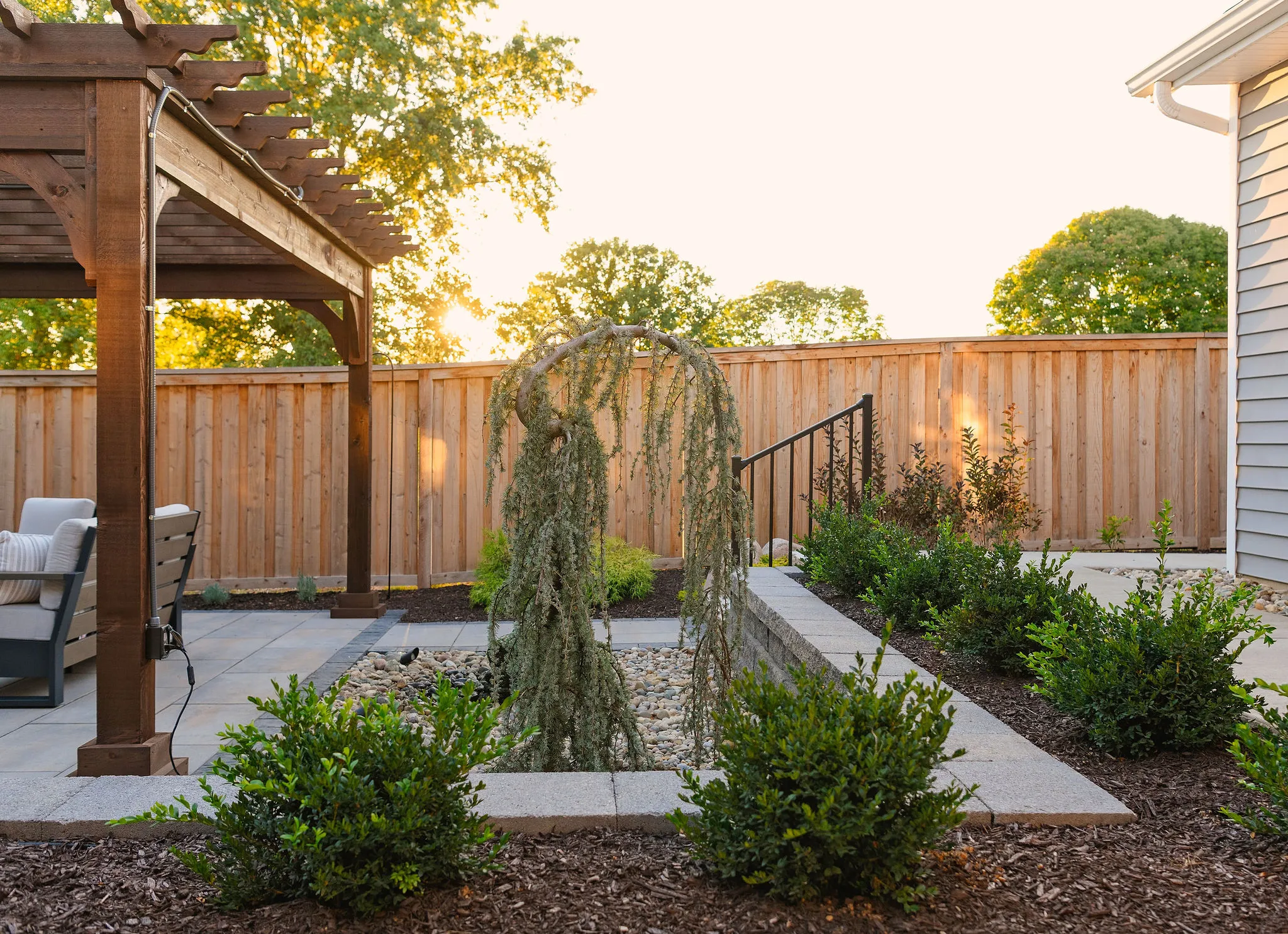
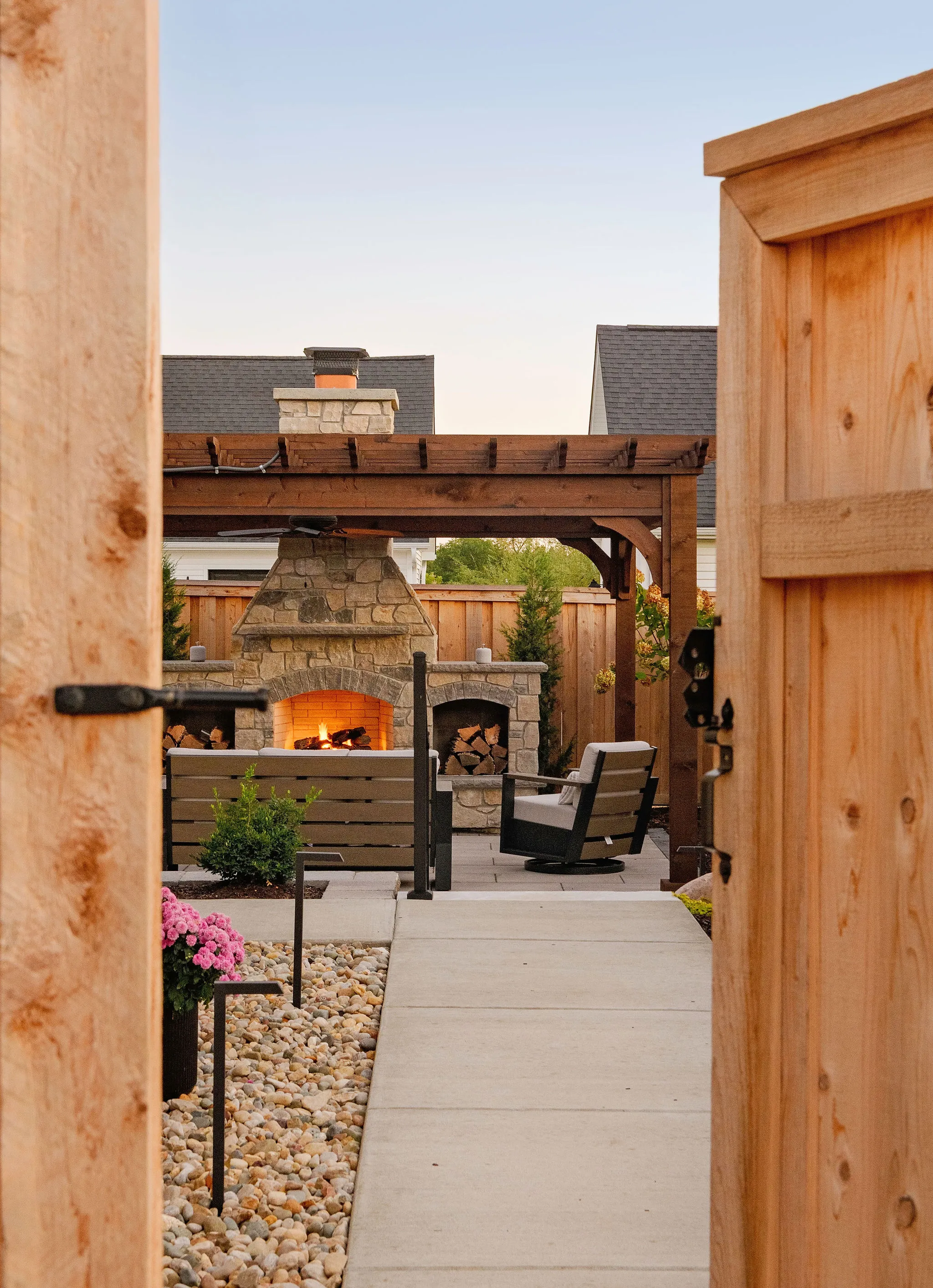
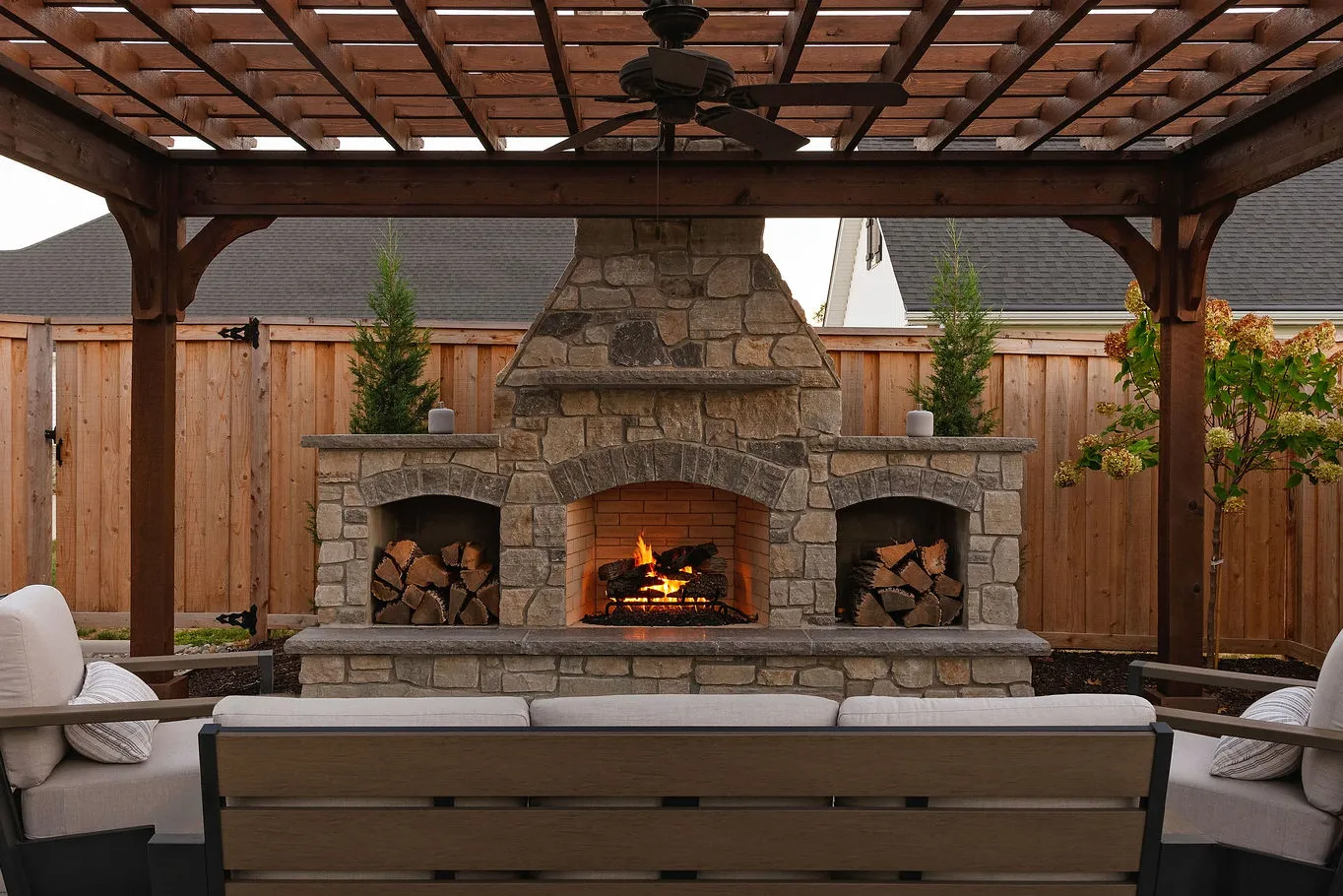
Cedar privacy fencing provides enclosure and warmth and pairs naturally with planting beds and patios. We used it to create privacy on the Sunken Sanctuary project
Vinyl offers a maintenance-forward option but typically costs more than cedar.
Wrought iron is often reserved for stair handrails, masonry-adjacent accents, or historic-style applications.
Fencing can also be used intentionally within a layout — as a divider behind spas, or as a backdrop paired with plantings.
We install cedar privacy fencing, vinyl, aluminum, and wrought iron systems. While materials vary, post installation and alignment determine long-term performance.
Post depth typically equals half the height of the fence. Holes are augered, and posts are wet-set in concrete. Concrete is mixed before placement to ensure proper consistency rather than relying on dry-set methods. Proper depth and curing prevent lean and wind movement.
Wood fences — particularly 6′ cedar privacy fencing — use with posts spaced approximately 6 feet on center. Gates are reinforced with anti-sag cables that can be adjusted over time to maintain alignment. Sagging gates are one of the most common failures in wood fencing, and reinforcement prevents that early movement.
Vinyl and aluminum systems follow manufacturer spacing requirements, with attention to plumb and level alignment before panel installation.
For grade transitions, we prefer racking panels (sloping) rather than stair-stepping when possible. Stepping can create visible gaps beneath the fence and disrupt visual continuity. Racking maintains a cleaner line and reduces open space at grade.
We generally avoid fastening fences directly to homes. Instead, we install a post adjacent to the structure to allow independent movement.
Most fence failures result from shallow post depth or long-term rot in untreated materials. Proper depth, concrete setting, and gate reinforcement prevent early instability.
Most aluminum or cedar fence projects begin around $17,000–$25,000 depending on linear footage and layout.
Larger properties with longer fence runs, multiple gates, or elevation changes commonly range from $30,000–$50,000+.
Wrought iron fencing and custom handrails typically cost significantly more than aluminum due to fabrication, welding, and finishing requirements.
Primary cost drivers include total linear footage, material type, gate count, grade variation, and fabrication complexity.
Design Considerations
Consider privacy needs, terrain changes, and whether the fence frames the yard or disappears into it.
Common Pairings
Decks, retaining walls, stair systems, and pools.
Pricing Factors
Typically $6k–$40k+. Material choice and terrain conditions determine pricing.
Service hero background image only maybe vh67 and since the content overlaps it some making it the level
Similar look where it looks like a page that overlaps the hero some. background black. Contains a left side for a rich text element for the content, a section for service specific FAQ, and on the right side a "at a glance" card with a rich text element. We need to find a way to show projects that feature this service. I added service tags to the portfolio cms.
H1 within the second section. hero only has image. so H1 is still first words on the page.
Rich Text for:
"What is it"
intro description explaining the problems the service solves, situations where it makes sense. Functinoal improvements, clarifies use cases and the value it brings to a space.
"Design Considerations" + Oten paired with
this talks about how its used and design in a space. other elements to consider mixiing this with. typical site constraints, scale etc. Talk about the kinds of materials used.
"How it's built"
talk about what goes into building this element. This could be as simple as describing the trenching for the gas line or complicated as the steps to a pool build. Talk about the the base that makes it last, the framing that gives it shape, and the finishes that make details count. Things like utilities, code restrictions and typical permiting requirements.
"Pricing Factors"
Talk about typical pricing ranges, what conditions affect the price more or less than others. Things that people "think is expensive but isnt" and "what peopled dont think is expensive but is." Scale obviously impacts price but so does installation complexity. talk about what that complexity looks like for each service.
"Service FAQ"
a service specific faq based on the faq cms filtered to the service. include the featured faqs at the end. I plan to have 2-3 featured ones about getting started.
"At A Glance"
floating card on the right
- Considerations: 2-3 sentences about its value, use in designs, and pairings.
- Pricing: 2 ranges with descriptions
- Featured projects: Is there a way to make a mini slider with the project name? Is that too much and just list 3-4 project names with the arrow icon?
- CTA to portfolio & get Started
"Photos of Service"
Condense the current 3 photos into a multi photo
"Related projects"
Some kind of ribon or grid showing related projects. The projects cms have a multi-picklist to tag services used on that project and can be used to filter matching projects here. The challenge