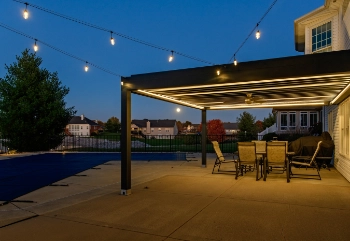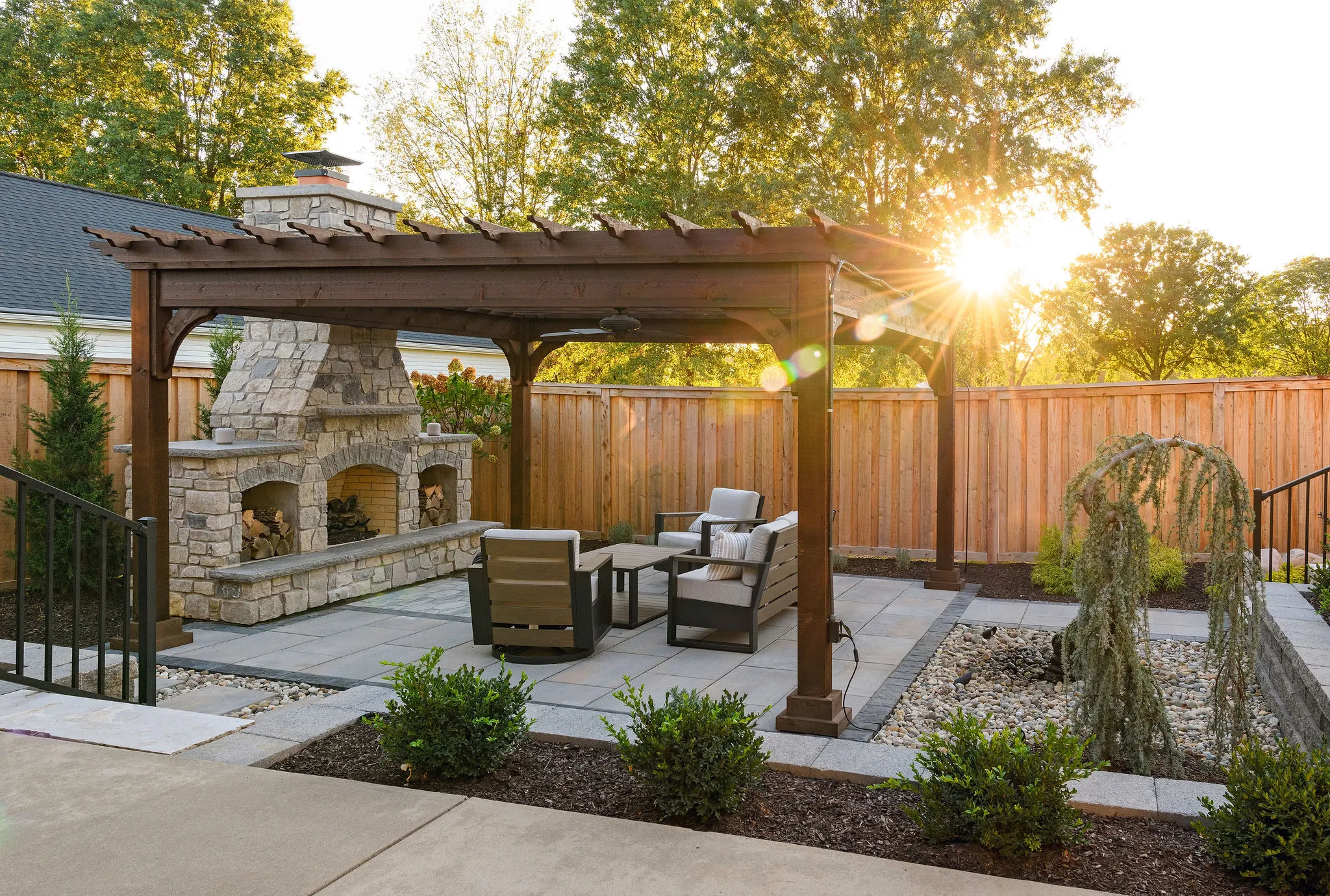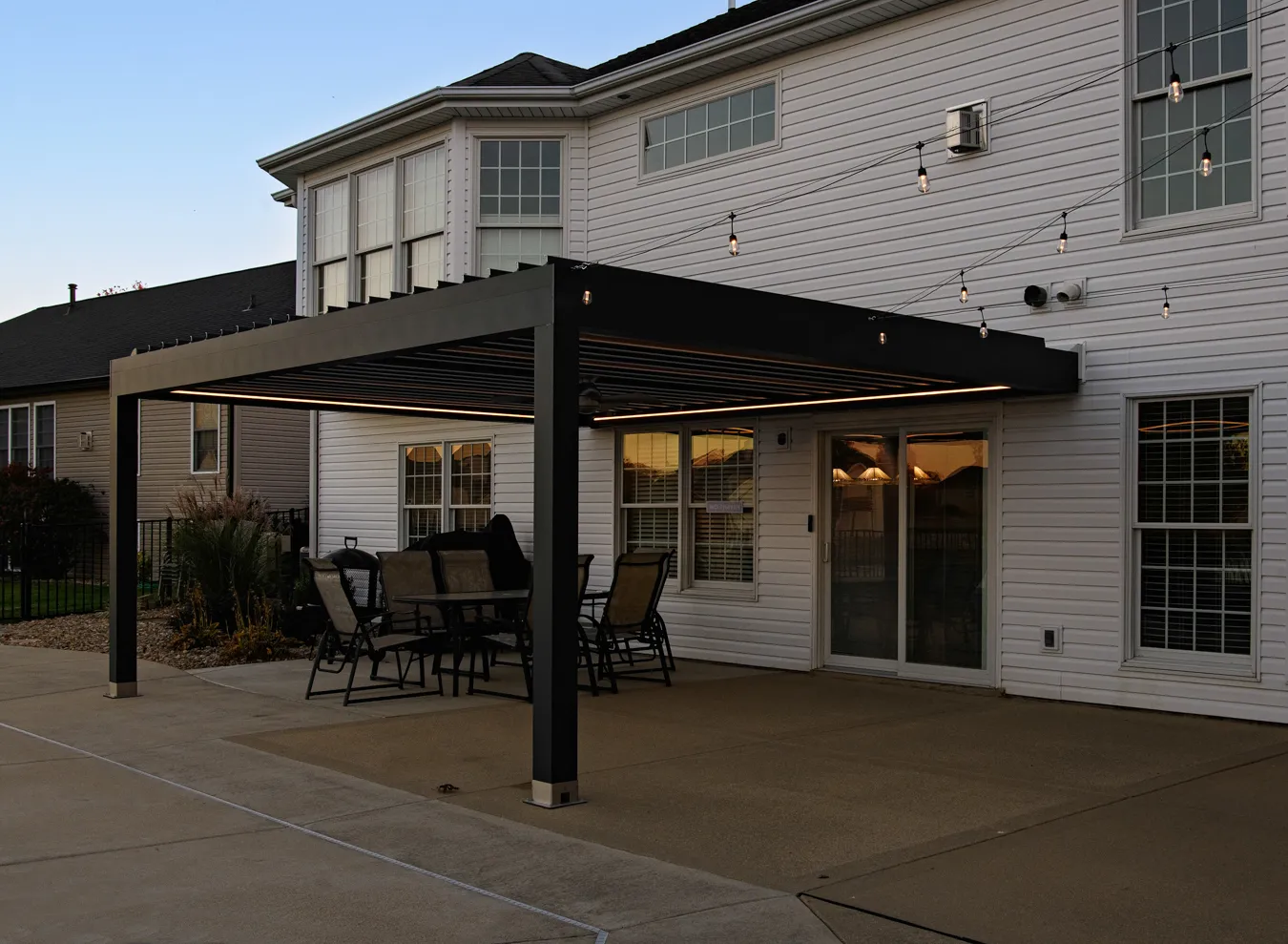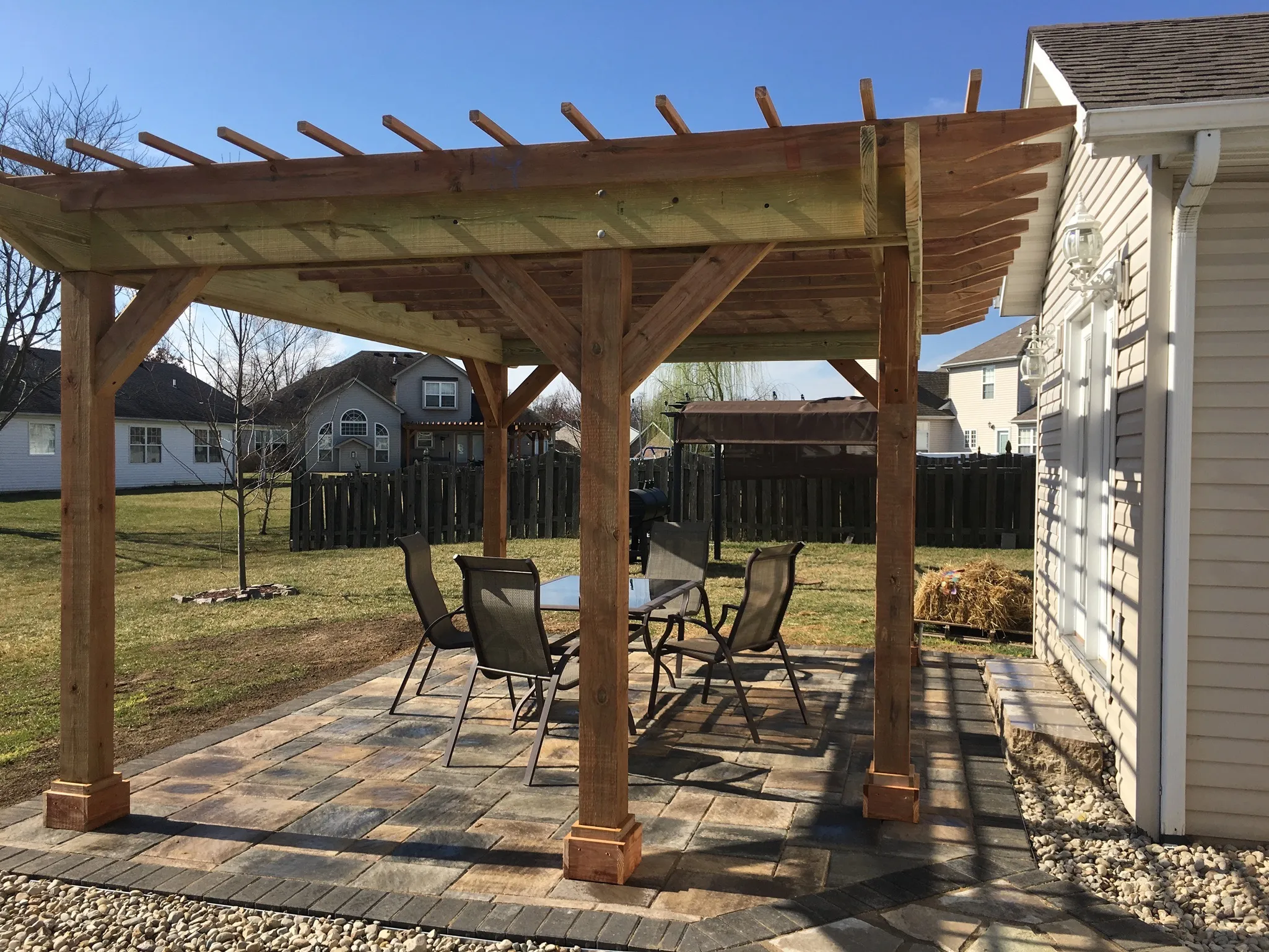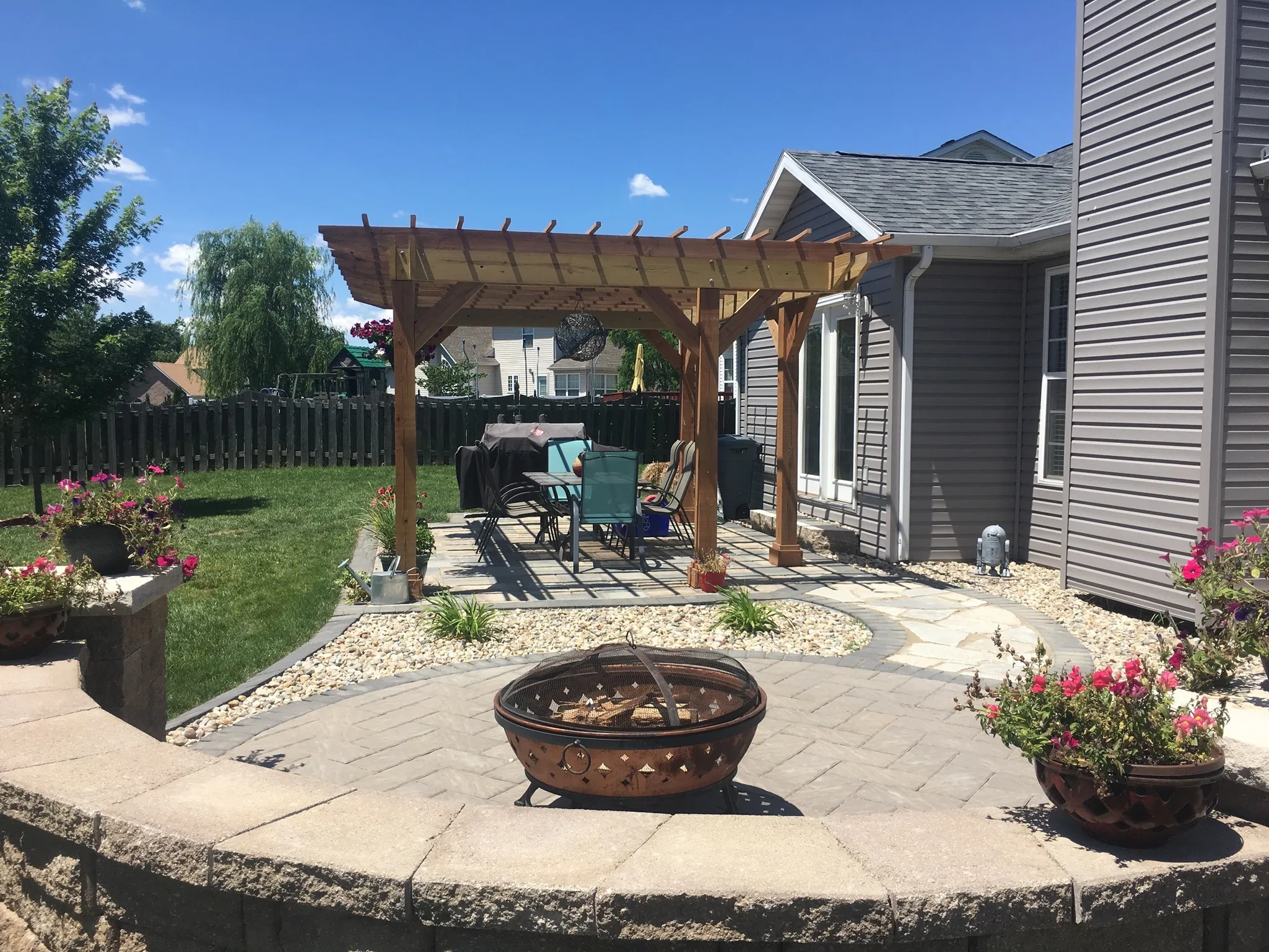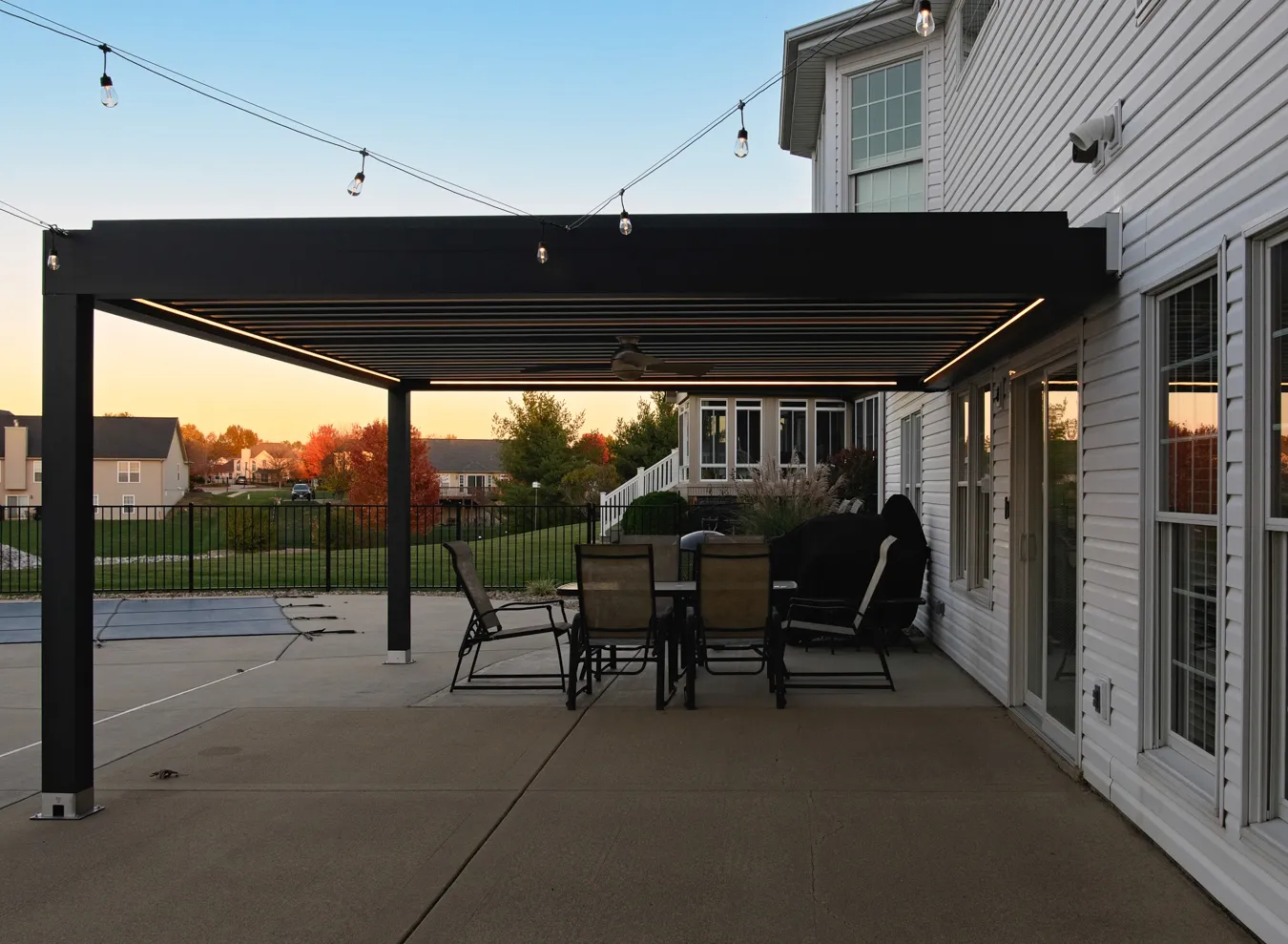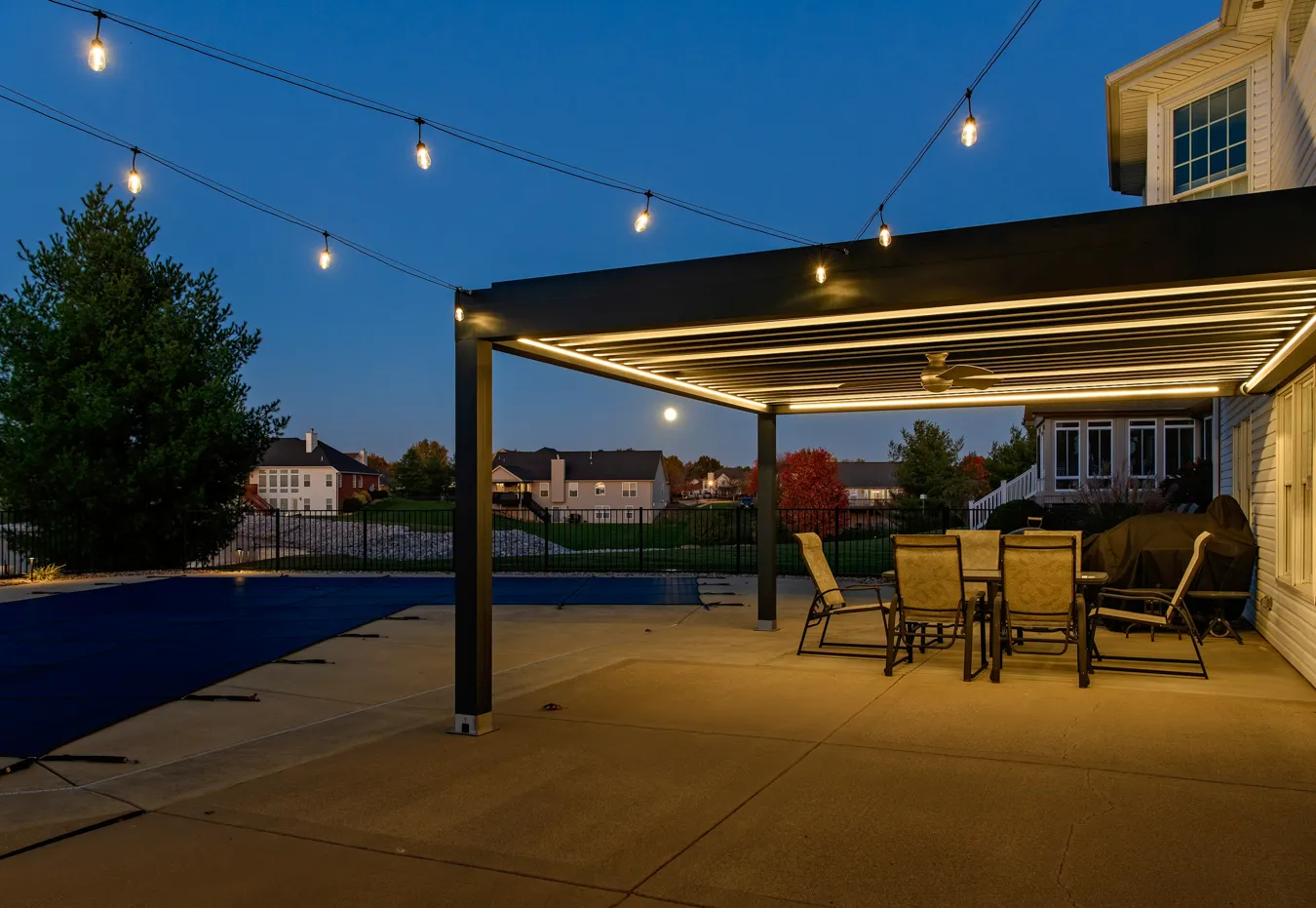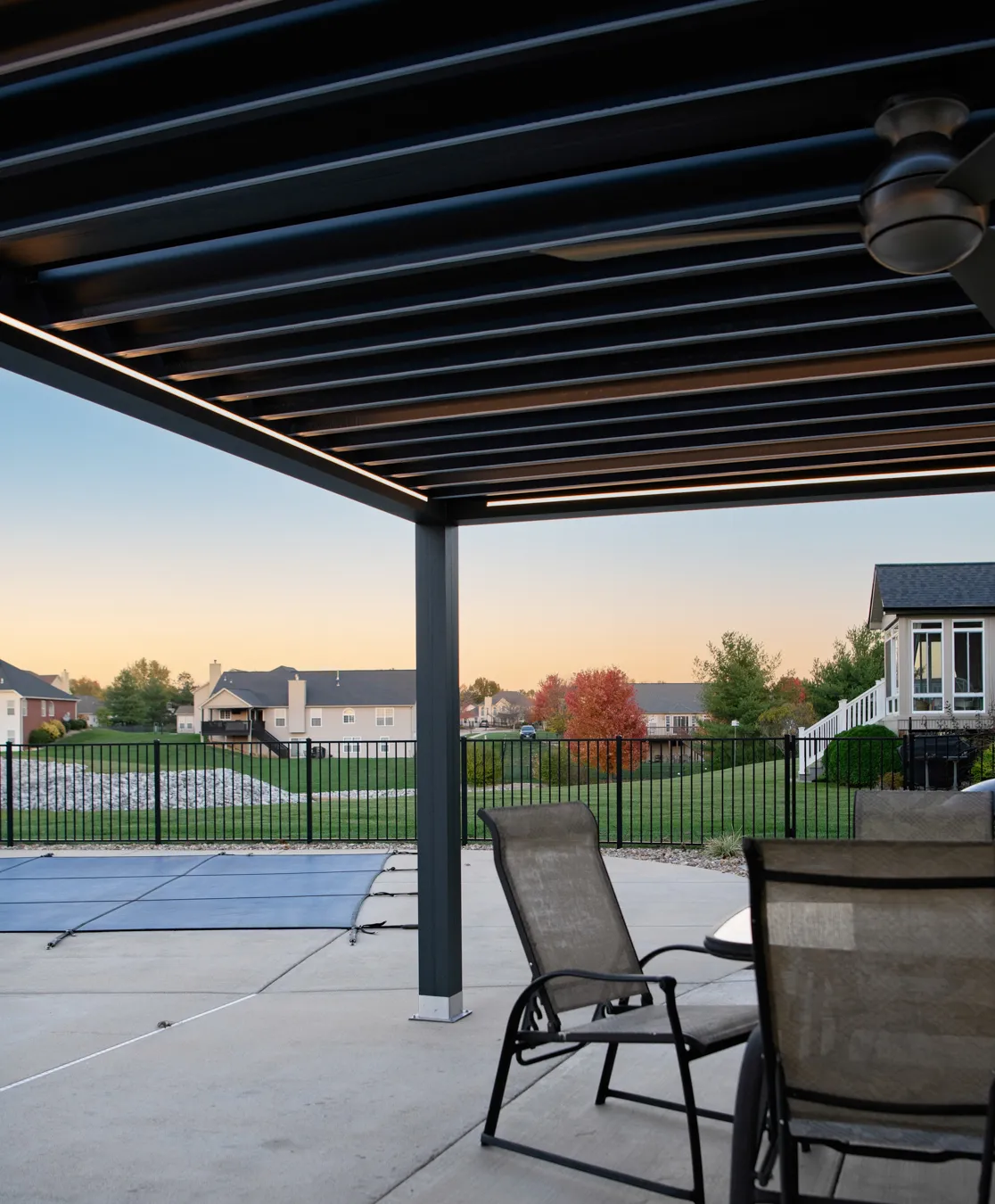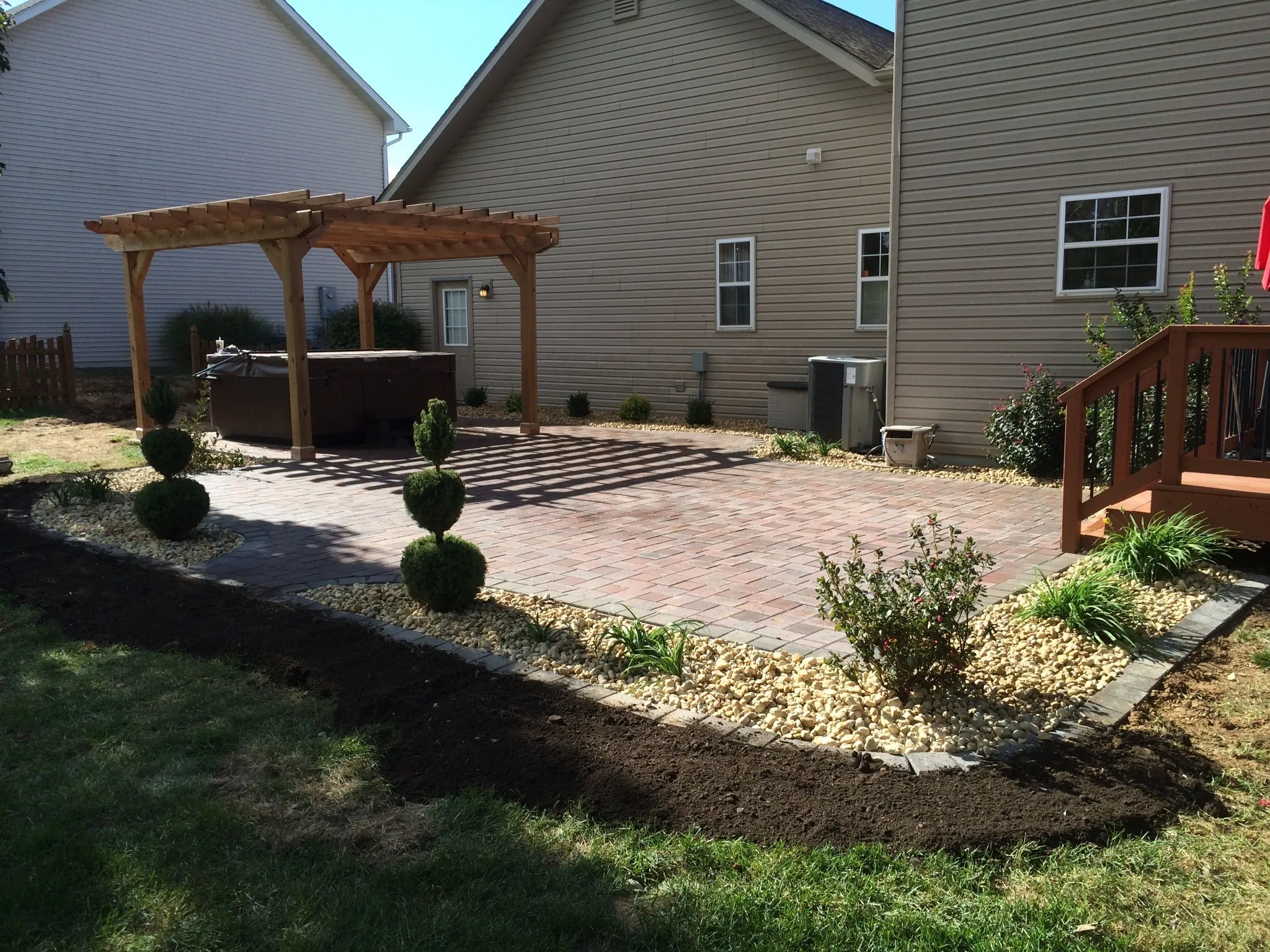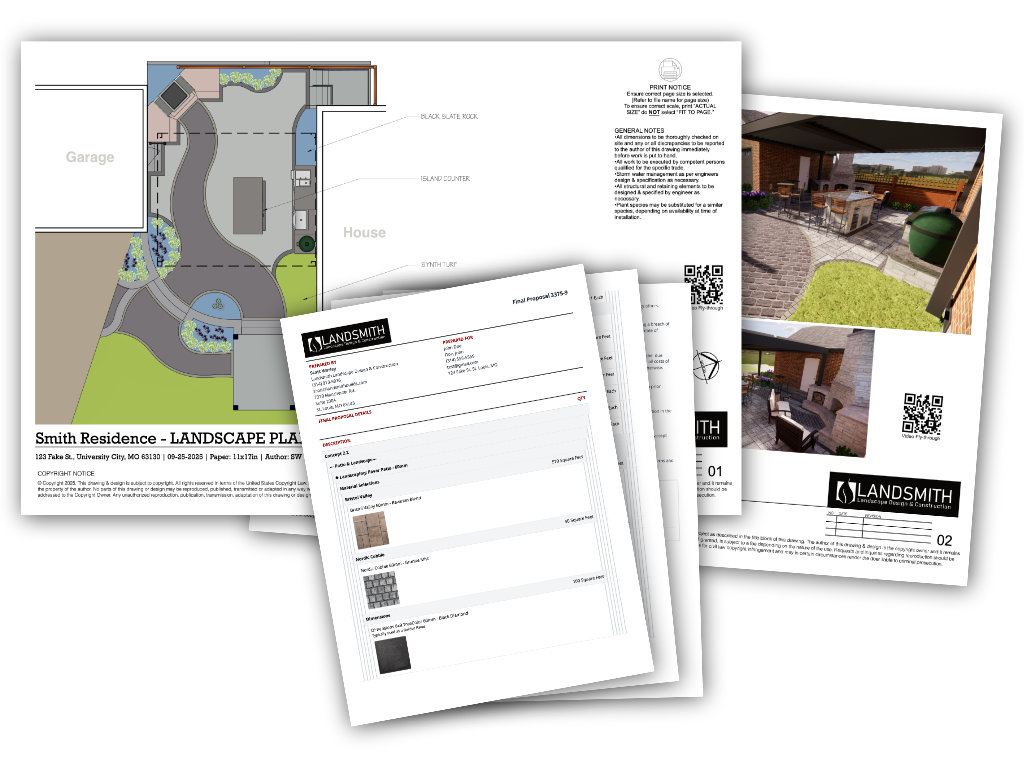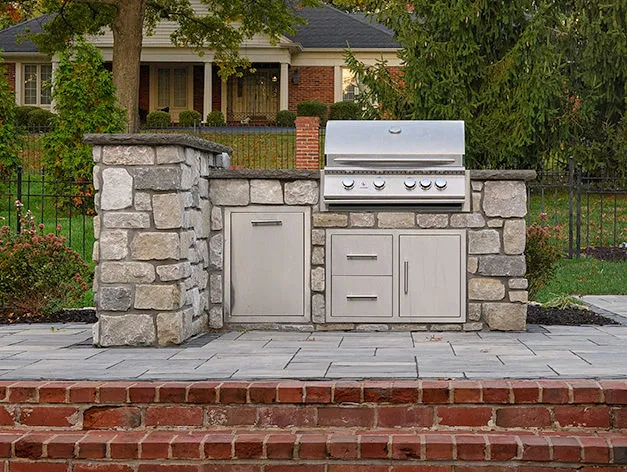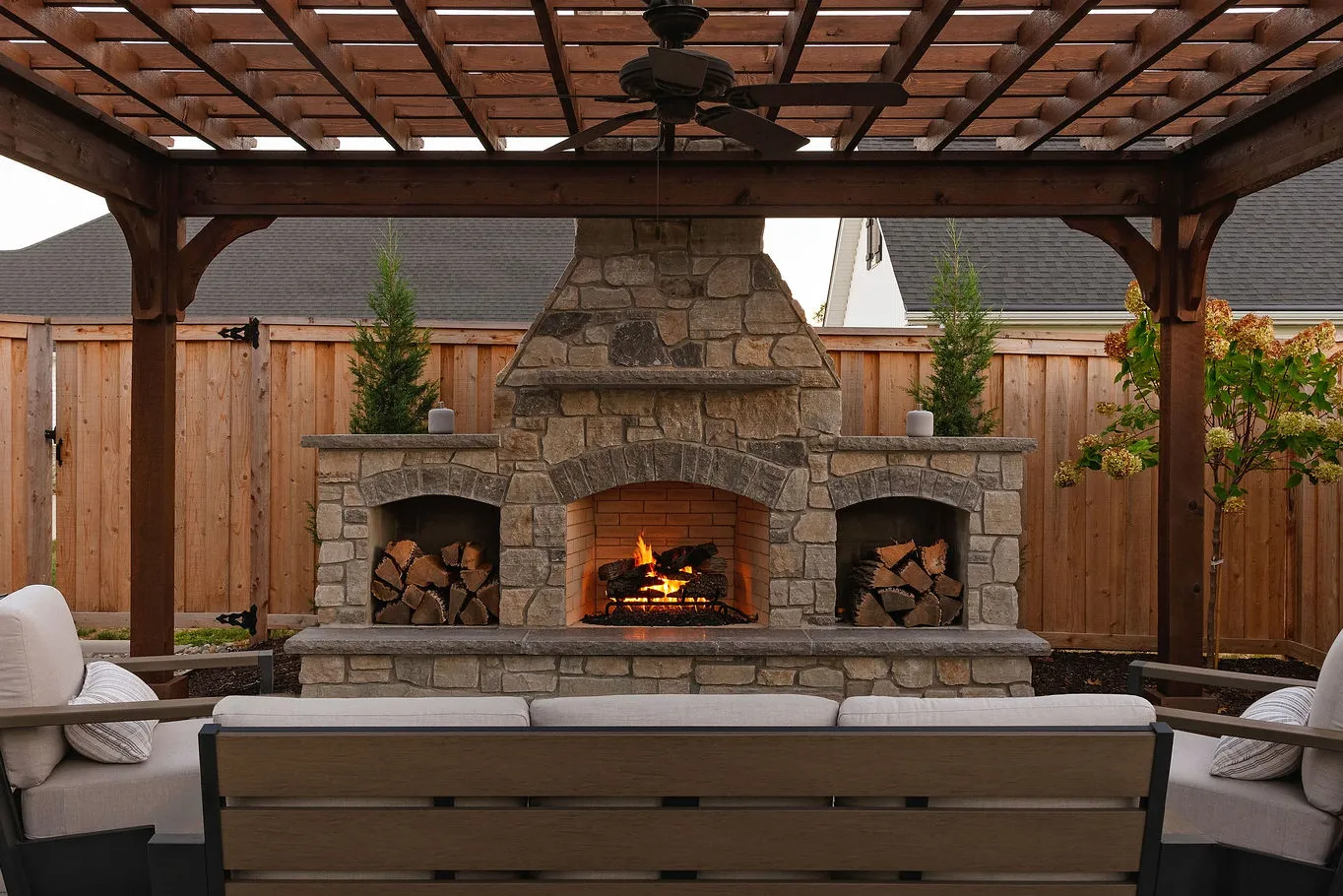

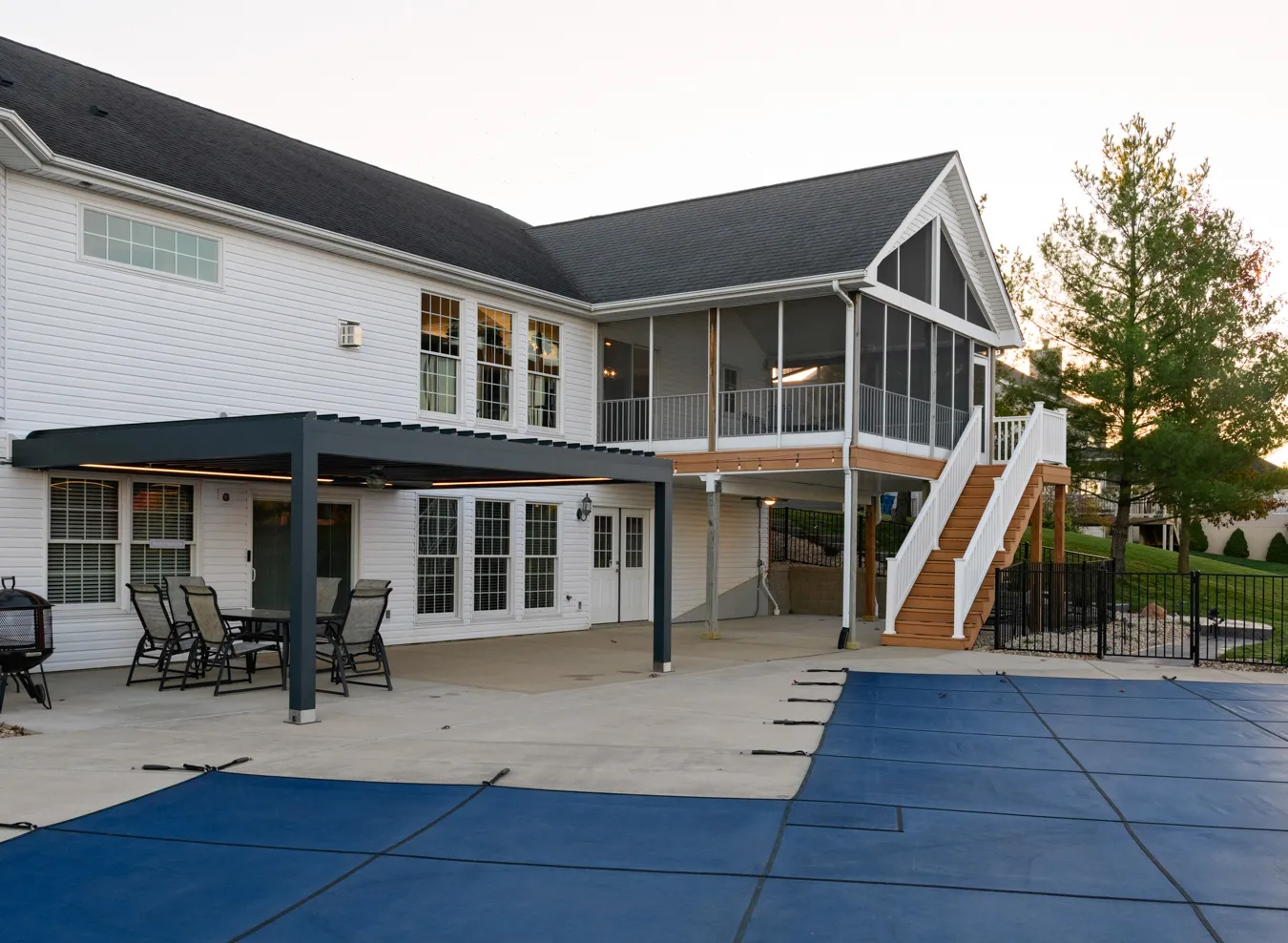
A pergola introduces overhead structure without fully roofing the space. It filters light, adds rhythm and proportion, and creates a defined area within a larger patio.
It’s visually lighter than a pavilion, but still tied into footings and sometimes - the home or an adjacent pavilion. It shapes the space without closing it in.
Our two pergola options are fixed wood pergolas and metal louvered pergolas.
Fixed wood pergolas provide a natural, authentic texture and can be accessorized with ceiling fans, lighting, outlets, canopies on tracks, and side shades. We love connecting these to a pavilion to cover the outdoor ktichen because it lightens the air flow around the grill and give contrast to the pavilions roof.
Metal louvered pergolas use motorized slats that open and close by remote. When closed, the louvers interlock and behave like gutters, directing water away from the space below.
Both types can be freestanding or attached to flat wall surfaces of the home.
Pergolas begin with footing placement. Even though they’re lighter than a pavilion, the posts still sit on concrete piers that are typically 12–16 inches in diameter and 30–34 inches deep to extend below the frost line. Frost movement shows up quickly in a structure like this, so footing depth matters just as much here as it does on larger builds.
Post bases are mounted to the concrete using brackets rather than embedding the wood directly into the footing. That bracket connection allows us to plumb the posts precisely during installation and keeps the base of the wood separated from moisture over time.
For wood pergolas, we typically use cedar. It looks better, feels better in scale, and holds up longer without warping compared to lower-grade materials. Posts, beams, and slats are framed and fastened with structural hardware — not standard deck screws — so the assembly resists uplift and lateral movement. Because pergolas are visually open, alignment matters. Beam straightness, post spacing, and slat layout are set carefully before final fastening.
For metal louvered pergolas, the footing and post anchoring process is similar, but the structure itself is assembled differently. These systems are typically assembled at ground level, lifted into place, and then secured to the installed posts. Precision during layout is critical so the system seats properly once lifted.
Pergolas may look simple, but the details determine whether they feel intentional or improvised. When footings, brackets, and structural connections are handled correctly, the structure stays straight, stable, and visually aligned long after installation.
Most traditional cedar pergolas begin around $18,000–$25,000 for a freestanding structure installed on proper footings and integrated into a patio.
Mid-sized pergolas with larger spans, upgraded lumber, custom staining, or integrated lighting typically range from $25,000–$45,000 depending on footprint and finish level.
Louvered pergolas operate differently. These are engineered aluminum systems with motorized, adjustable roof blades that open and close for sun or rain protection. Most louvered pergolas begin around $45,000–$60,000 and commonly range from $65,000–$110,000+ depending on size, automation features, drainage integration, and electrical requirements.
Primary cost drivers include overall footprint, beam span, post anchoring method, material type (cedar vs. aluminum), integrated lighting or screens, automation components, and whether the structure is freestanding or attached to the home.
Design Considerations
Consider how much shade you actually need, how open or enclosed it should feel, and whether it defines a space or simply softens it.
Common Pairings
Patios, outdoor kitchens, lighting, and privacy planting.
Pricing Factors
Typically $12k–$45k+. Lumber species, attachment method, and added electrical increase range.
Service hero background image only maybe vh67 and since the content overlaps it some making it the level
Similar look where it looks like a page that overlaps the hero some. background black. Contains a left side for a rich text element for the content, a section for service specific FAQ, and on the right side a "at a glance" card with a rich text element. We need to find a way to show projects that feature this service. I added service tags to the portfolio cms.
H1 within the second section. hero only has image. so H1 is still first words on the page.
Rich Text for:
"What is it"
intro description explaining the problems the service solves, situations where it makes sense. Functinoal improvements, clarifies use cases and the value it brings to a space.
"Design Considerations" + Oten paired with
this talks about how its used and design in a space. other elements to consider mixiing this with. typical site constraints, scale etc. Talk about the kinds of materials used.
"How it's built"
talk about what goes into building this element. This could be as simple as describing the trenching for the gas line or complicated as the steps to a pool build. Talk about the the base that makes it last, the framing that gives it shape, and the finishes that make details count. Things like utilities, code restrictions and typical permiting requirements.
"Pricing Factors"
Talk about typical pricing ranges, what conditions affect the price more or less than others. Things that people "think is expensive but isnt" and "what peopled dont think is expensive but is." Scale obviously impacts price but so does installation complexity. talk about what that complexity looks like for each service.
"Service FAQ"
a service specific faq based on the faq cms filtered to the service. include the featured faqs at the end. I plan to have 2-3 featured ones about getting started.
"At A Glance"
floating card on the right
- Considerations: 2-3 sentences about its value, use in designs, and pairings.
- Pricing: 2 ranges with descriptions
- Featured projects: Is there a way to make a mini slider with the project name? Is that too much and just list 3-4 project names with the arrow icon?
- CTA to portfolio & get Started
"Photos of Service"
Condense the current 3 photos into a multi photo
"Related projects"
Some kind of ribon or grid showing related projects. The projects cms have a multi-picklist to tag services used on that project and can be used to filter matching projects here. The challenge