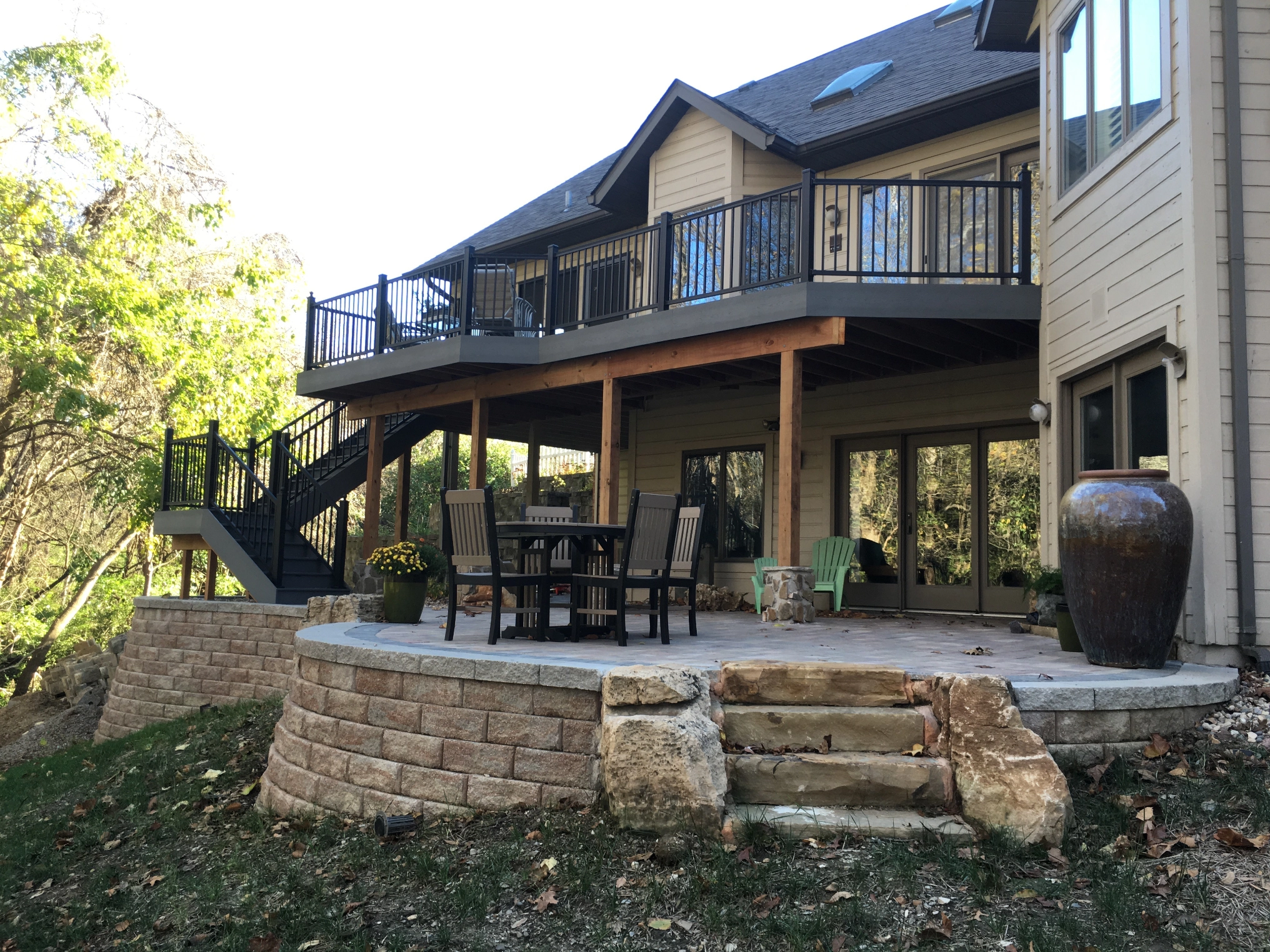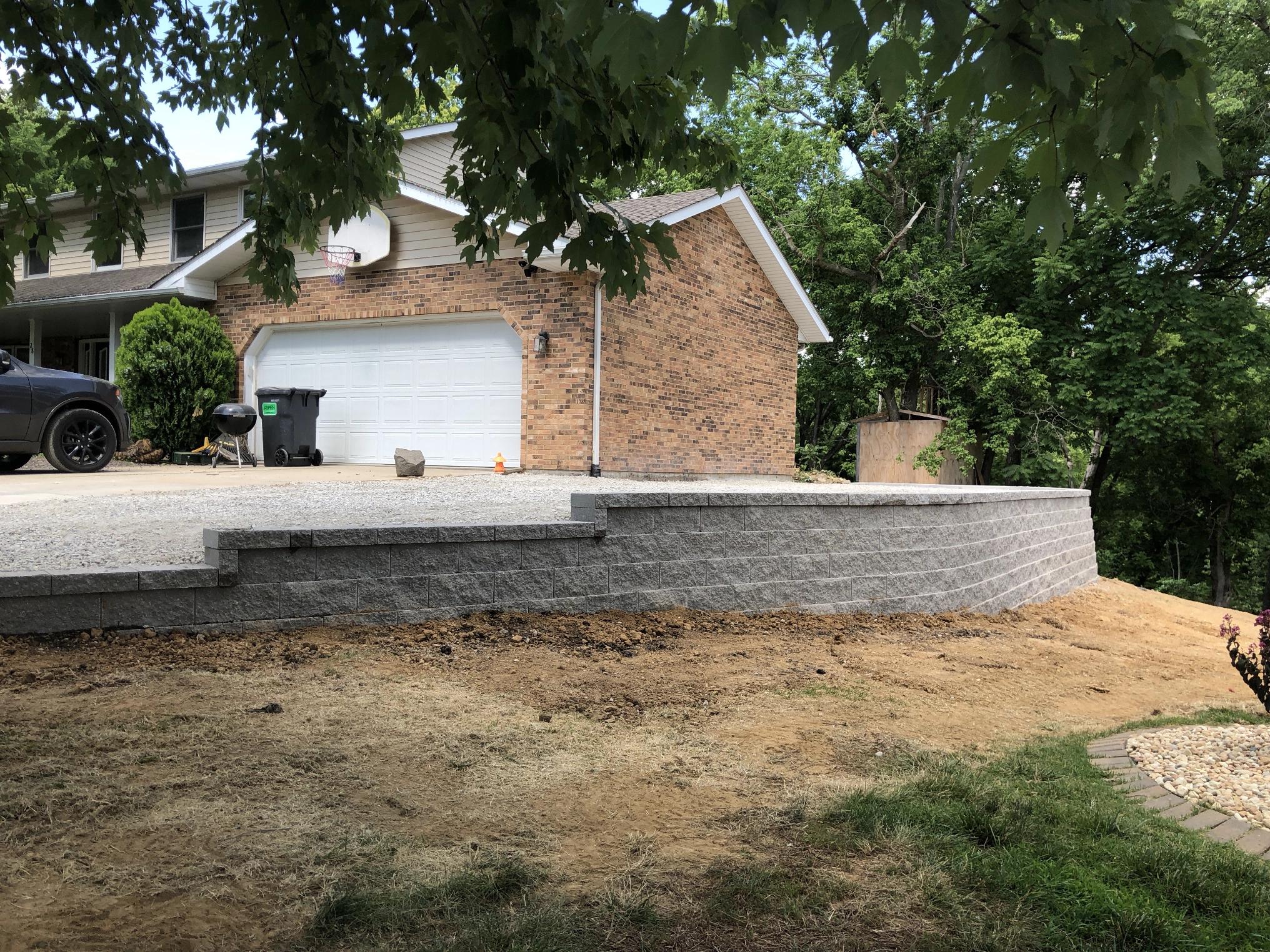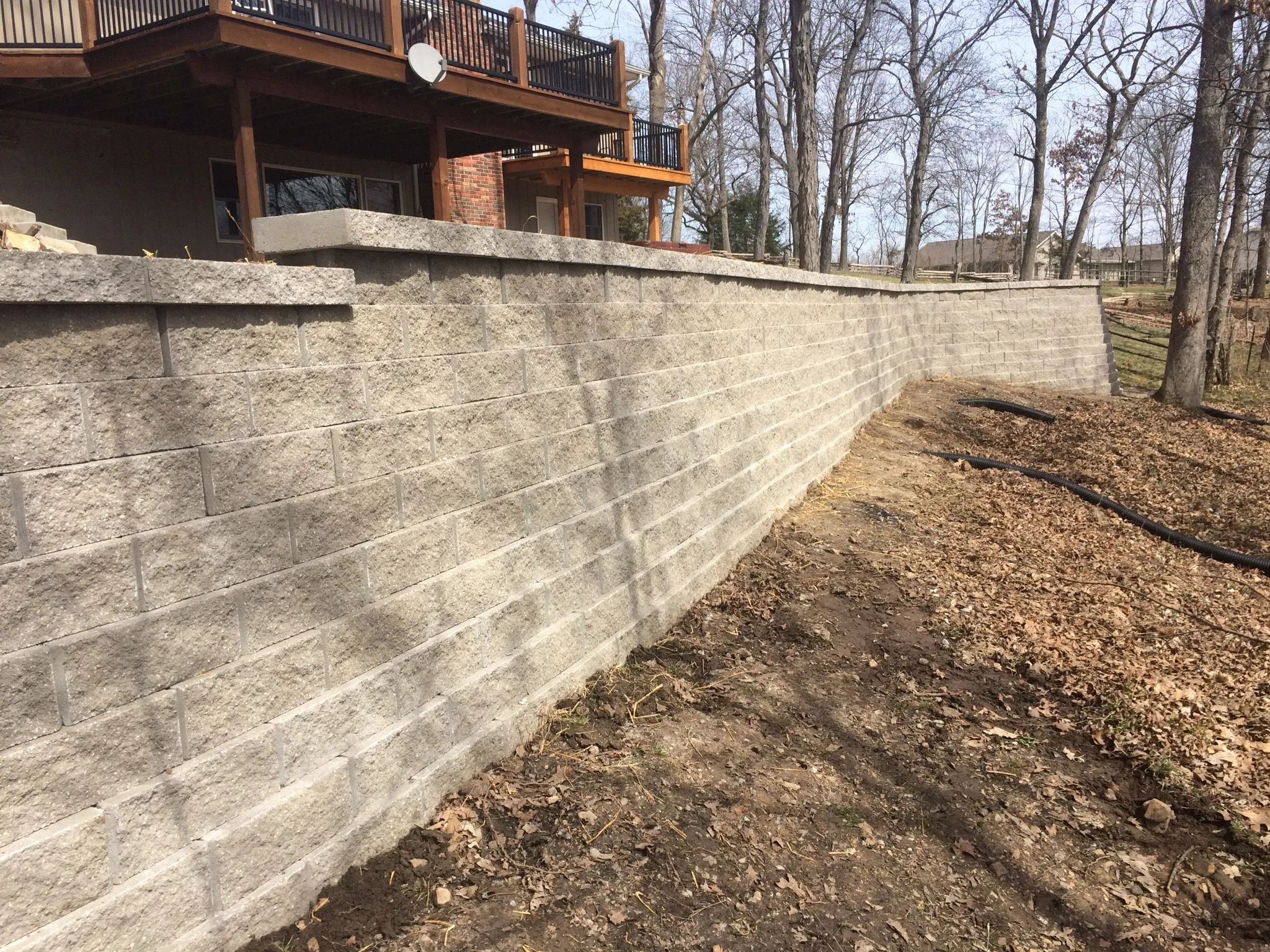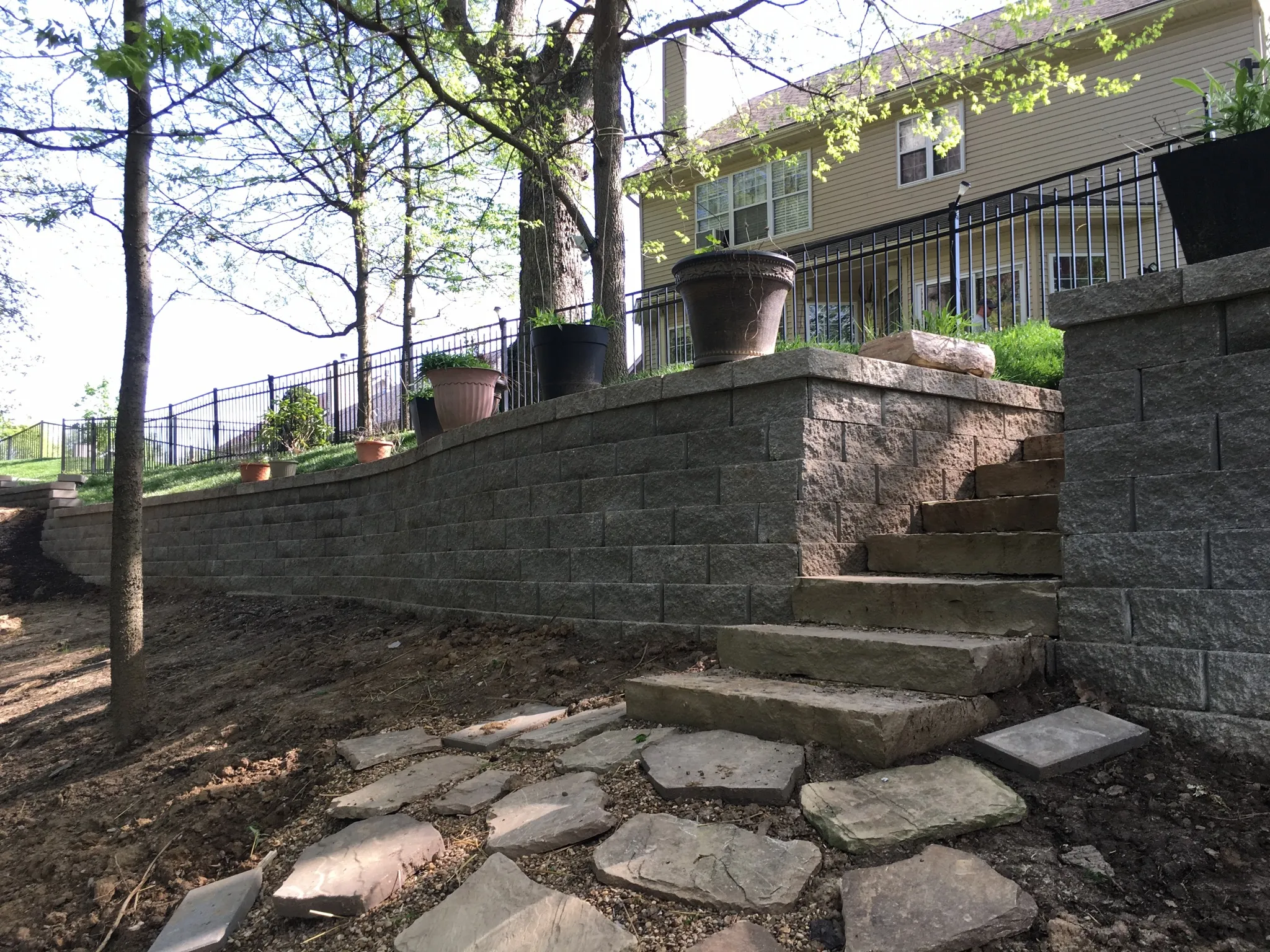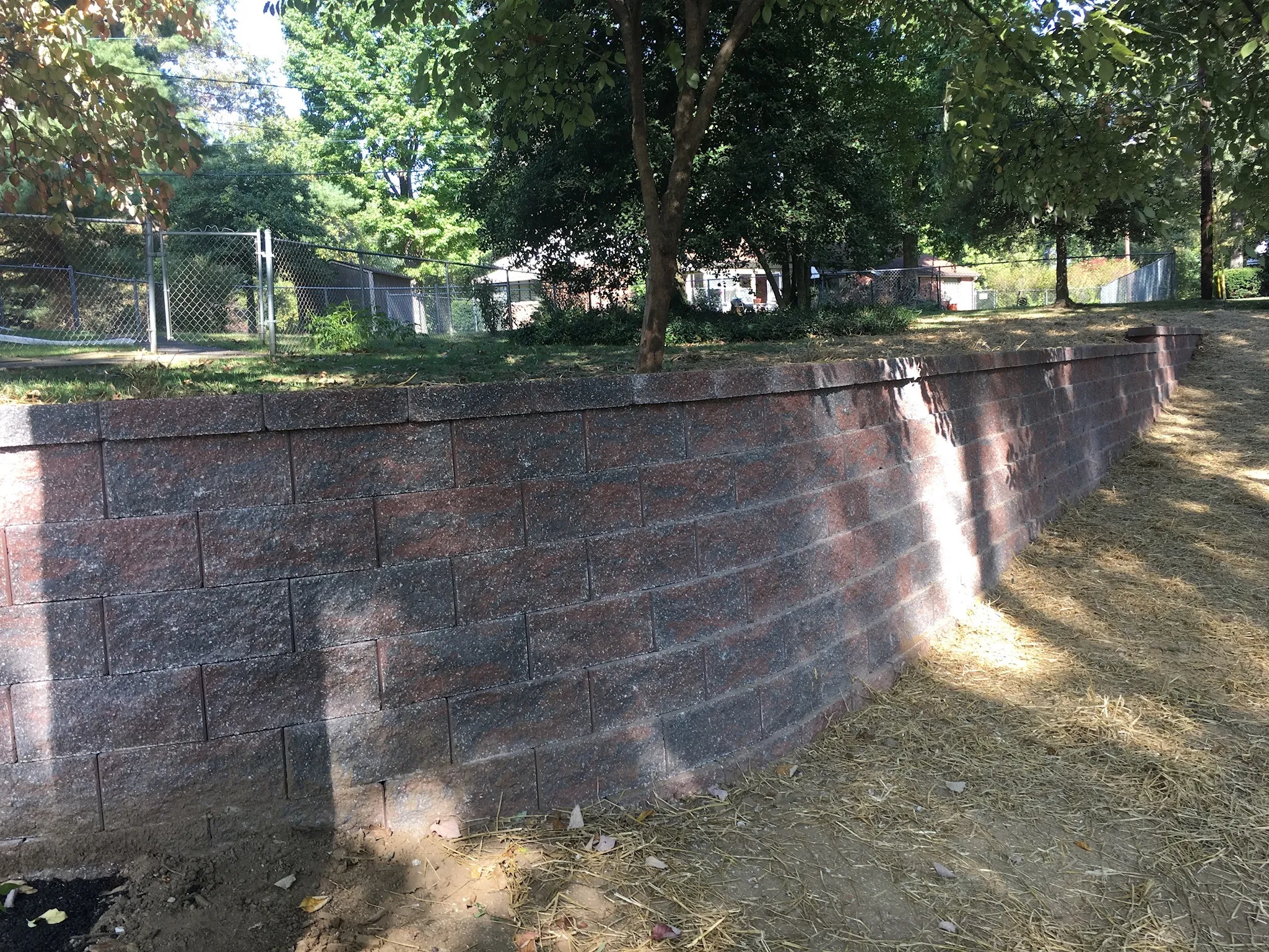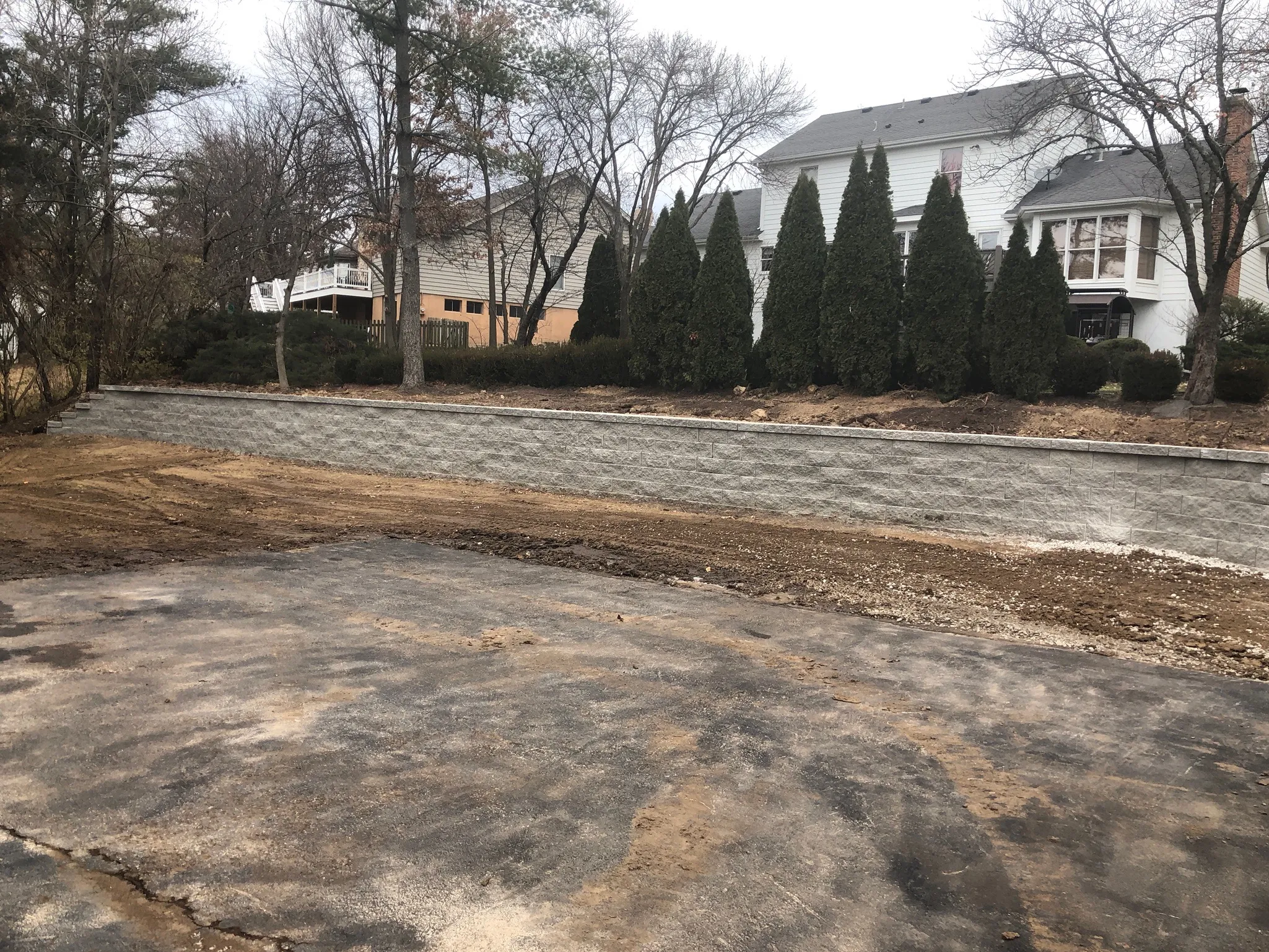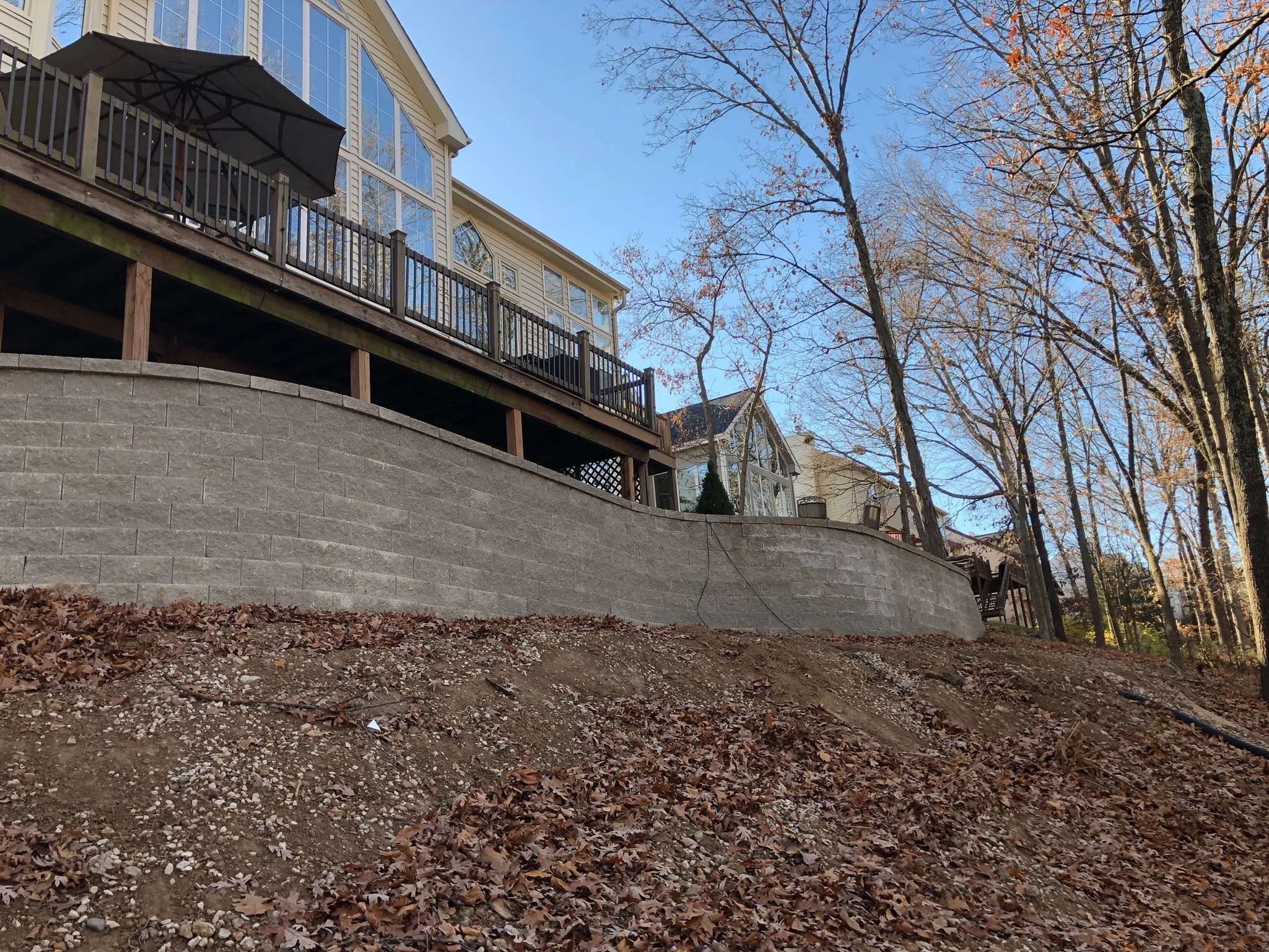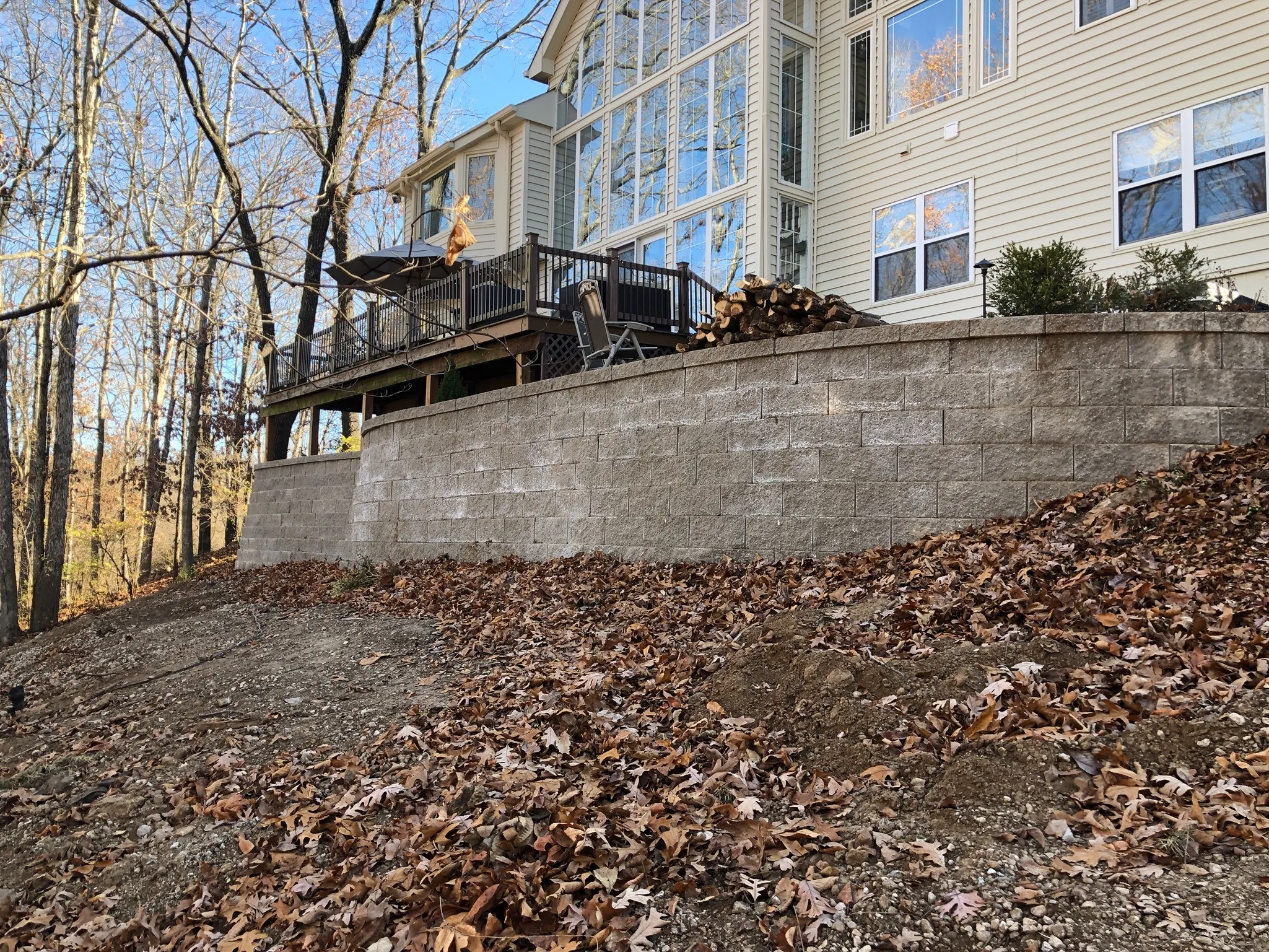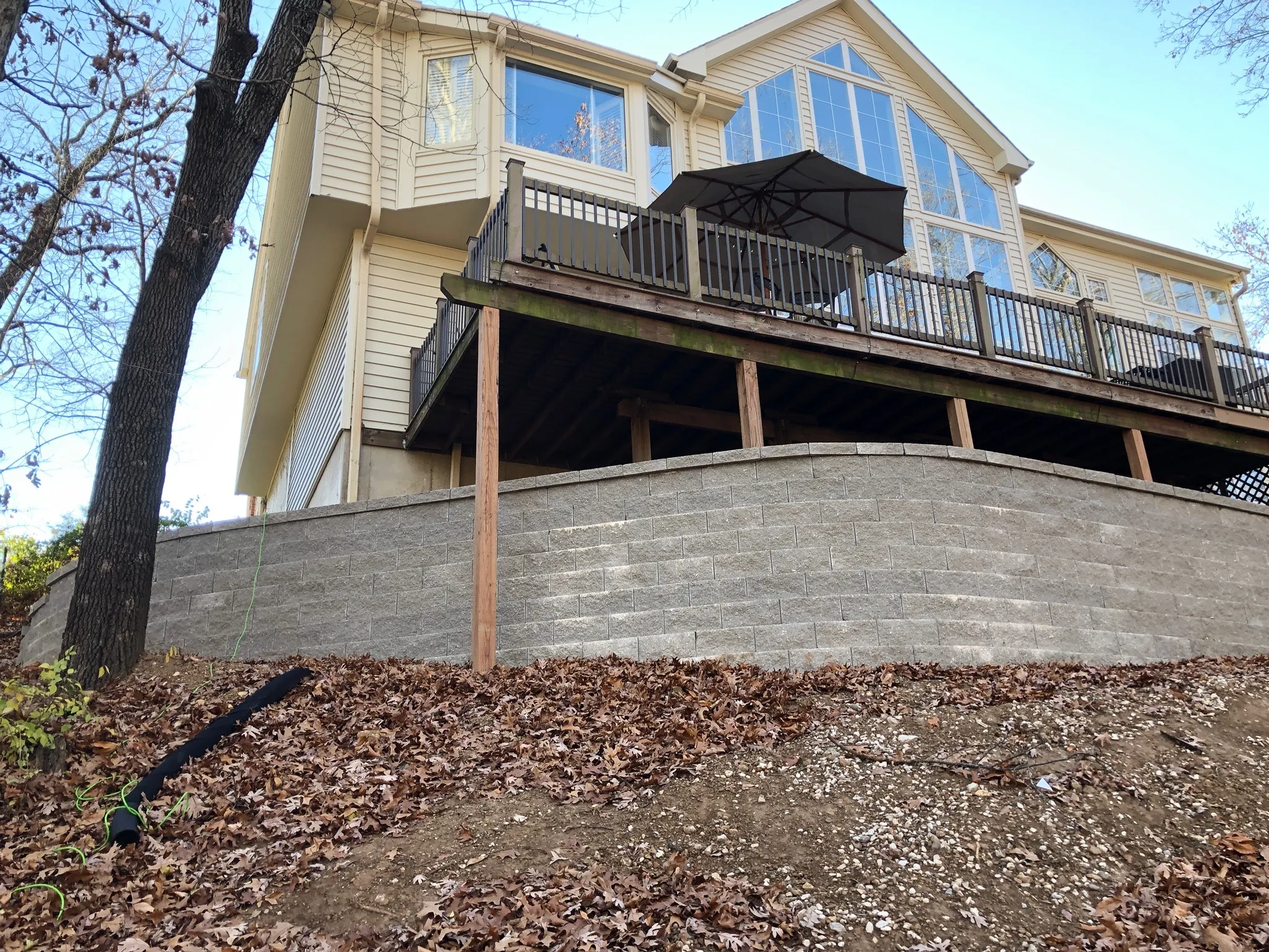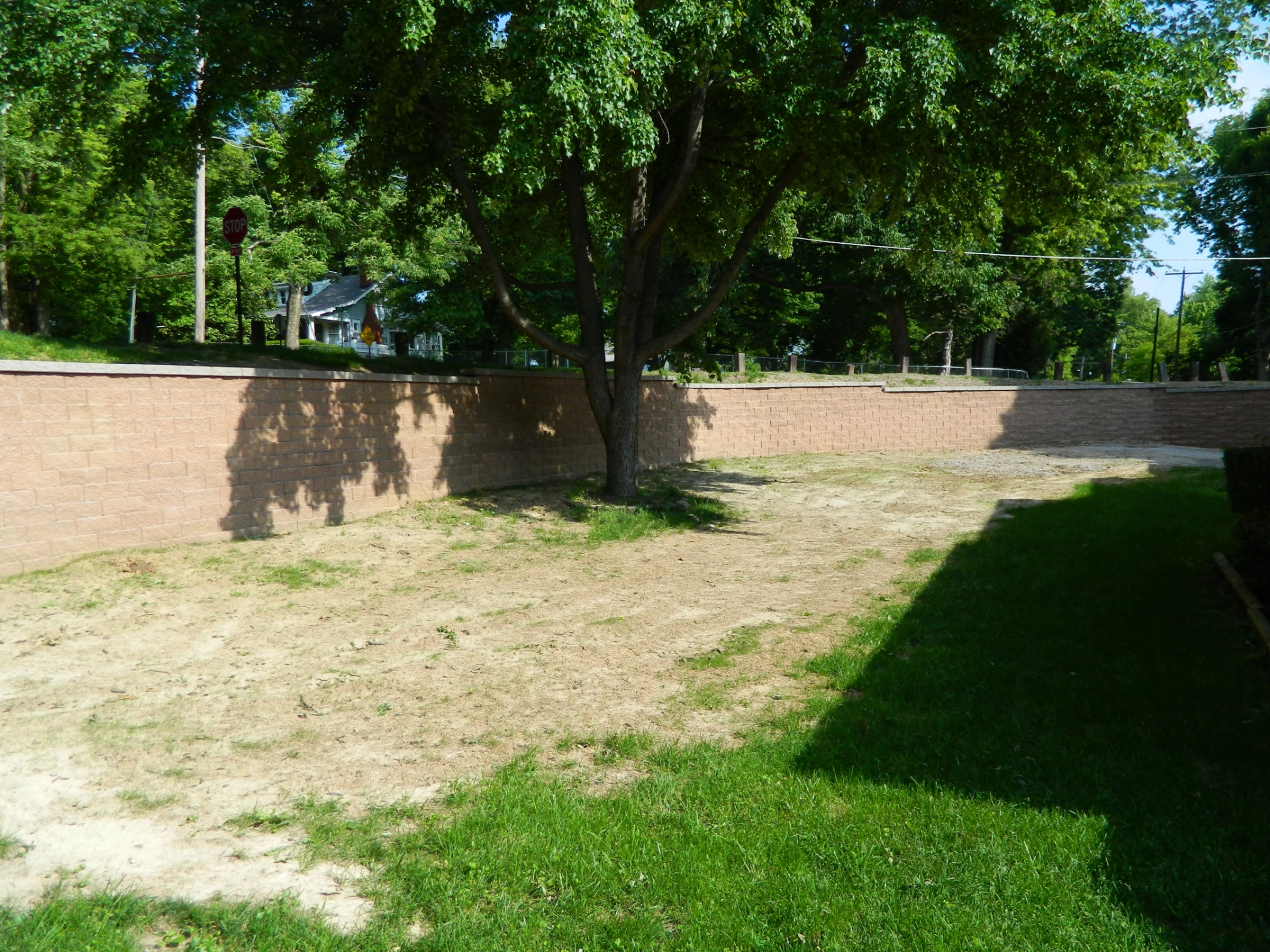

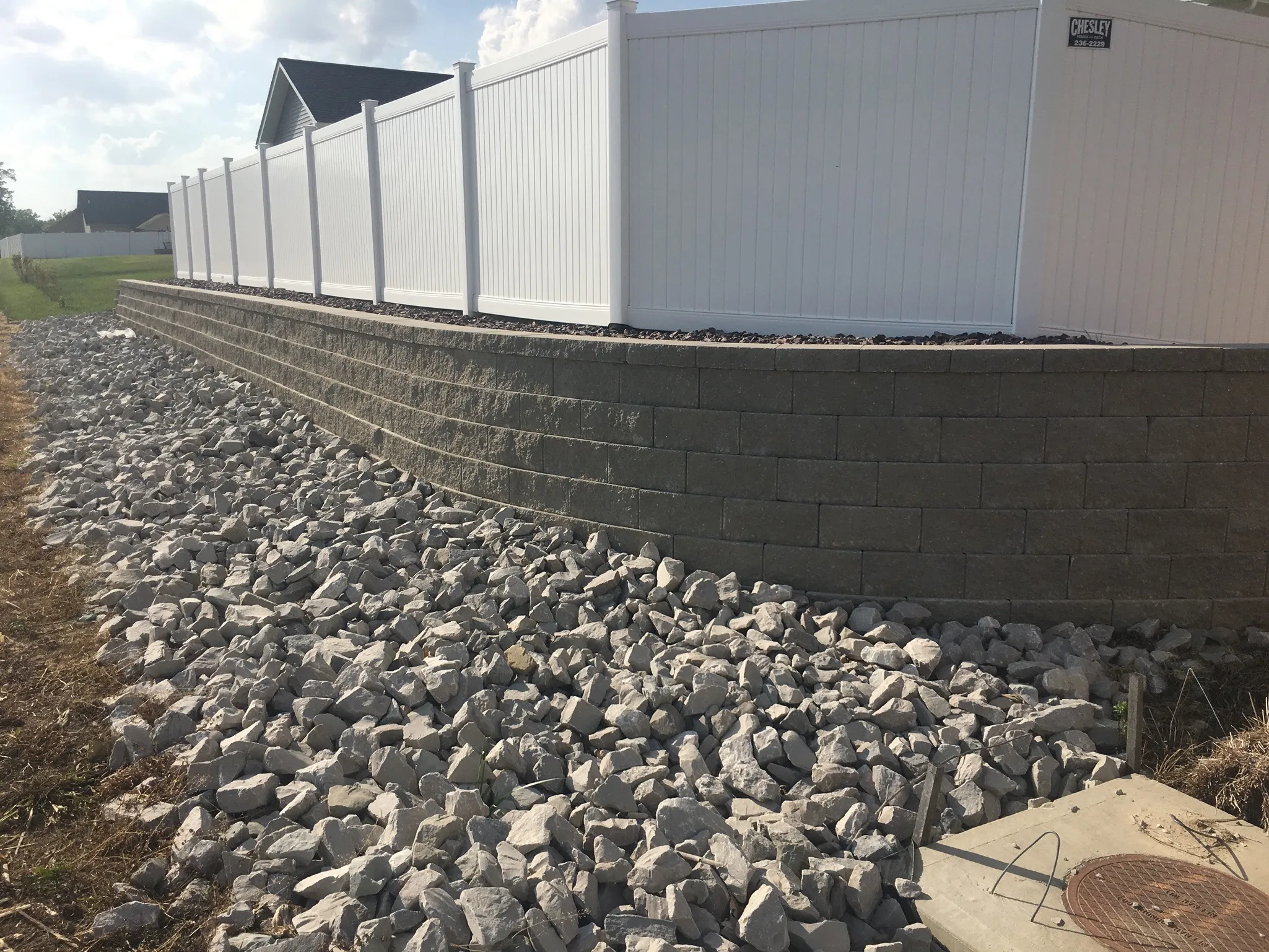
Retaining walls are structural systems that hold back soil and shape elevation. They’re what allow a flat patio to exist where there used to be a slope.
Sometimes they’re small transitions. Sometimes they’re engineered structures managing real load. Either way, they’re not decorative borders. If they fail, the space around them fails too. They affect drainage, grading, and what can be built above or below them.
The first question is load. What is the wall supporting — and how much of it? That determines height, reinforcement, and whether engineering is required.
Then we look at placement. Is it creating usable space above? Supporting a patio edge? Managing drainage behind it? Walls often dictate where stairs land, where lighting gets integrated, and how planting transitions happen.
Visually, the scale has to feel intentional. A wall that’s structurally correct but proportionally wrong still feels off.
Retaining walls begin with excavation and base preparation. For segmental retaining wall (SRW) systems, the wall itself does not extend below the frost line like a poured footing would. Performance depends on proper base prep, reinforcement, and drainage. Most wall failures we see trace back to inadequate base depth or improper backfill — not the block itself.
We excavate and install a compacted aggregate base to create a stable leveling pad before the first course is set. That first row must be perfectly level. Any deviation compounds as the wall rises.
Engineering thresholds vary by municipality. In most St. Louis areas, walls over 4 feet in height require permitting. SRW wall system suppliers provide master plans to meet engineering requirements for walls between 4 feet and 6 feet. 6 feet and up typically require site specific engineering plans. Some examples of varying restrictions: Kirkwood, MO requires a permit for walls at 3 feet and engineering at 4'; walls in Wildwood, MO often require grading permits in addition to the building permit because of the terrain being developed, while Edwardsville, IL follows the International Residential Code (IRC) more literally. The reason isn’t arbitrary — factors such as property encroachment, drainage and terrain influence municipalities' additional requirements.
We follow engineered specifications and construction best practices because retaining walls are structural. They incorporate geogrid reinforcement extending back into the retained soil. The grid ties the wall mass into the surrounding earth, creating a reinforced soil system rather than a freestanding stack of block.
Behind the wall, we install clean ¾” rock backfill — not native soil pushed back into place. That stone creates a drainage column leading down to a perforated drain tile installed at the base of the wall. The drain line is routed to daylight or an approved discharge point. Water pressure is the number one cause of retaining wall failure, so drainage is treated as structural, not optional.
Caps are cut to fit and secured with exterior-rated adhesive. Transitions into patios, steps, or adjacent grade are coordinated so loads are distributed properly and the wall integrates into the broader hardscape system without creating pressure points.
Retaining walls aren’t decorative borders. They’re structural systems. When base prep, reinforcement, and drainage are handled correctly, they quietly hold everything else in place.
Small structural retaining walls typically begin around $15,000–$25,000 depending on height and length.
Mid-sized retaining walls that involve grade transitions, longer runs, or reinforced construction commonly range from $25,000–$60,000 depending on soil conditions and structural requirements.
Larger engineered retaining wall systems — especially those exceeding typical height thresholds, supporting driveways or structures, or requiring geogrid reinforcement and advanced drainage systems — often fall between $60,000–$150,000+ depending on site conditions and engineering scope.
Engineered walls increase in cost not just because of visible height, but because of the volume of excavation, structural aggregate, geogrid reinforcement, drainage components, and backfill effort required behind the wall. A significant portion of the structural investment occurs below grade and isn’t visible once the project is complete.
Primary cost drivers include wall height, total linear footage, soil conditions, reinforcement depth, drainage design, access constraints, and whether engineering or permitting is required.
Design Considerations
Consider how much elevation change needs to be managed, whether it creates usable flat space, and how visible the wall will be from the home.
Common Pairings
Patios, walkways, landscape beds, and stair systems.
Pricing Factors
Typically $10k–$85k+. Height, access, and structural reinforcement drive pricing.
Service hero background image only maybe vh67 and since the content overlaps it some making it the level
Similar look where it looks like a page that overlaps the hero some. background black. Contains a left side for a rich text element for the content, a section for service specific FAQ, and on the right side a "at a glance" card with a rich text element. We need to find a way to show projects that feature this service. I added service tags to the portfolio cms.
H1 within the second section. hero only has image. so H1 is still first words on the page.
Rich Text for:
"What is it"
intro description explaining the problems the service solves, situations where it makes sense. Functinoal improvements, clarifies use cases and the value it brings to a space.
"Design Considerations" + Oten paired with
this talks about how its used and design in a space. other elements to consider mixiing this with. typical site constraints, scale etc. Talk about the kinds of materials used.
"How it's built"
talk about what goes into building this element. This could be as simple as describing the trenching for the gas line or complicated as the steps to a pool build. Talk about the the base that makes it last, the framing that gives it shape, and the finishes that make details count. Things like utilities, code restrictions and typical permiting requirements.
"Pricing Factors"
Talk about typical pricing ranges, what conditions affect the price more or less than others. Things that people "think is expensive but isnt" and "what peopled dont think is expensive but is." Scale obviously impacts price but so does installation complexity. talk about what that complexity looks like for each service.
"Service FAQ"
a service specific faq based on the faq cms filtered to the service. include the featured faqs at the end. I plan to have 2-3 featured ones about getting started.
"At A Glance"
floating card on the right
- Considerations: 2-3 sentences about its value, use in designs, and pairings.
- Pricing: 2 ranges with descriptions
- Featured projects: Is there a way to make a mini slider with the project name? Is that too much and just list 3-4 project names with the arrow icon?
- CTA to portfolio & get Started
"Photos of Service"
Condense the current 3 photos into a multi photo
"Related projects"
Some kind of ribon or grid showing related projects. The projects cms have a multi-picklist to tag services used on that project and can be used to filter matching projects here. The challenge