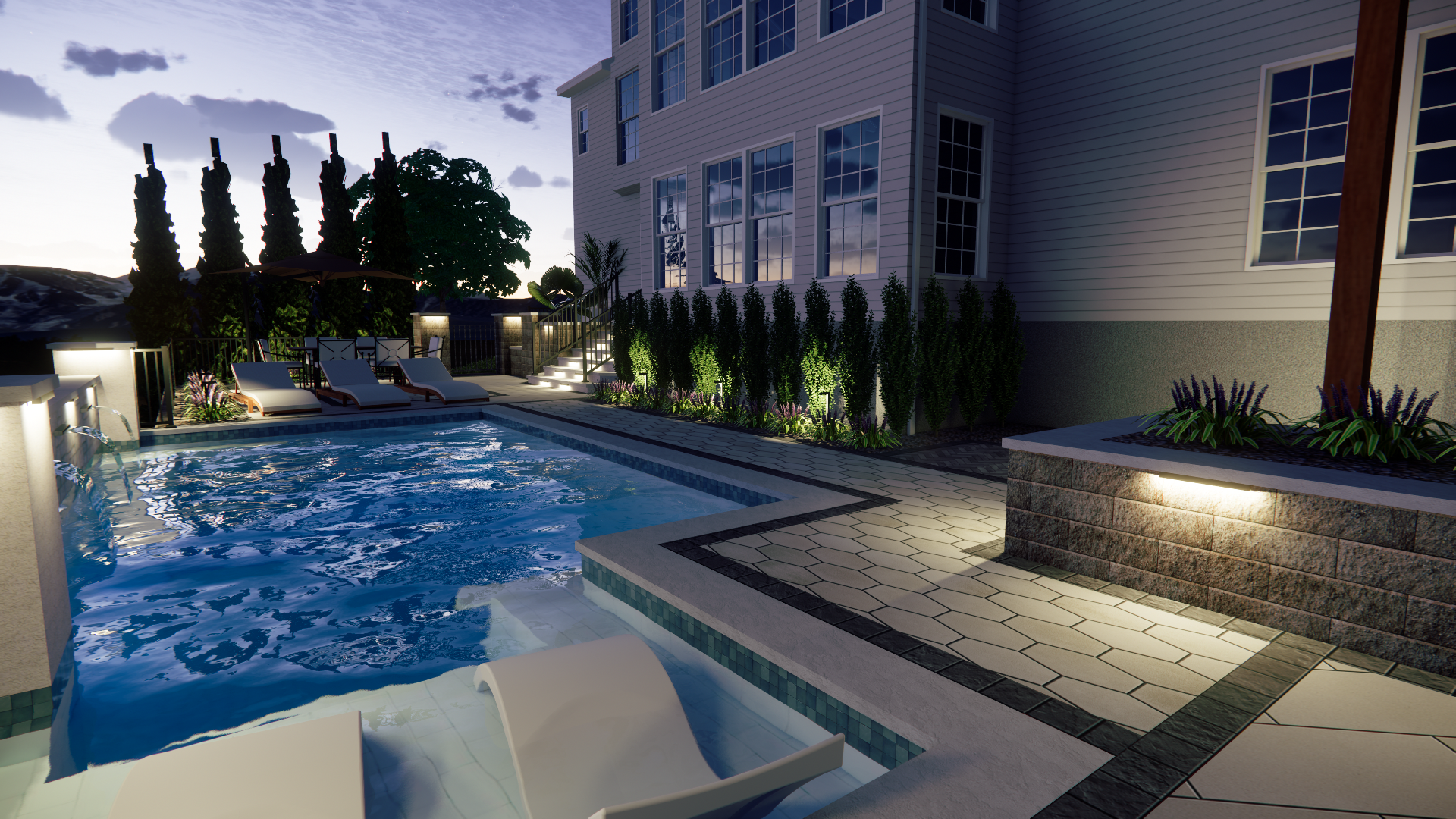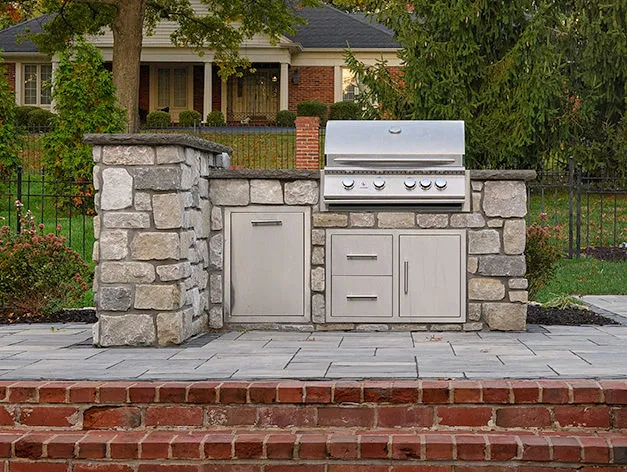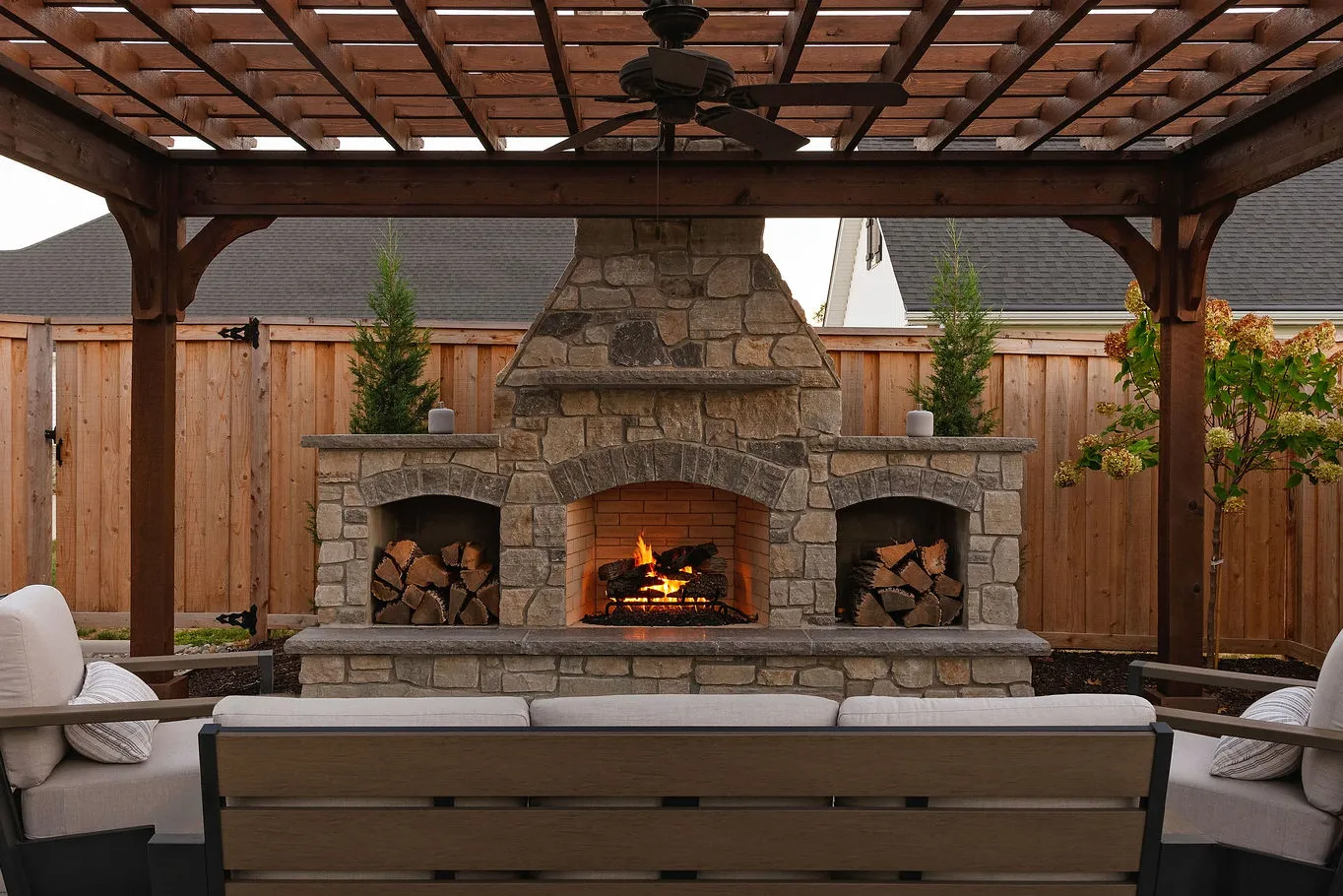

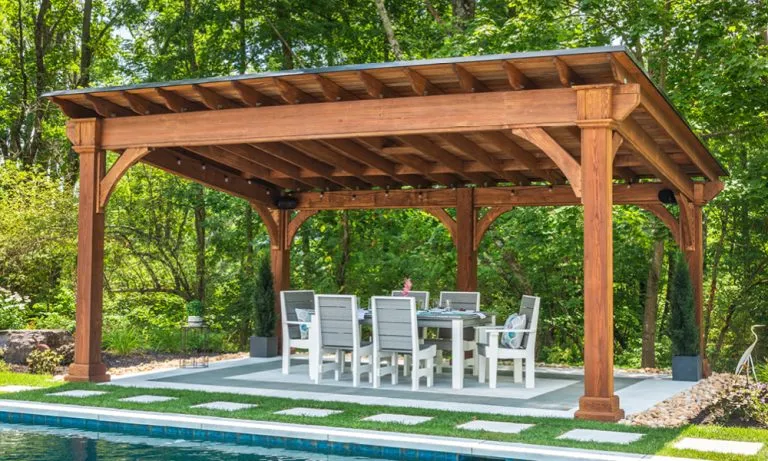
A pavilion is a fully roofed outdoor structure supported by structural posts and anchored to dedicated footings. It provides full shade and weather protection, often incorporating lighting, fans, heaters, or post columns.
It's structural but still a styled build that changes how the patio feels underneath it. The pavilion paths we offer are pre-engineered - a solid mid grade choice - or custom stick built.
The biggest design decision is purpose. Do you want a dedicated covered room, or a structure that anchors the space while still feeling open-air? That choice drives everything that follows — scale, roof style, column layout, even how the patio is shaped beneath it.
We typically offer two paths. Pre-engineered structures are a strong middle ground. They’re high quality — not cheap, and cost-effective when the available styles align with the home. Custom-built pavilions make more sense when the structure needs to complement a unique architectural style or when you want something truly one-of-a-kind. The right answer depends on the house and how permanent you want the statement to feel.
**Important: for as much as we love pre-engineered structures, trying to force fit one to a home with highly defined architecture (like historic districts), not building a custom styled pavilion could be visually jarring. It's expected that custom pavilions go through an Architectural Board Review to ensure that what's designed is fitting and acceptable.
If the pavilion will cover an outdoor kitchen — especially one with a grill or side burner — ventilation has to be addressed early. Covered kitchens often require a vent hood, and that’s best solved in design, not after framing is complete.
Roof height, beam depth, and post spacing affect more than appearance. They influence sight lines from the house, circulation across the patio, and how furniture can realistically be arranged. Where the posts landing matters. How the pavilion meets the patio surface matters.
Pavilions start with layout and footing placement. Each post location is excavated and poured on a concrete pier — typically 16 inches in diameter and 30–34 inches deep in our region to get below the frost line. That depth isn’t optional. If the foundation moves, the structure shows it.
Posts are anchored with anchor bolts using a standoff plate or flange bracket, depending on the build. The goal is a clean, plumb, rigid connection that also keeps the post detail correct at the base over the long haul.
From there, framing depends on whether the pavilion is pre-engineered or custom. Pre-engineered systems often use rough sawn solid members, while custom builds commonly incorporate LVLs (laminated veneer lumber) and treated framing wrapped with cedar or other finishes, based on the design. Hardware, spacing, and member sizing follow the engineered spec when engineering is involved — we build to that, not to “what usually works.”
Roof assembly is highly design-dependent. We typically install roof sheathing and then finish with the selected roofing system — and the ceiling finish can range from standard assemblies to tongue-and-groove when the design calls for it.
If the pavilion ties into the house, flashing and the connection detail matter as much as the visible finish. On masonry homes, that can mean flashing that needs to be tuck-pointed into the mortar joint so water is managed correctly at the wall transition.
And yes — style is a big part of why people choose a pavilion in the first place. Post proportions, beam depth, roof pitch, ceiling finish, and trim detail all shape whether it looks intentional next to the home or like an add-on. The structural build has to be right, but the visual weight has to be right too — that’s what makes it feel like a true outdoor room.
Most pavilion projects begin around $35,000–$50,000 for a properly footed, post-and-beam structure with an asphalt shingle roof and basic ceiling finish.
Mid-sized pavilions that include electrical, recessed lighting, ceiling fans, tongue-and-groove ceilings, or upgraded roofing materials typically range from $55,000–$90,000 depending on size and finish selection.
Larger or more customized pavilion structures — including masonry columns, integrated fireplaces, outdoor kitchens, standing seam metal roofing, or complex rooflines — often fall between $100,000–$175,000+ depending on structural scope and site conditions.
Primary cost drivers include overall footprint, roof structure and material, column type (wood vs. masonry), ceiling finish, electrical integration, and how the pavilion ties into adjacent hardscape and grade.
Design Considerations
Consider how much weather protection you want, how tall it should feel, and whether it anchors the space or blends into the yard.
Common Pairings
Outdoor kitchens, fireplaces, patios, and ceiling heaters or fans.
Pricing Factors
Typically $30k–$120k+. Engineering, roofing material, and tie-ins to the home influence cost.
Service hero background image only maybe vh67 and since the content overlaps it some making it the level
Similar look where it looks like a page that overlaps the hero some. background black. Contains a left side for a rich text element for the content, a section for service specific FAQ, and on the right side a "at a glance" card with a rich text element. We need to find a way to show projects that feature this service. I added service tags to the portfolio cms.
H1 within the second section. hero only has image. so H1 is still first words on the page.
Rich Text for:
"What is it"
intro description explaining the problems the service solves, situations where it makes sense. Functinoal improvements, clarifies use cases and the value it brings to a space.
"Design Considerations" + Oten paired with
this talks about how its used and design in a space. other elements to consider mixiing this with. typical site constraints, scale etc. Talk about the kinds of materials used.
"How it's built"
talk about what goes into building this element. This could be as simple as describing the trenching for the gas line or complicated as the steps to a pool build. Talk about the the base that makes it last, the framing that gives it shape, and the finishes that make details count. Things like utilities, code restrictions and typical permiting requirements.
"Pricing Factors"
Talk about typical pricing ranges, what conditions affect the price more or less than others. Things that people "think is expensive but isnt" and "what peopled dont think is expensive but is." Scale obviously impacts price but so does installation complexity. talk about what that complexity looks like for each service.
"Service FAQ"
a service specific faq based on the faq cms filtered to the service. include the featured faqs at the end. I plan to have 2-3 featured ones about getting started.
"At A Glance"
floating card on the right
- Considerations: 2-3 sentences about its value, use in designs, and pairings.
- Pricing: 2 ranges with descriptions
- Featured projects: Is there a way to make a mini slider with the project name? Is that too much and just list 3-4 project names with the arrow icon?
- CTA to portfolio & get Started
"Photos of Service"
Condense the current 3 photos into a multi photo
"Related projects"
Some kind of ribon or grid showing related projects. The projects cms have a multi-picklist to tag services used on that project and can be used to filter matching projects here. The challenge