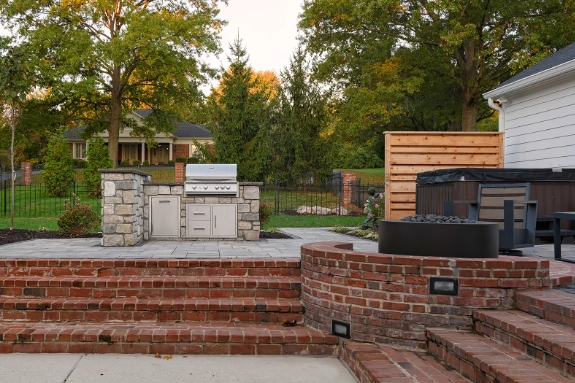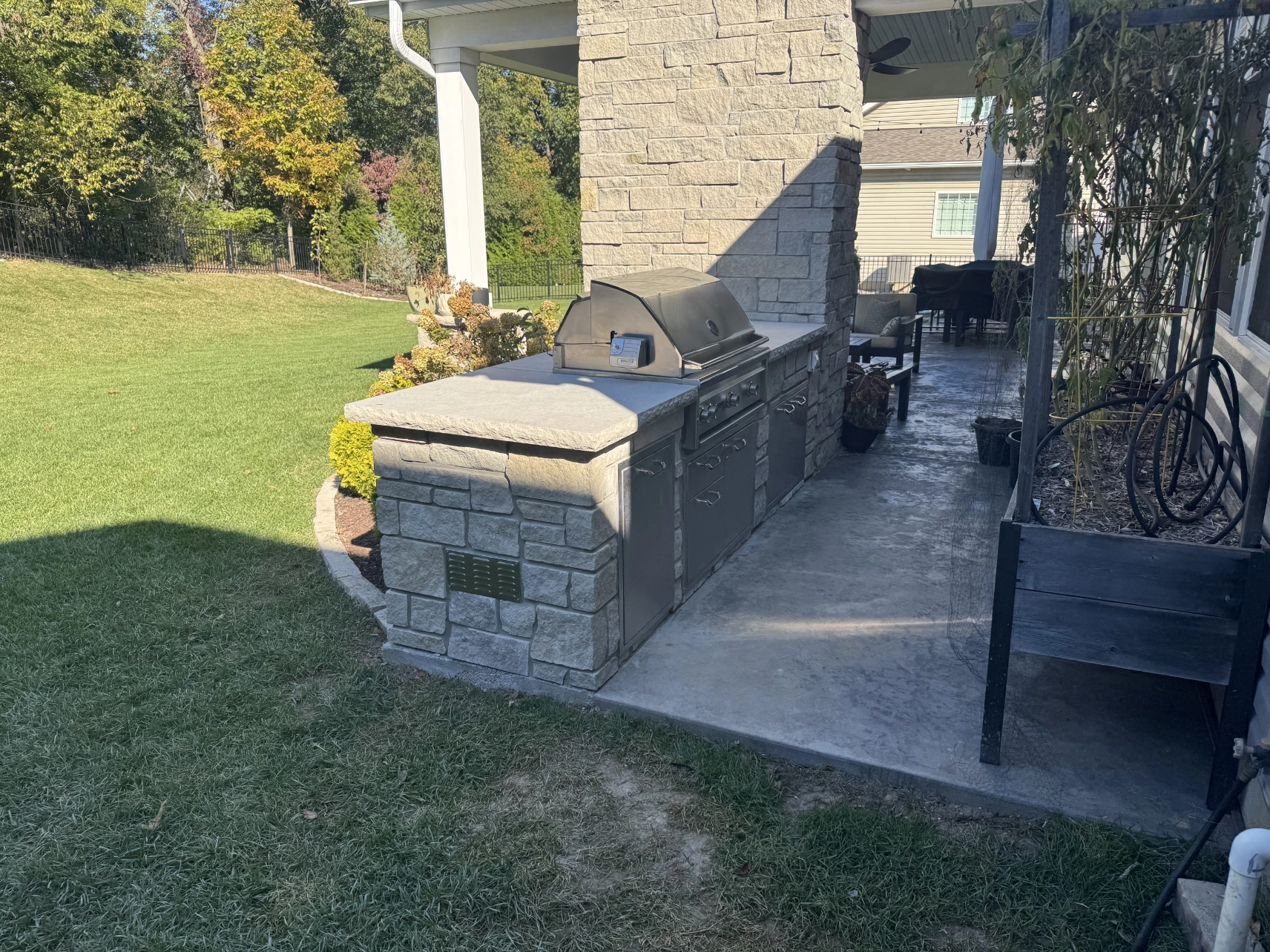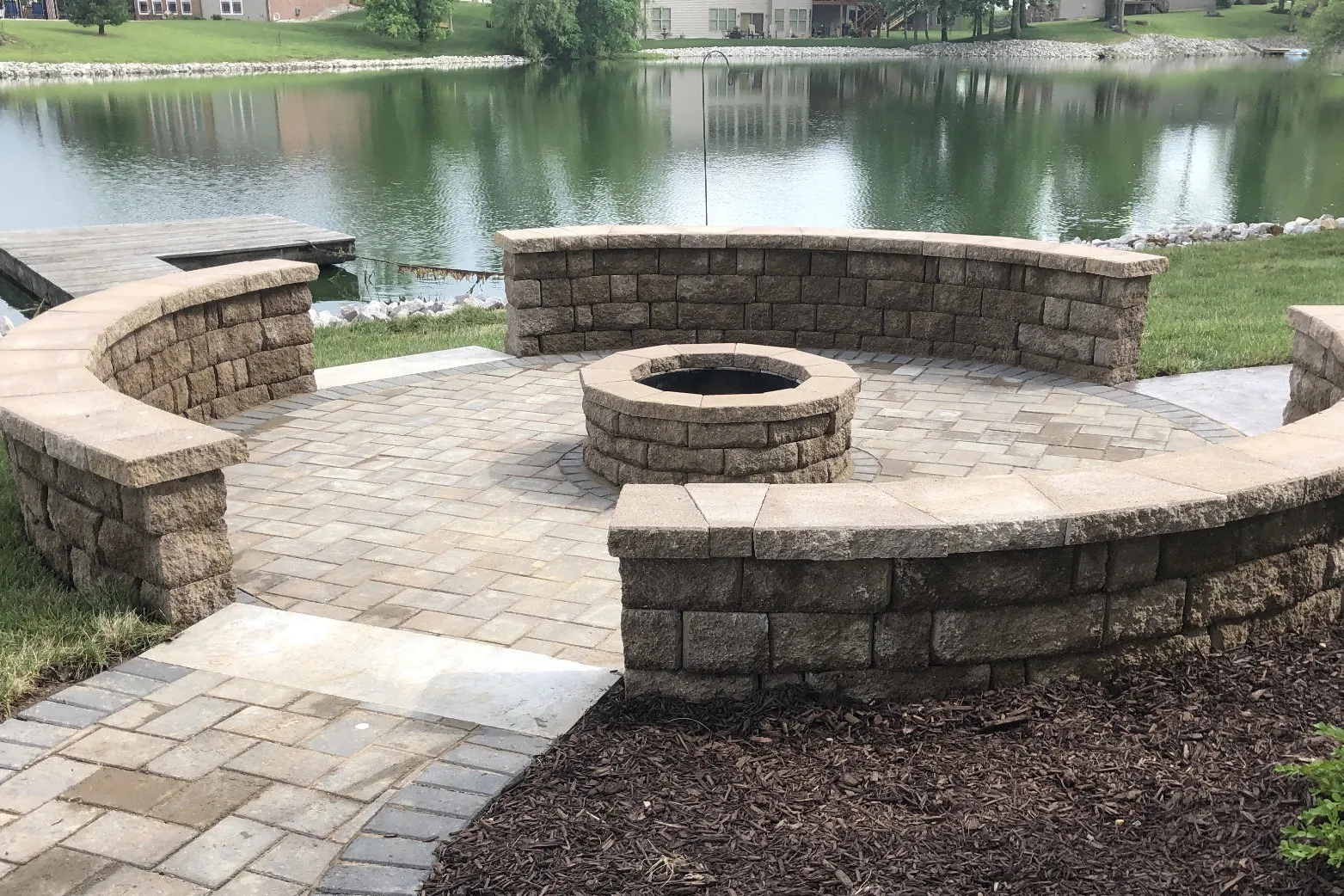

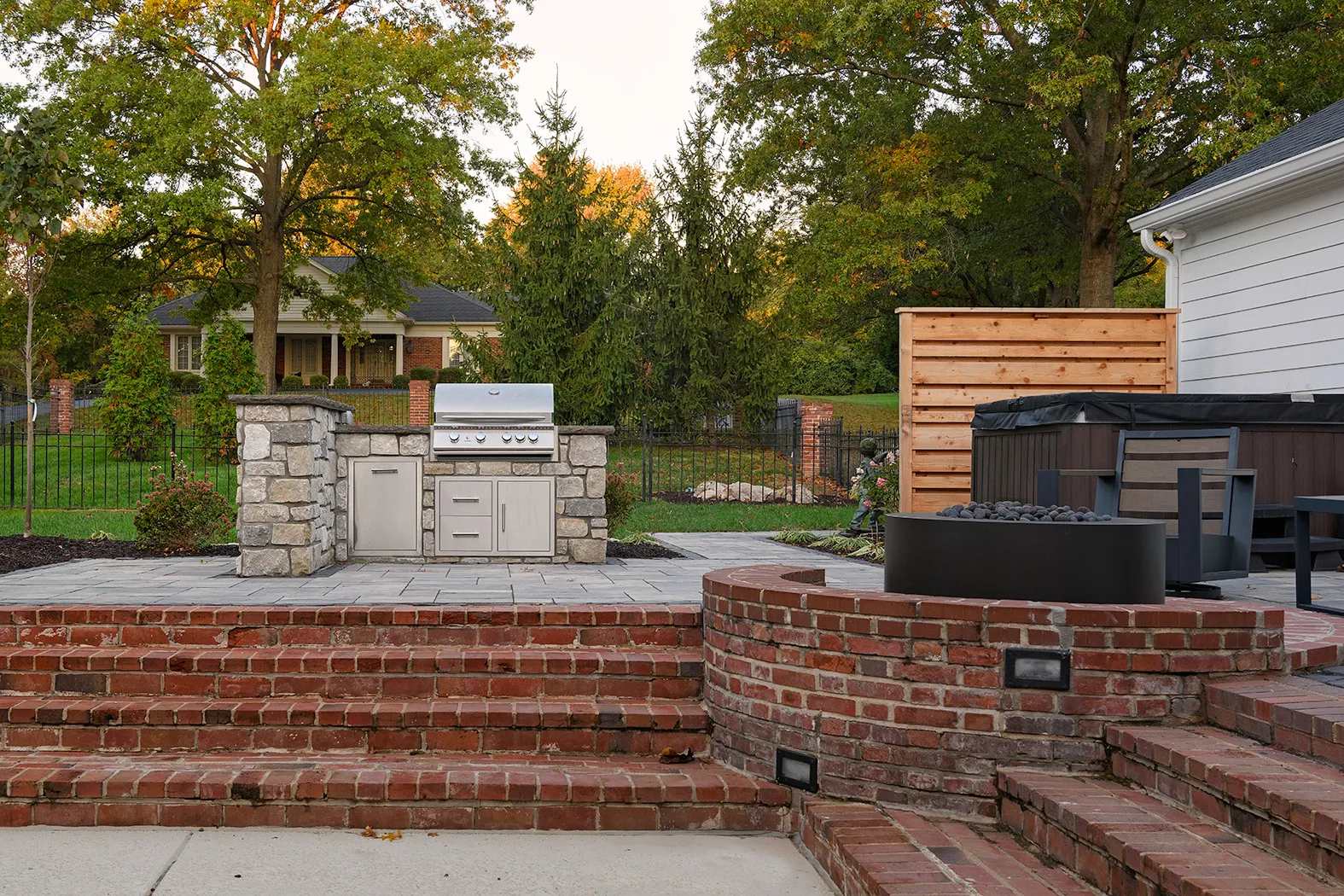
An outdoor kitchen is a built-in cooking and prep space integrated into the hardscape. It can be as simple as a grill island — or a full setup with refrigeration, storage, sink, gas, and power.
It’s not just about the appliance. Once you build one, utilities, ventilation, traffic flow, and seating all start to matter in a different way. It becomes part of the layout, not an accessory.
The layout starts with function. Grill location, prep space, traffic flow, and seating all need to work without people bumping into each other. The relationship between prep space, cooking surface, and serving or seating areas should feel intuitive and efficient.
Distance from the indoor kitchen affects daily usability. Shelter, wind direction, and ventilation influence appliance placement—especially when the kitchen is paired with a pavilion or pergola.
Most outdoor kitchens perform best as part of a larger plan. During our design engagement, we study circulation, sight lines, and how the kitchen integrates with the patio and adjacent features.
Outdoor kitchens start with structure and footing. We frame these much like a house—treated lumber framing set on dedicated concrete footings—so the kitchen has a stable base that can carry stone, countertops, appliances, and long-term use without shifting. If the kitchen is going on an existing patio slab, we evaluate it carefully. Outdoor kitchens add real mass, and finish materials can crack a slab that wasn’t built for that kind of load.
Once the footprint is set, utilities are planned around the appliances. Most outdoor kitchens include a gas line for the grill. Gas is run underground and brought up inside the kitchen structure at a protected location for connection. Electrical is handled with exterior-rated materials and GFCI-protected circuits with weatherproof outlet coverings. If the grill has lighting or a rotisserie, it needs power—so that gets planned up front instead of treated like an afterthought.
If there’s a sink, we typically run a single cold water line and install an instant water heater under the sink, unless the kitchen is directly against the house and can tie into existing hot water. Drainage is routed legally: either tying back into the home’s plumbing when feasible or connecting to the sewer cleanout. Draining an outdoor sink into the yard isn’t legal, and we don’t treat it as an option.
If the kitchen is under a pavilion or other cover, ventilation and clearances get addressed early. Grills and burners have clearance requirements to combustibles, and if there’s a roof that will capture smoke, a vent hood becomes necessary. That’s a design decision, not something you want to discover after framing and finishes are in place.
Countertops sit directly on the framing. That’s why alignment and structure matter before any veneer or tops go on. Once things are wrapped and finished, access disappears—so the sequencing has to be right from the start.
Most outdoor kitchens begin around $22,000. Mid-sized kitchens (counter with bar ledge or L-Shapes) typically range from $30,000–$55,000. Larger, fully integrated kitchens can reach $75,000–$95,000+ depending on appliance selection and infrastructure.
Primary cost drivers include length and configuration, appliance quality, utility distance, and countertop materials.
Design Considerations
Consider where smoke and heat will travel, how close it should sit to the house, and whether it feels like an extension of the patio or its own destination.
Common Pairings
Patios, pavilions, pergolas, fireplaces, and landscape lighting.
Pricing Factors
Typically $25k–$90k+. Appliance selection, utilities, structure, and finish materials determine scope.
Service hero background image only maybe vh67 and since the content overlaps it some making it the level
Similar look where it looks like a page that overlaps the hero some. background black. Contains a left side for a rich text element for the content, a section for service specific FAQ, and on the right side a "at a glance" card with a rich text element. We need to find a way to show projects that feature this service. I added service tags to the portfolio cms.
H1 within the second section. hero only has image. so H1 is still first words on the page.
Rich Text for:
"What is it"
intro description explaining the problems the service solves, situations where it makes sense. Functinoal improvements, clarifies use cases and the value it brings to a space.
"Design Considerations" + Oten paired with
this talks about how its used and design in a space. other elements to consider mixiing this with. typical site constraints, scale etc. Talk about the kinds of materials used.
"How it's built"
talk about what goes into building this element. This could be as simple as describing the trenching for the gas line or complicated as the steps to a pool build. Talk about the the base that makes it last, the framing that gives it shape, and the finishes that make details count. Things like utilities, code restrictions and typical permiting requirements.
"Pricing Factors"
Talk about typical pricing ranges, what conditions affect the price more or less than others. Things that people "think is expensive but isnt" and "what peopled dont think is expensive but is." Scale obviously impacts price but so does installation complexity. talk about what that complexity looks like for each service.
"Service FAQ"
a service specific faq based on the faq cms filtered to the service. include the featured faqs at the end. I plan to have 2-3 featured ones about getting started.
"At A Glance"
floating card on the right
- Considerations: 2-3 sentences about its value, use in designs, and pairings.
- Pricing: 2 ranges with descriptions
- Featured projects: Is there a way to make a mini slider with the project name? Is that too much and just list 3-4 project names with the arrow icon?
- CTA to portfolio & get Started
"Photos of Service"
Condense the current 3 photos into a multi photo
"Related projects"
Some kind of ribon or grid showing related projects. The projects cms have a multi-picklist to tag services used on that project and can be used to filter matching projects here. The challenge