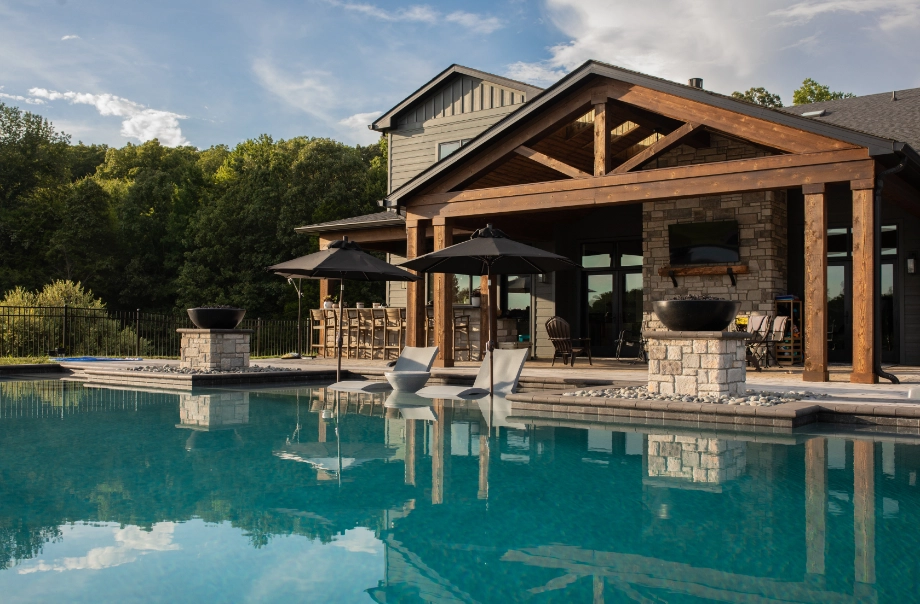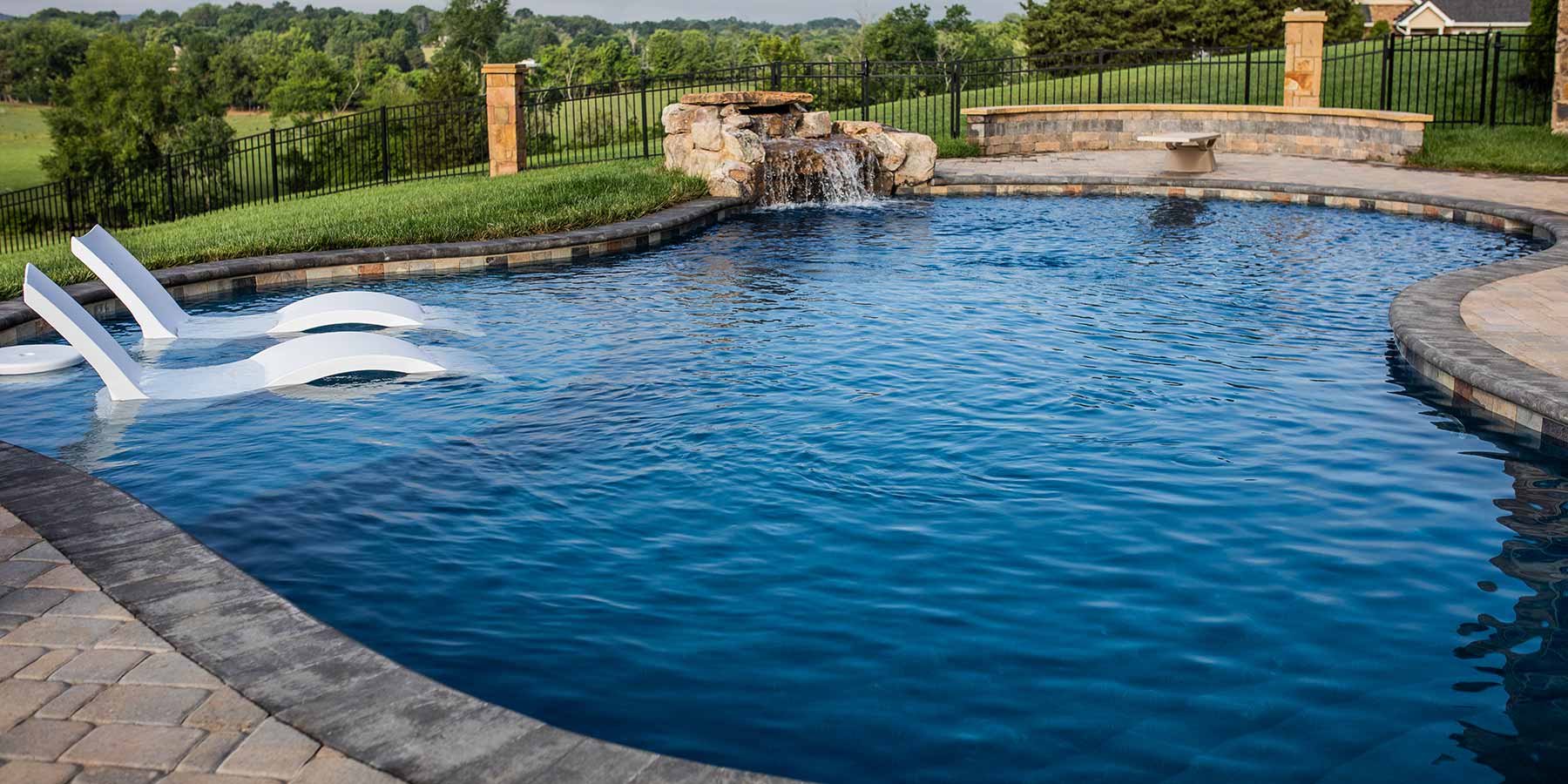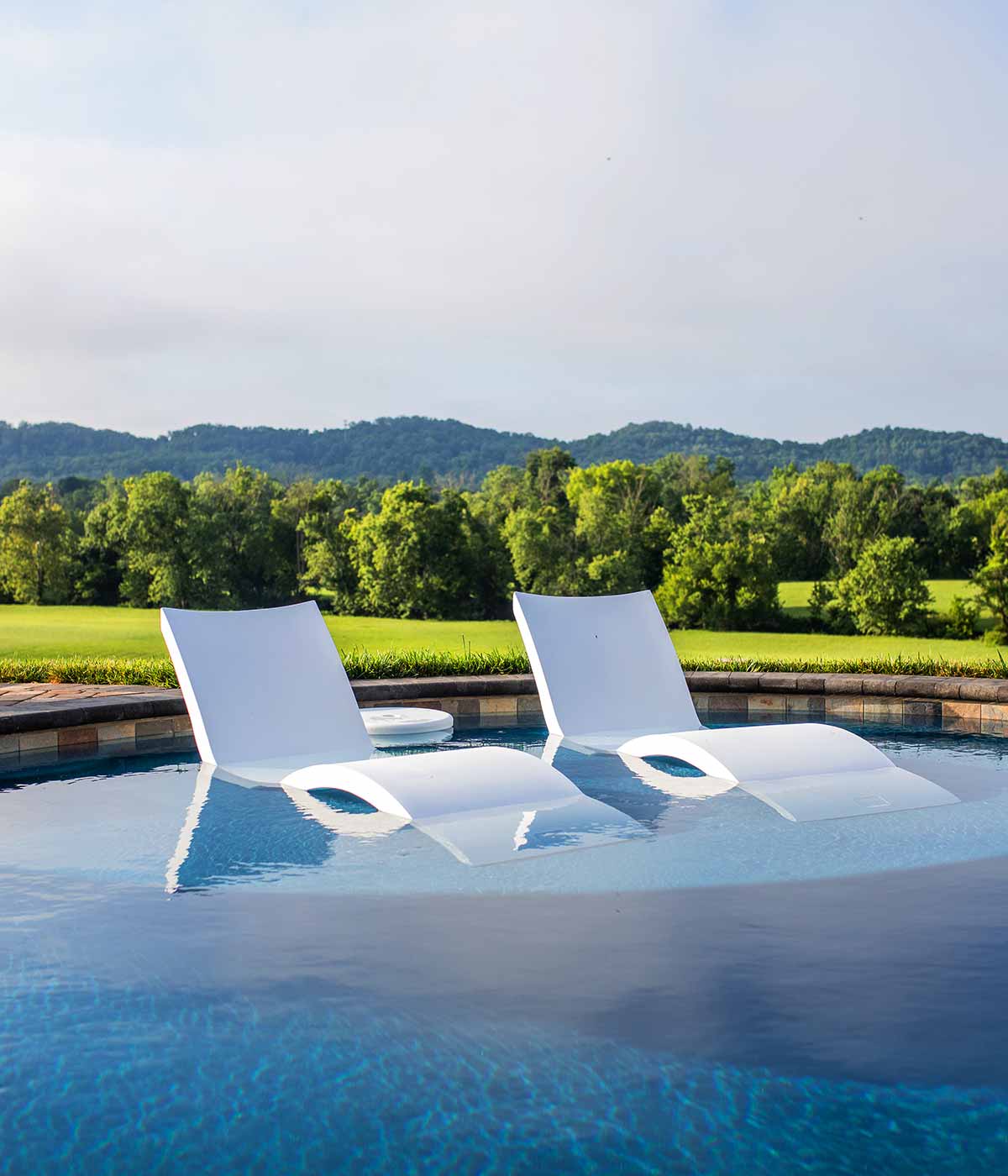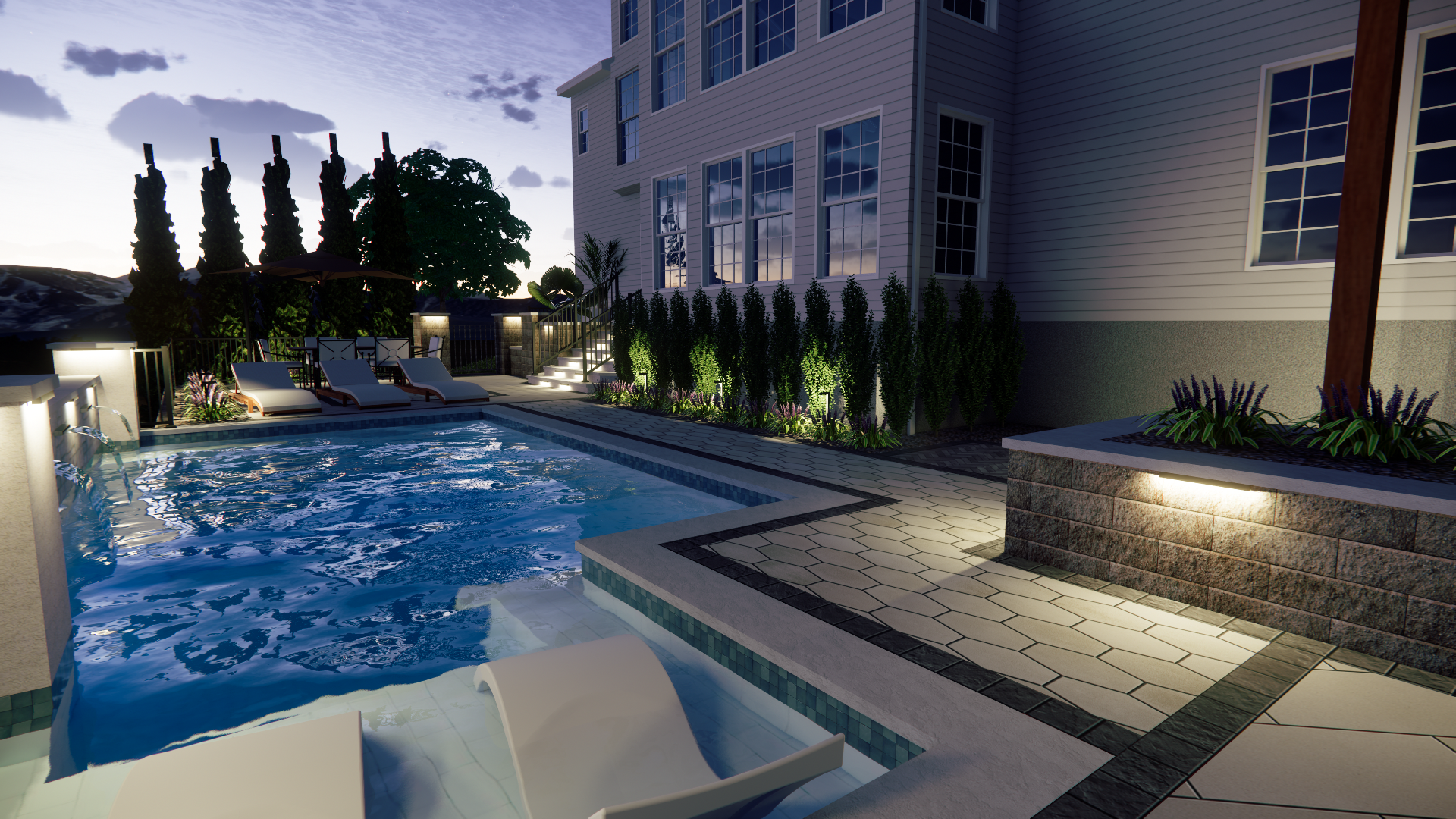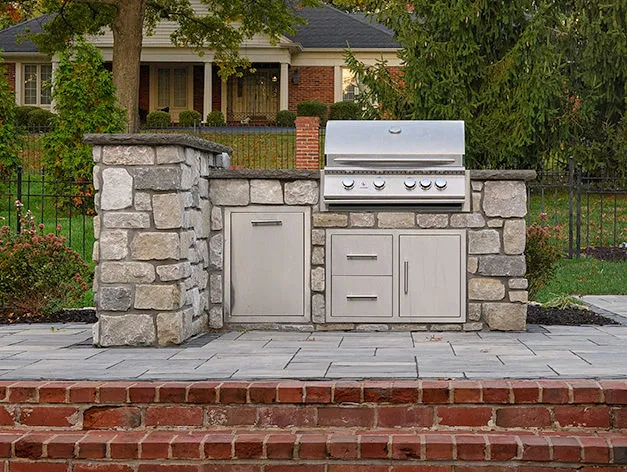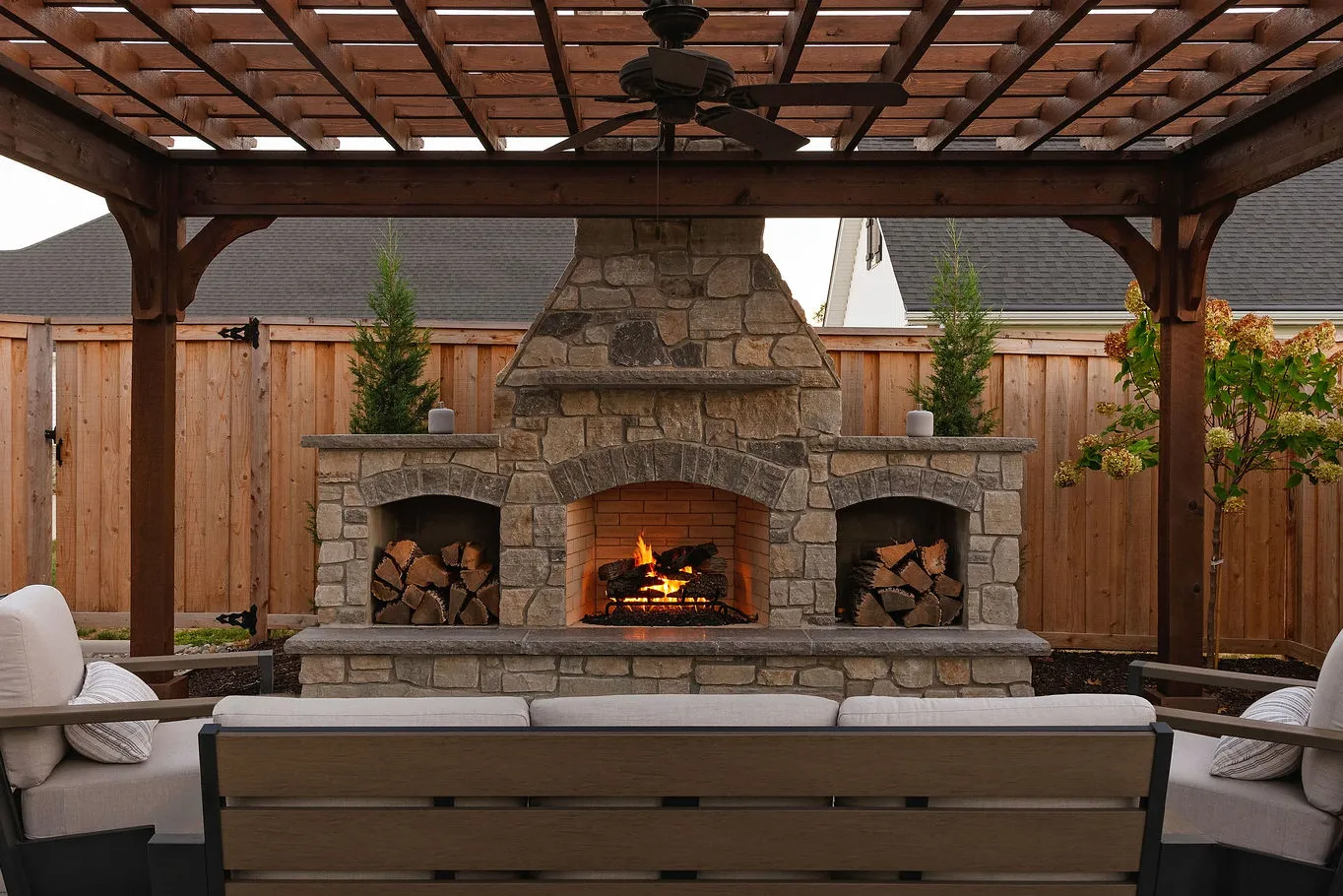

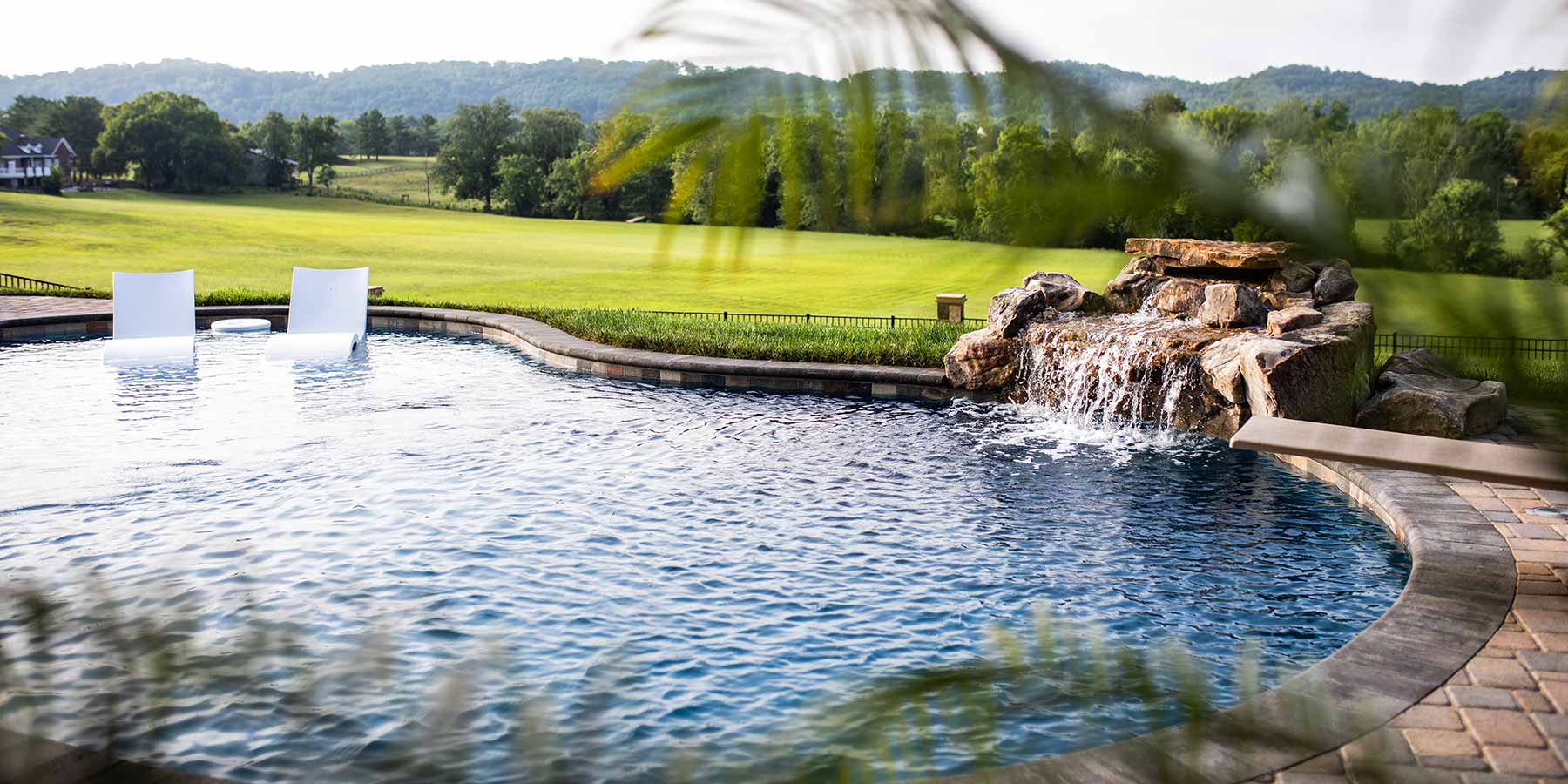
A pool is a major structural and visual element in a yard. It’s not just a recreational feature — it influences (and is influenced by) grading, drainage, fencing, decking, utilities, and sight lines.
Because of their size, it usually becomes the initial organizing element of the entire space. Everything else — patios, walls, kitchens, planting — works in relation to it.
Most of the important decisions happen before excavation: where the pool sits on the property, how the deck connects to the home and other outdoor zones, and how the surrounding grades resolve cleanly.
Topography and access matter. Pools can be installed on many properties, but the difficulty and restrictions vary based on elevation changes, equipment access, and how much site work is required to make the layout work.
Features also shape layout and cost: tanning ledges, curvature, integrated spas, water features, and infinity edges. Size influences cost — but site complexity and feature integration often have a greater impact than small dimensional changes.
Resolving the design typically includes engineering and permitting steps, along with coordination between trades so utilities, deck, and landscaping are sequenced properly.
The majority of the pools we build are gunite. That’s the system we use most often because it allows full customization in shape, depth, and structural integration. Vinyl liner and fiberglass pools follow many of the same installation stages — the primary difference is the shell itself.
Every pool begins with layout and excavation. The dig establishes elevation, overdig allowances, and how the pool integrates with surrounding patios, retaining walls, and drainage systems. Excavation isn’t just about shape — it’s about managing grade and water movement across the yard.
From there, the shell stage is where systems differ.
For a gunite pool, steel reinforcement is installed to form the structural framework of the shell. Plumbing lines are run and pressure-tested before any concrete is applied. Once the steel and plumbing are in place, gunite is pneumatically applied to form a monolithic shell built directly on site. A bond beam is formed at the top of the structure to create continuity and support coping and deck transitions.
For a vinyl liner pool, wall panels are framed and assembled in the excavation rather than poured. The floor is typically formed using a vermiculite-based base that creates a smooth surface beneath the liner. A vinyl liner is then installed to create the waterproof shell. Because there is no structural coping beam like a gunite pool, concrete or paver decking can be installed directly to the pool edge.
For a fiberglass pool, a pre-manufactured shell is craned into the excavation and set in place before plumbing and backfill are completed. The structure arrives as a finished form, and the installation focuses on leveling, plumbing, and proper backfill to support the shell.
After the shell is established — the remaining stages follow the same steps. Plumbing connections are finalized, backfill is completed and compacted properly, and equipment is installed on a dedicated pad. Pump, filter, heater, and control systems are positioned intentionally for serviceability. Drainage around the equipment area is considered so water doesn’t collect around mechanical components.
Decking, coping (when applicable), and adjacent hardscape are coordinated carefully. On hillside properties, retaining walls may be required to manage grade transitions around the pool. Plumbing runs, backfill, deck installation, and equipment integration all need to align so the pool integrates with the broader outdoor environment rather than feeling like a separate component.
The shell method defines how the structure is formed. The rest of the process — excavation, plumbing, backfill, decking, equipment, and integration — demands the same level of coordination regardless of system.
Gunite pools in the St. Louis market typically begin around $180,000 and most commonly range from $200,000–$325,000+ once excavation, structural shell, equipment, and surrounding hardscape are included.
On the Metro East (Illinois) side, comparable gunite pools generally begin closer to $150,000 and most commonly fall between $170,000–$275,000+. Pricing is often lower due to more favorable excavation conditions, improved site accessibility in many neighborhoods, and generally lower material and overhead costs.
Vinyl liner pools typically represent a lower structural entry point than gunite and most commonly range from $150,000–$220,000 depending on size, decking scope, and equipment selection.
Fiberglass pools are often the most streamlined installation type and commonly range from $130,000–$180,000 once excavation, utilities, decking, and drainage are included.
Primary cost drivers include pool type (gunite, vinyl liner, or fiberglass), excavation complexity, access constraints, retaining requirements, finish materials, equipment packages, and the amount of surrounding hardscape and integrated structure required to complete the environment.
Design Considerations
Consider how it aligns with the house, how sun exposure affects comfort, and how the surrounding hardscape supports lounging and movement.
Common Pairings
Patios, pavilions, outdoor kitchens, lighting, putting greens, and water features.
Pricing Factors
Typically $90k–$250k+. Excavation, structural requirements, and finish selections shape the range.
Service hero background image only maybe vh67 and since the content overlaps it some making it the level
Similar look where it looks like a page that overlaps the hero some. background black. Contains a left side for a rich text element for the content, a section for service specific FAQ, and on the right side a "at a glance" card with a rich text element. We need to find a way to show projects that feature this service. I added service tags to the portfolio cms.
H1 within the second section. hero only has image. so H1 is still first words on the page.
Rich Text for:
"What is it"
intro description explaining the problems the service solves, situations where it makes sense. Functinoal improvements, clarifies use cases and the value it brings to a space.
"Design Considerations" + Oten paired with
this talks about how its used and design in a space. other elements to consider mixiing this with. typical site constraints, scale etc. Talk about the kinds of materials used.
"How it's built"
talk about what goes into building this element. This could be as simple as describing the trenching for the gas line or complicated as the steps to a pool build. Talk about the the base that makes it last, the framing that gives it shape, and the finishes that make details count. Things like utilities, code restrictions and typical permiting requirements.
"Pricing Factors"
Talk about typical pricing ranges, what conditions affect the price more or less than others. Things that people "think is expensive but isnt" and "what peopled dont think is expensive but is." Scale obviously impacts price but so does installation complexity. talk about what that complexity looks like for each service.
"Service FAQ"
a service specific faq based on the faq cms filtered to the service. include the featured faqs at the end. I plan to have 2-3 featured ones about getting started.
"At A Glance"
floating card on the right
- Considerations: 2-3 sentences about its value, use in designs, and pairings.
- Pricing: 2 ranges with descriptions
- Featured projects: Is there a way to make a mini slider with the project name? Is that too much and just list 3-4 project names with the arrow icon?
- CTA to portfolio & get Started
"Photos of Service"
Condense the current 3 photos into a multi photo
"Related projects"
Some kind of ribon or grid showing related projects. The projects cms have a multi-picklist to tag services used on that project and can be used to filter matching projects here. The challenge