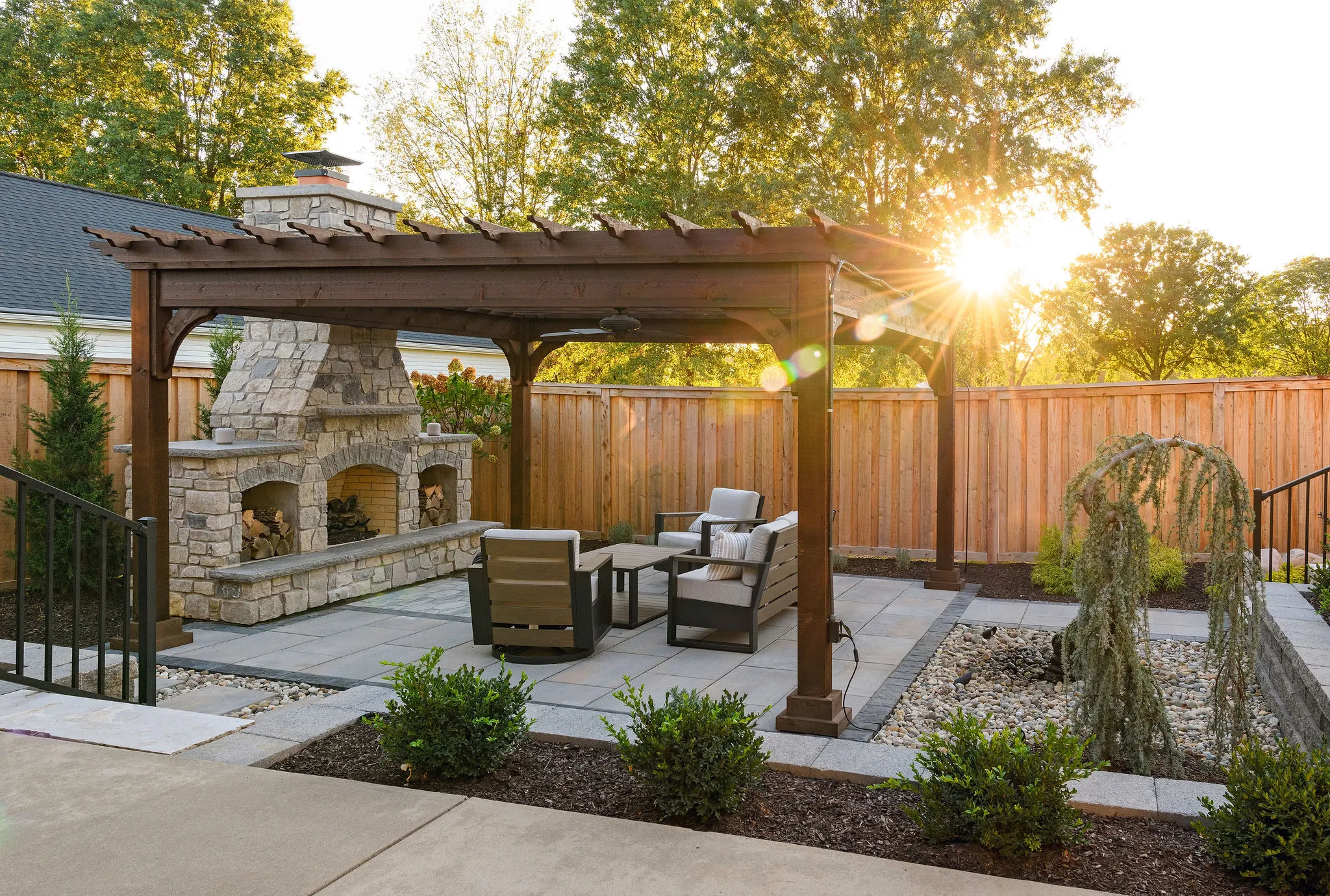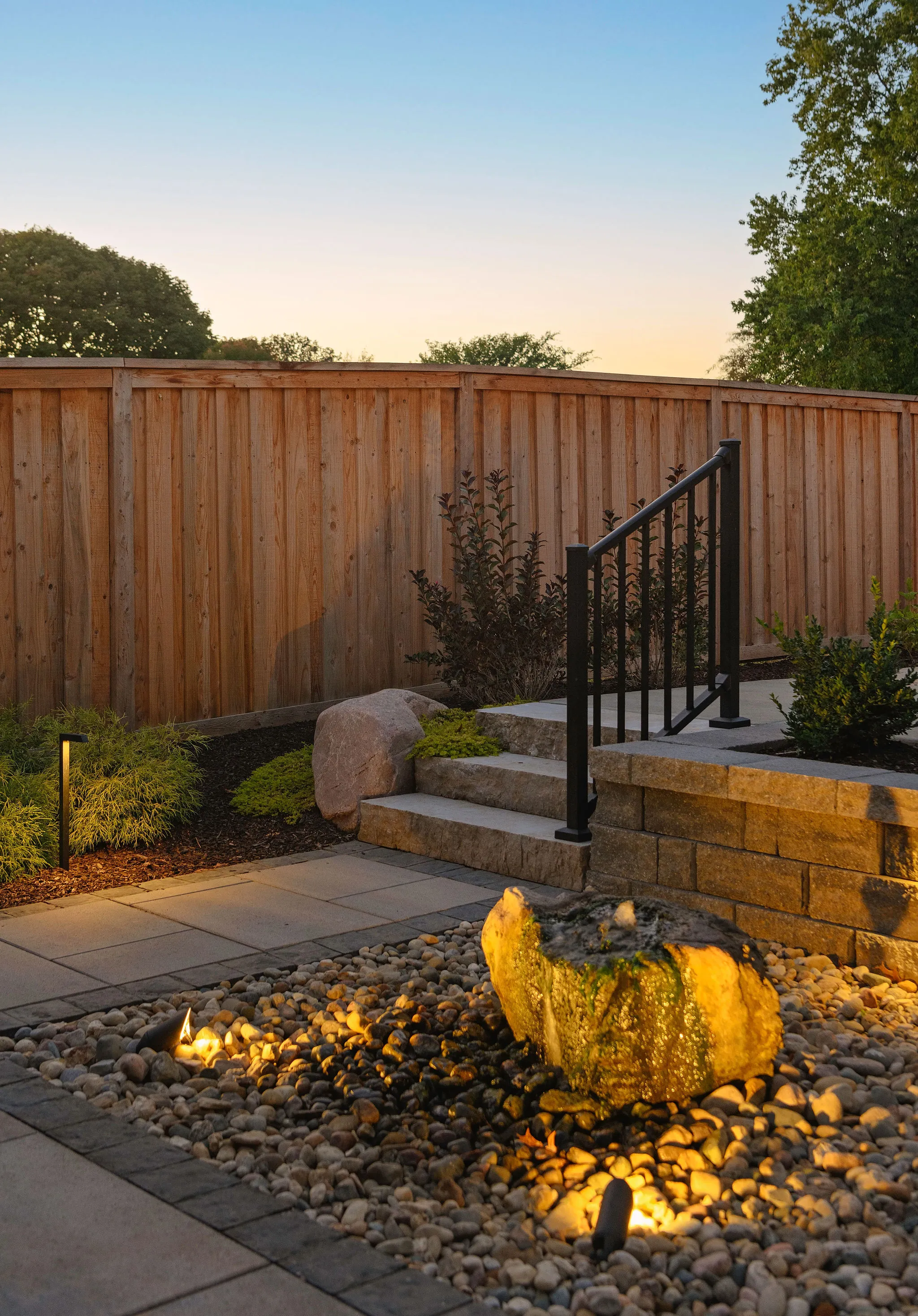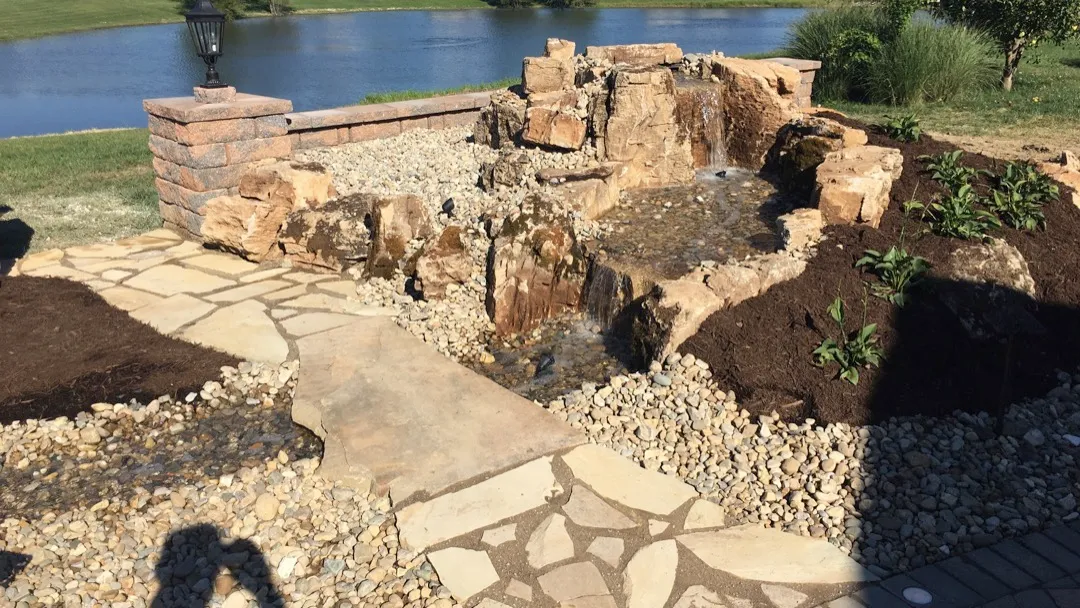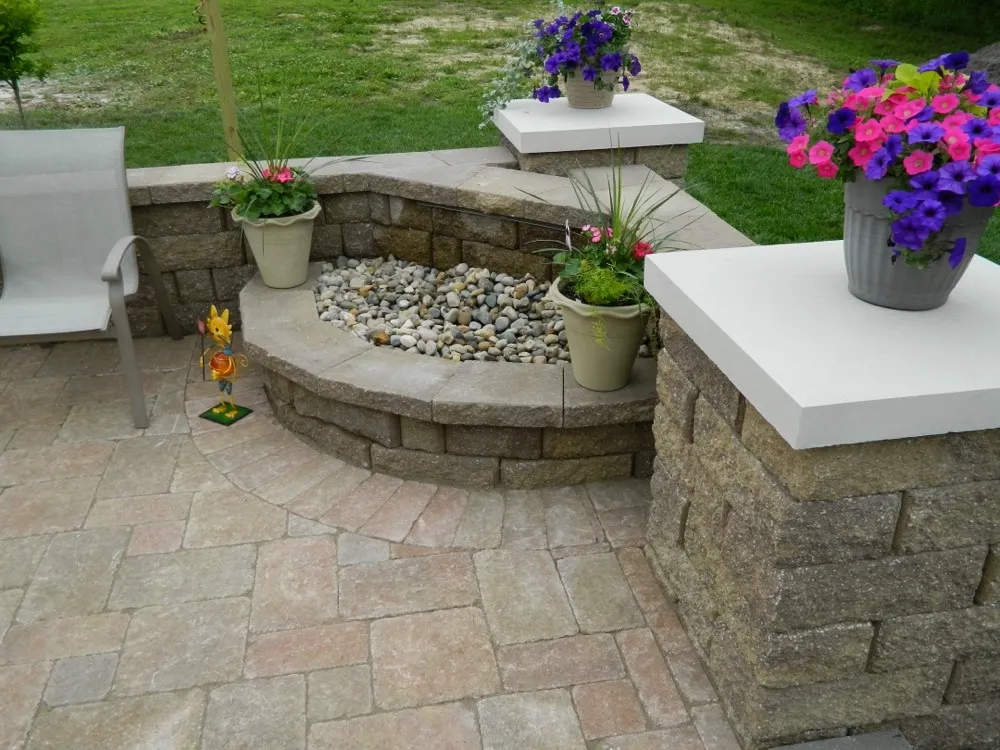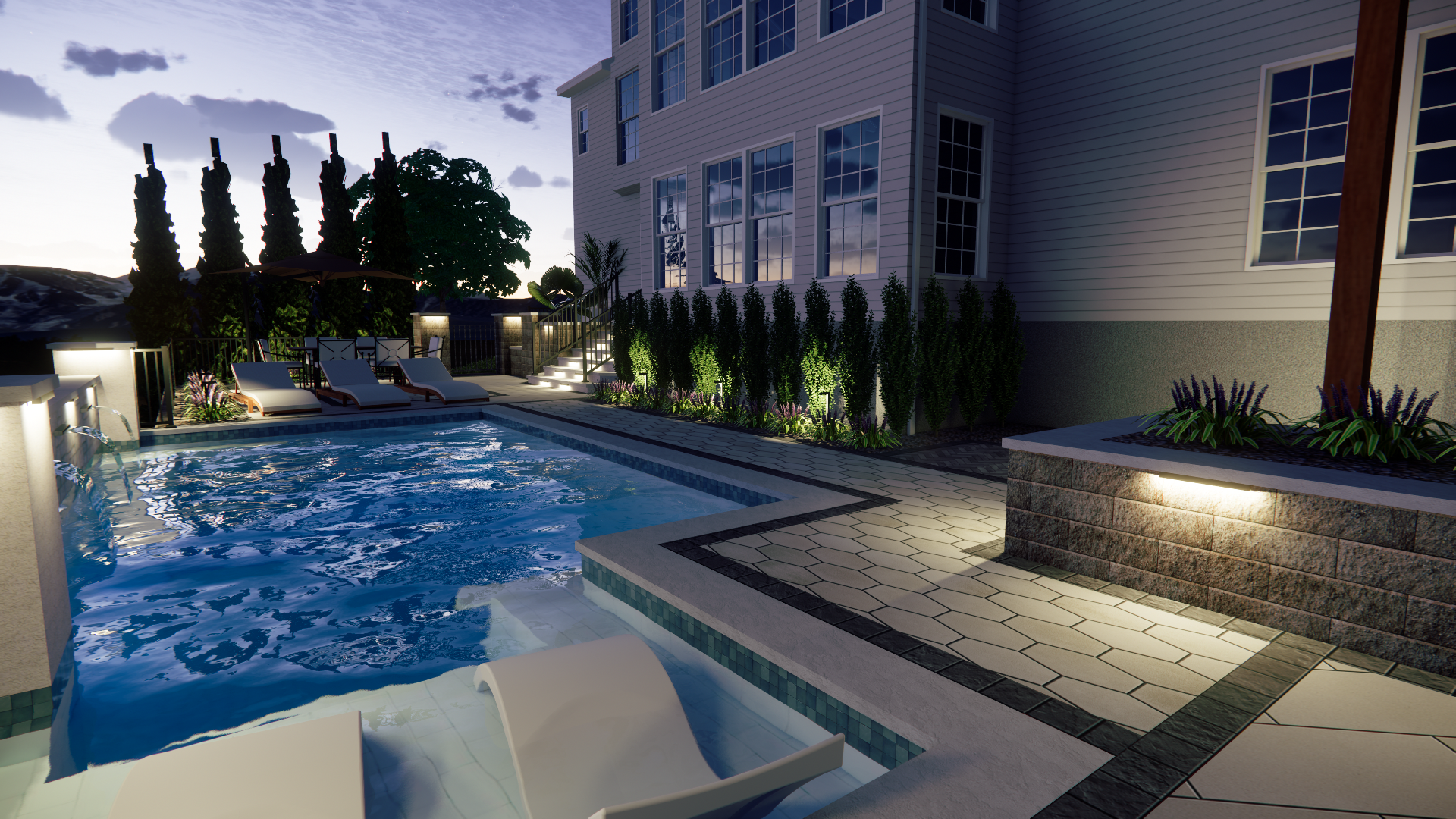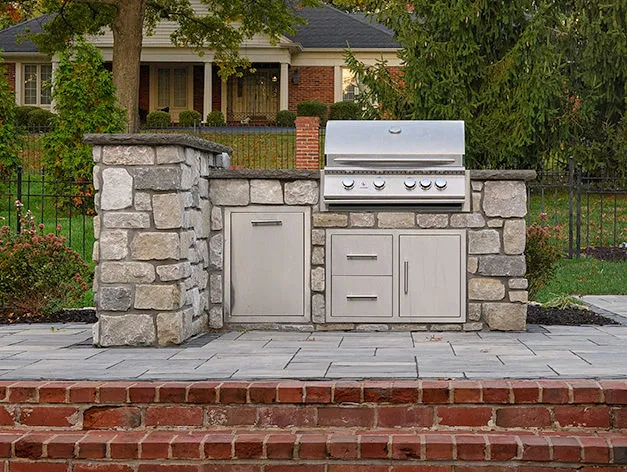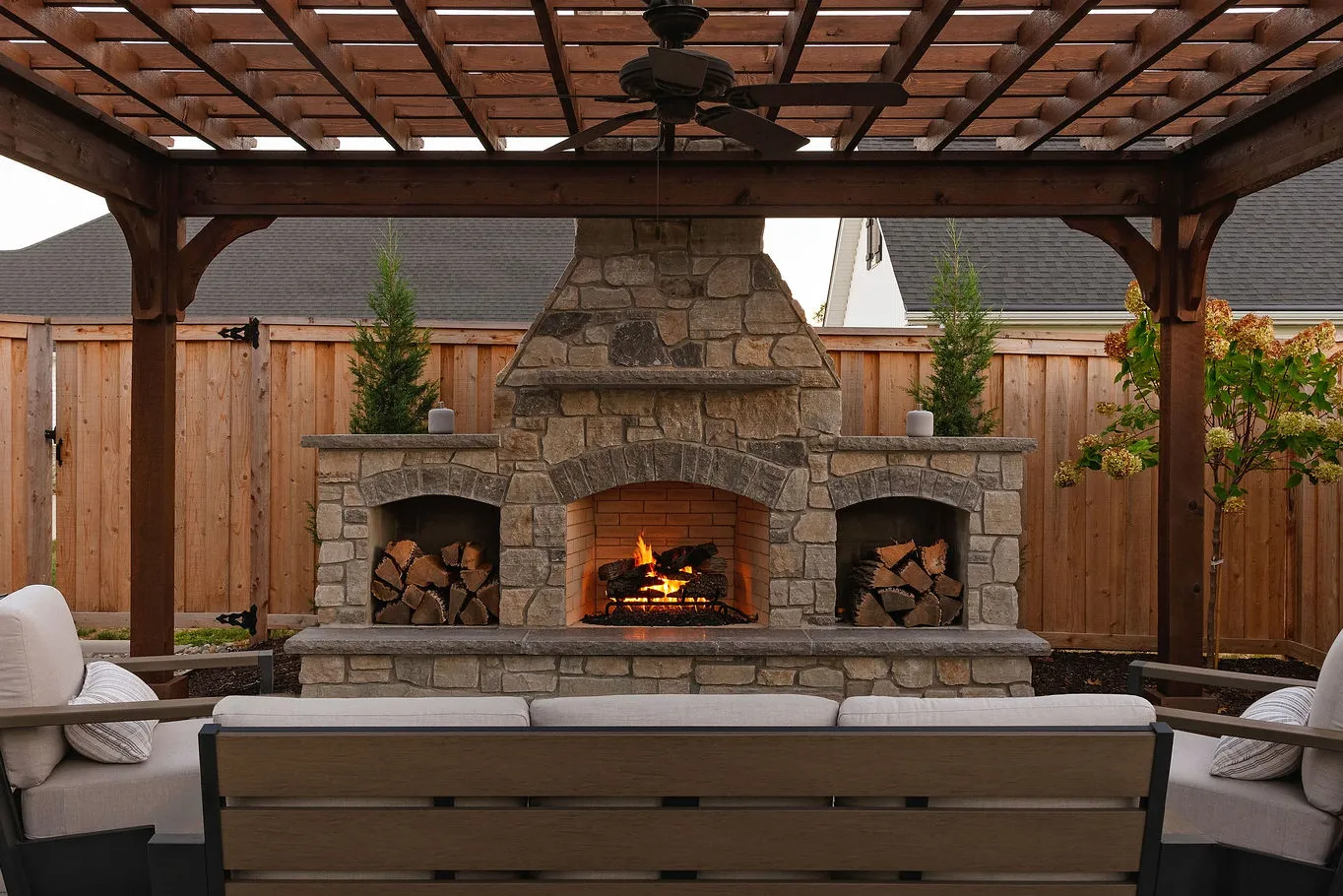

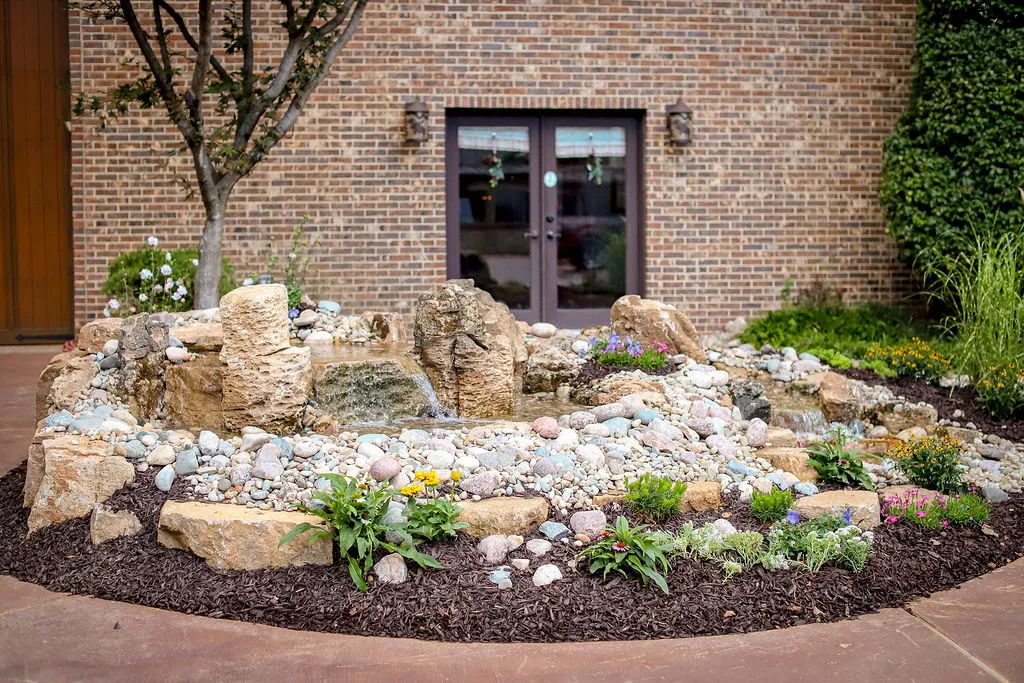
A water feature introduces moving water into the landscape to create sound, motion, and atmosphere.
Most systems we build are pondless waterfalls or bubbling boulders—designed for strong visual impact with lower maintenance than traditional ponds.
Water features are rarely installed out in the middle of a yard. They’re typically integrated into a landscape bed near a patio or deck, built into a pool environment, or positioned intentionally near a fire feature to create the classic fire-and-water contrast.
Sound is the first design decision. A gentle spill produces a soft background presence. A taller fall creates stronger sound and movement.
Placement and scale determine whether the feature feels embedded or applied. The best installs read like the grade was shaped around them from the start.
Bubbling boulders are the most restrained option—sound and movement without becoming the centerpiece. Pondless waterfalls create stronger identity and require enough stone mass to feel natural.
We install several types of water features — including ponds, pondless waterfalls, bubbling boulders, and sheer descents. While the visible result may differ, the underlying structure follows the same principles: excavation, liner protection, controlled circulation, and drainage management.
Most pond and pondless systems are excavated to approximately 3 feet deep. That depth allows space for rock fill and creates a reservoir large enough to sustain circulation without freezing solid in winter. After excavation, loose soil is removed so settlement doesn’t stretch the liner against heavy boulders.
The basin is shaped intentionally, often with stepped shelves to support rock placement and distribute weight. A rubber liner is installed over layers of filter fabric underlayment to cushion the liner and relieve soil gases. Without proper underlayment, gas buildup and sharp stone edges can stretch or puncture the liner over time.
Pumps are housed inside a plastic pump chamber or skimmer vault with a removable lid for service access. Pondless systems use accessible pump chambers that can be concealed with rock while remaining reachable for maintenance. Plumbing is typically flexible line between the pump and waterfall spill, allowing movement around boulders and reducing stress during freeze cycles.
Overflow is managed by building the feature slightly elevated so runoff doesn’t pour directly into the basin. When water levels rise, overflow drains away from the structure rather than saturating the surrounding soil.
Electrical is supplied via exterior-rated connections, and pump cords are routed intentionally. Water features are also a logical location for integrating landscape lighting transformers when planned correctly.
Most long-term failures trace back to skipped underlayment or improper liner handling. A stretched or punctured liner becomes a leak — and leaks almost always originate in the stream where liner was cut or not protected during rock placement.
The visible water is decorative. The system beneath it is structural.
Bubbling boulders typically range from $5,000–$12,000 depending on stone size and basin scale.
Pondless waterfalls most commonly fall between $20,000–$45,000 depending on height, stream length, stone volume, and access.
More involved or multi-tier features can exceed $50,000. The biggest cost drivers are stone mass, excavation scope, basin size/water volume, pump requirements, and site accessibility.
Design Considerations
Consider the sound level you want, how visible the feature is from inside the home, and whether it feels natural or architectural.
Common Pairings
Patios, fireplaces, landscape beds, and landscape lighting.
Pricing Factors
Typically $12k–$65k+. Size, hardware, and styling (like stream bends) affect cost.
Service hero background image only maybe vh67 and since the content overlaps it some making it the level
Similar look where it looks like a page that overlaps the hero some. background black. Contains a left side for a rich text element for the content, a section for service specific FAQ, and on the right side a "at a glance" card with a rich text element. We need to find a way to show projects that feature this service. I added service tags to the portfolio cms.
H1 within the second section. hero only has image. so H1 is still first words on the page.
Rich Text for:
"What is it"
intro description explaining the problems the service solves, situations where it makes sense. Functinoal improvements, clarifies use cases and the value it brings to a space.
"Design Considerations" + Oten paired with
this talks about how its used and design in a space. other elements to consider mixiing this with. typical site constraints, scale etc. Talk about the kinds of materials used.
"How it's built"
talk about what goes into building this element. This could be as simple as describing the trenching for the gas line or complicated as the steps to a pool build. Talk about the the base that makes it last, the framing that gives it shape, and the finishes that make details count. Things like utilities, code restrictions and typical permiting requirements.
"Pricing Factors"
Talk about typical pricing ranges, what conditions affect the price more or less than others. Things that people "think is expensive but isnt" and "what peopled dont think is expensive but is." Scale obviously impacts price but so does installation complexity. talk about what that complexity looks like for each service.
"Service FAQ"
a service specific faq based on the faq cms filtered to the service. include the featured faqs at the end. I plan to have 2-3 featured ones about getting started.
"At A Glance"
floating card on the right
- Considerations: 2-3 sentences about its value, use in designs, and pairings.
- Pricing: 2 ranges with descriptions
- Featured projects: Is there a way to make a mini slider with the project name? Is that too much and just list 3-4 project names with the arrow icon?
- CTA to portfolio & get Started
"Photos of Service"
Condense the current 3 photos into a multi photo
"Related projects"
Some kind of ribon or grid showing related projects. The projects cms have a multi-picklist to tag services used on that project and can be used to filter matching projects here. The challenge