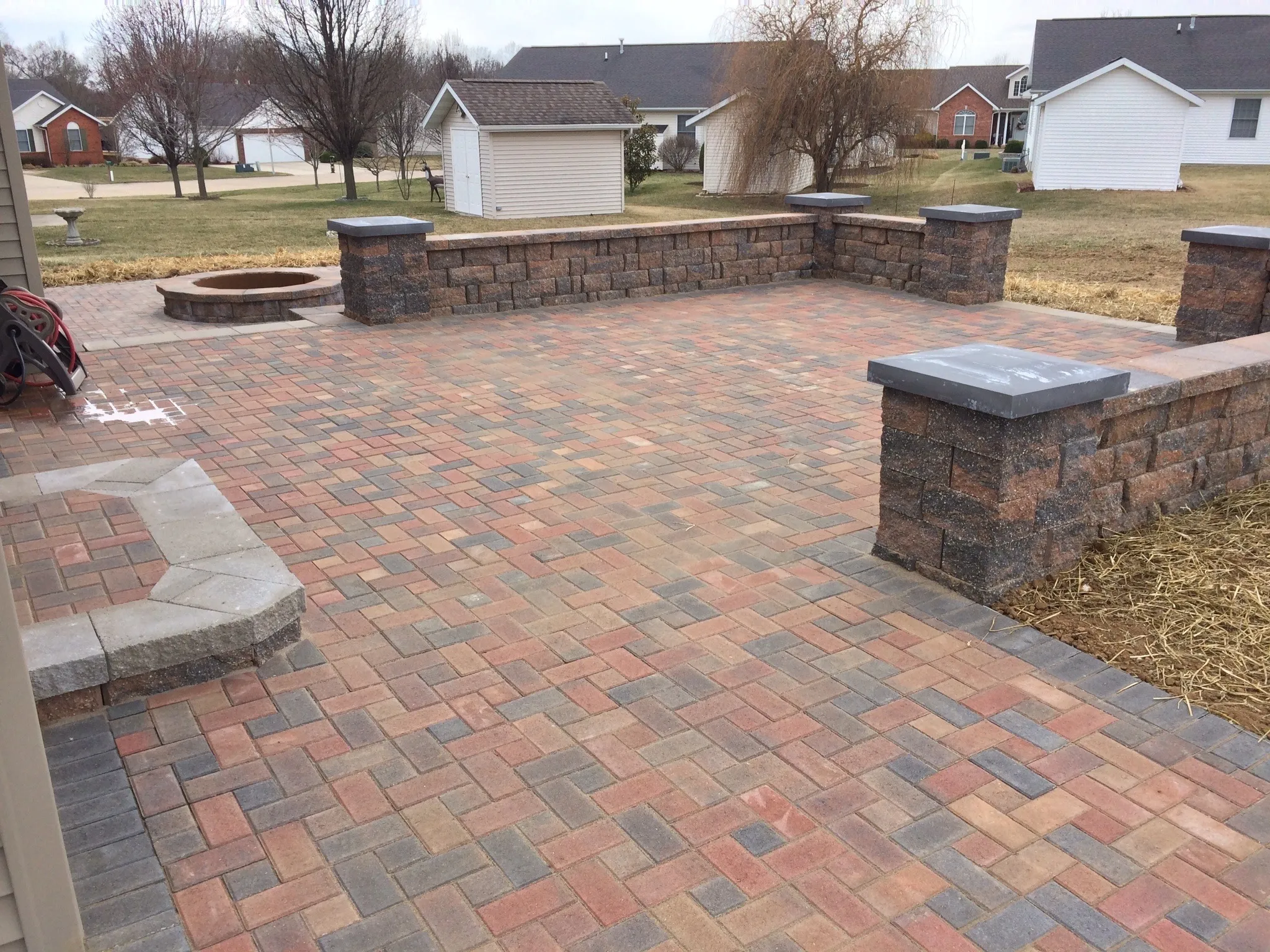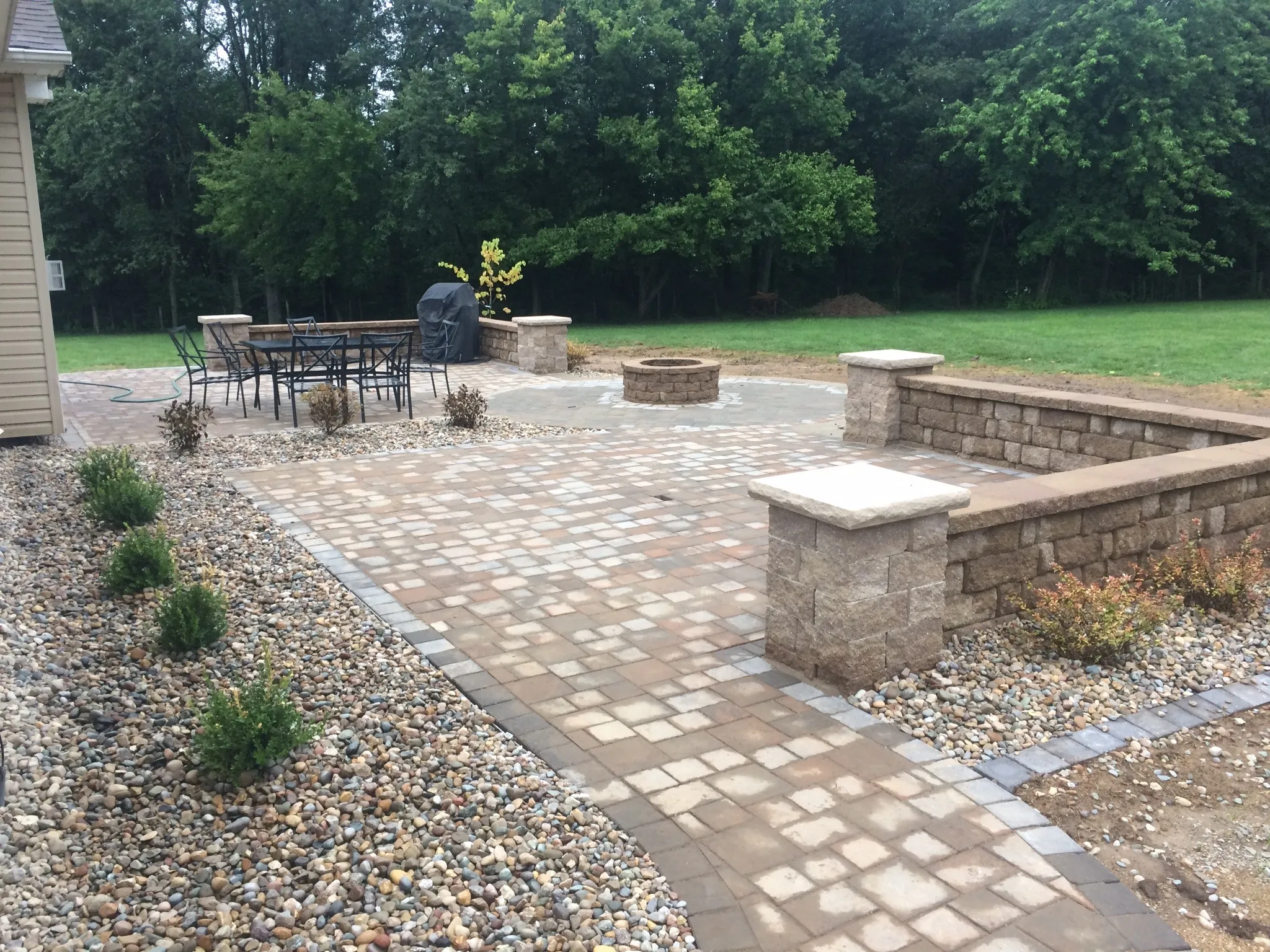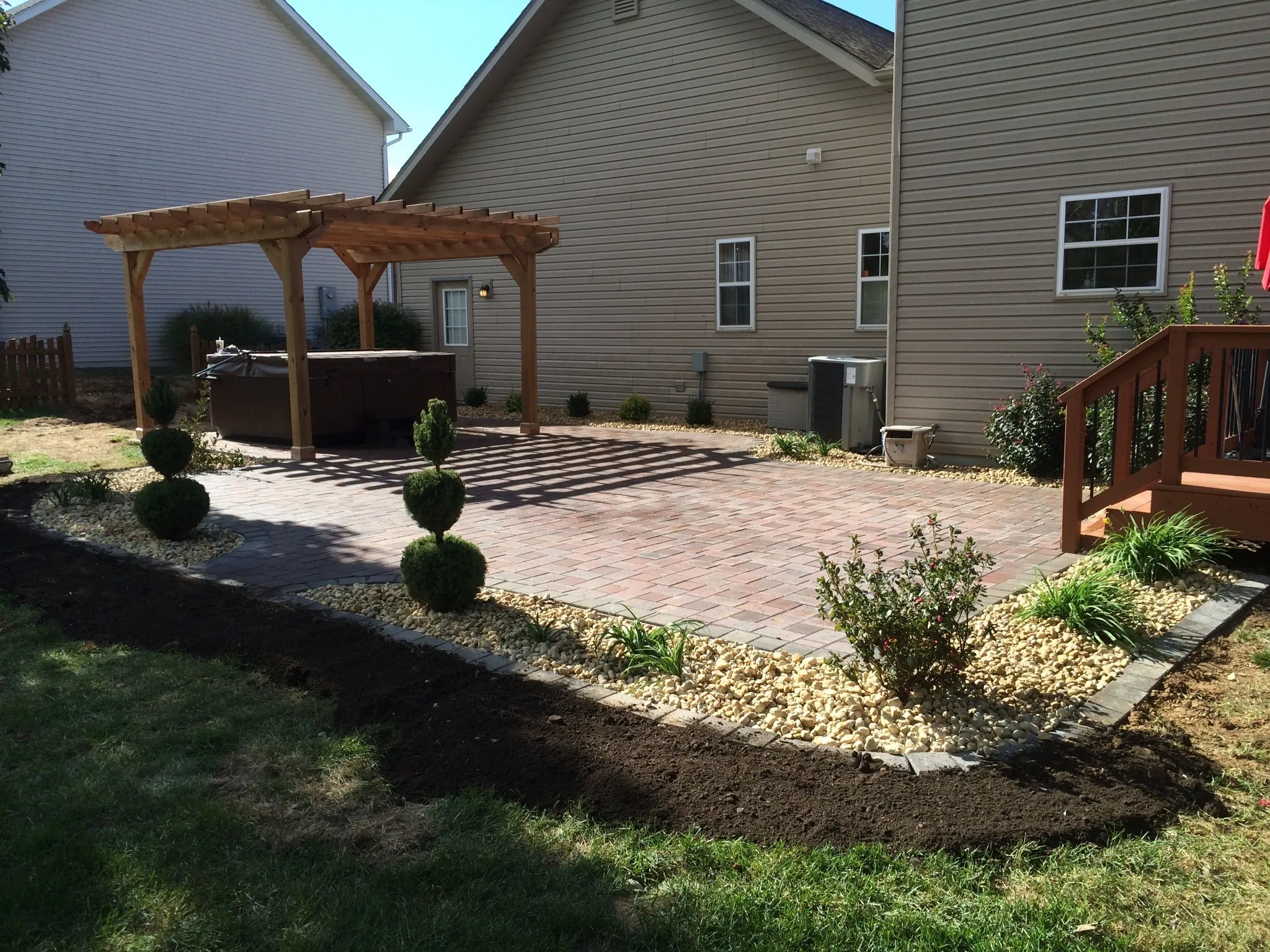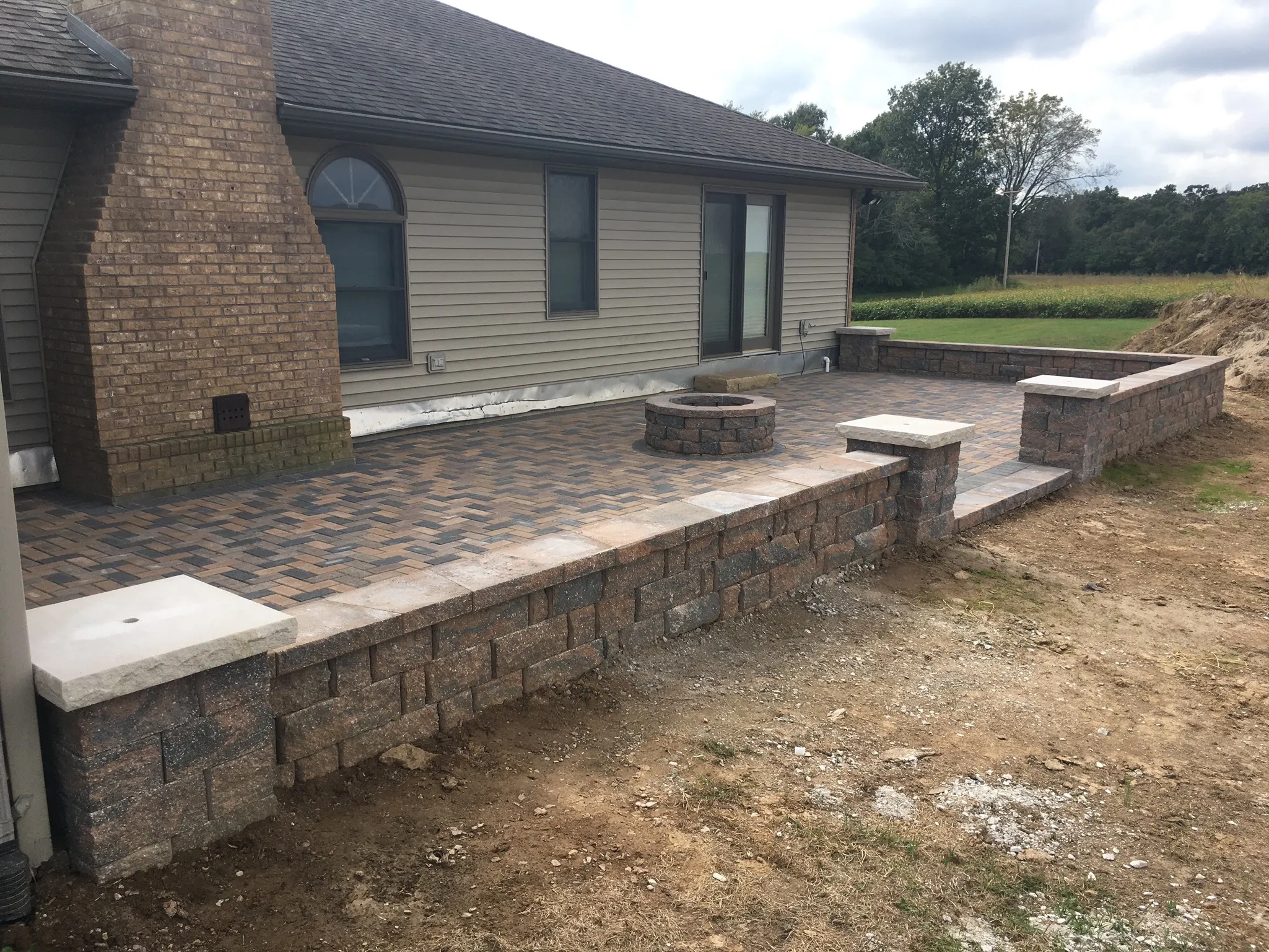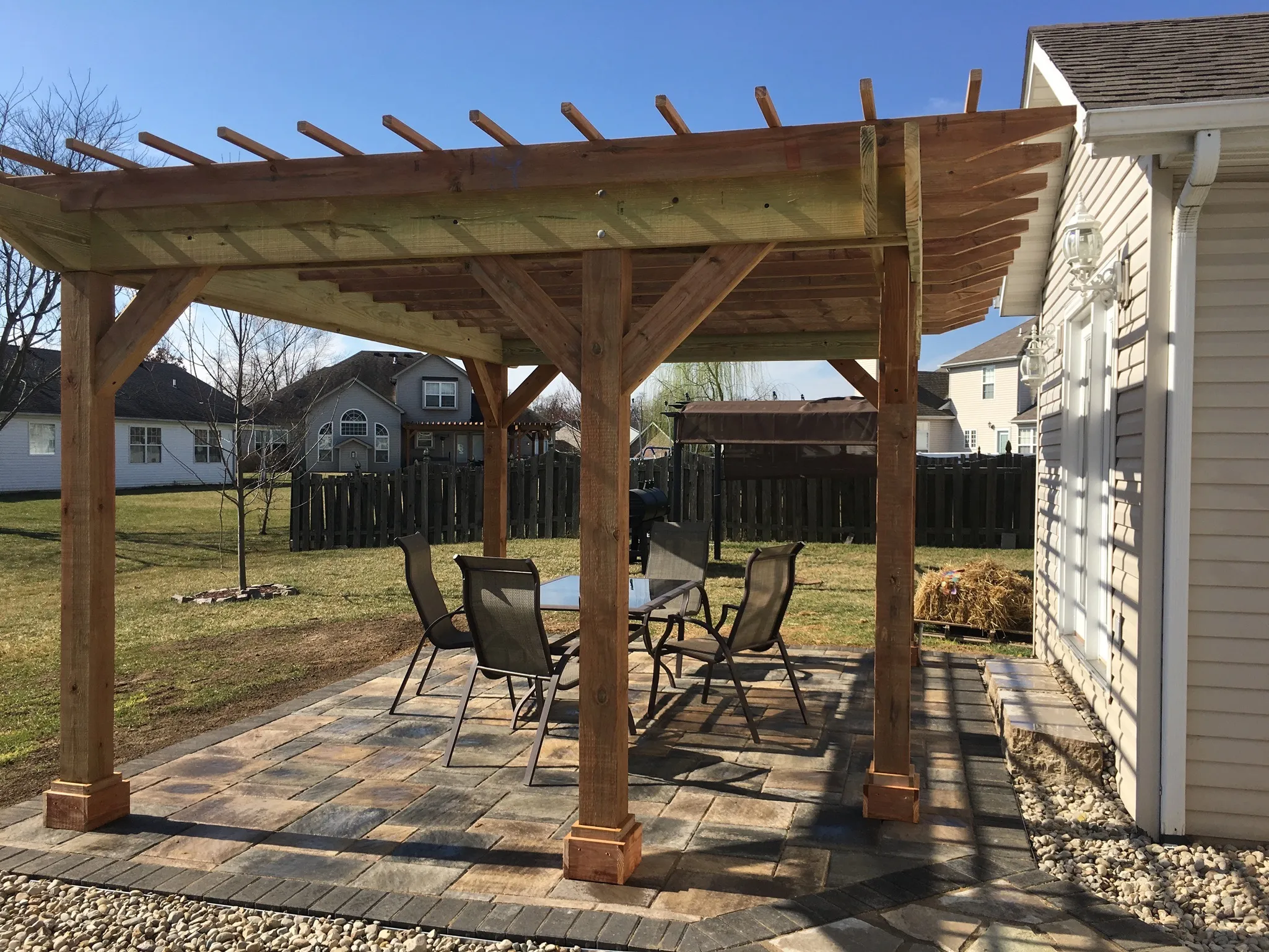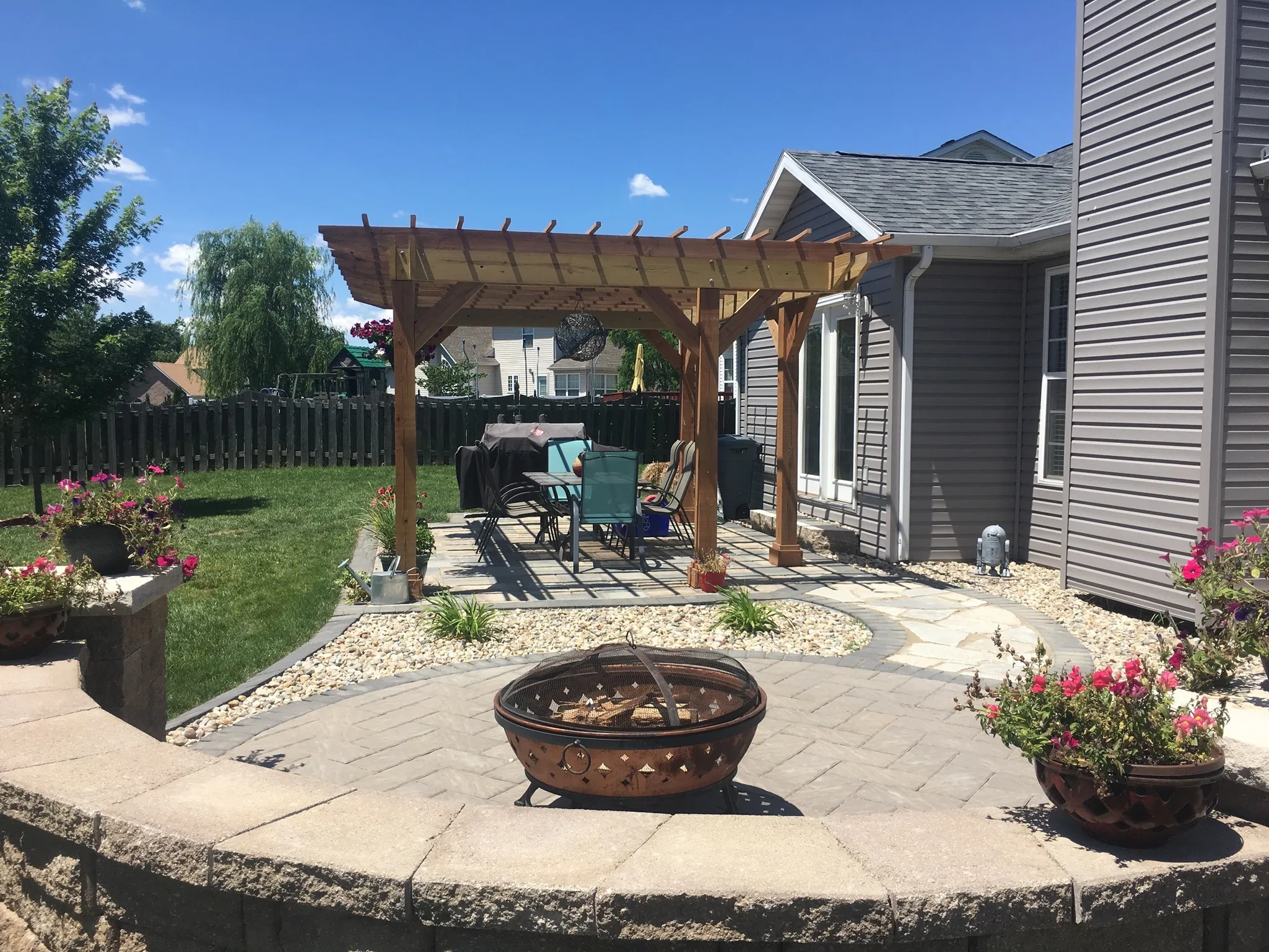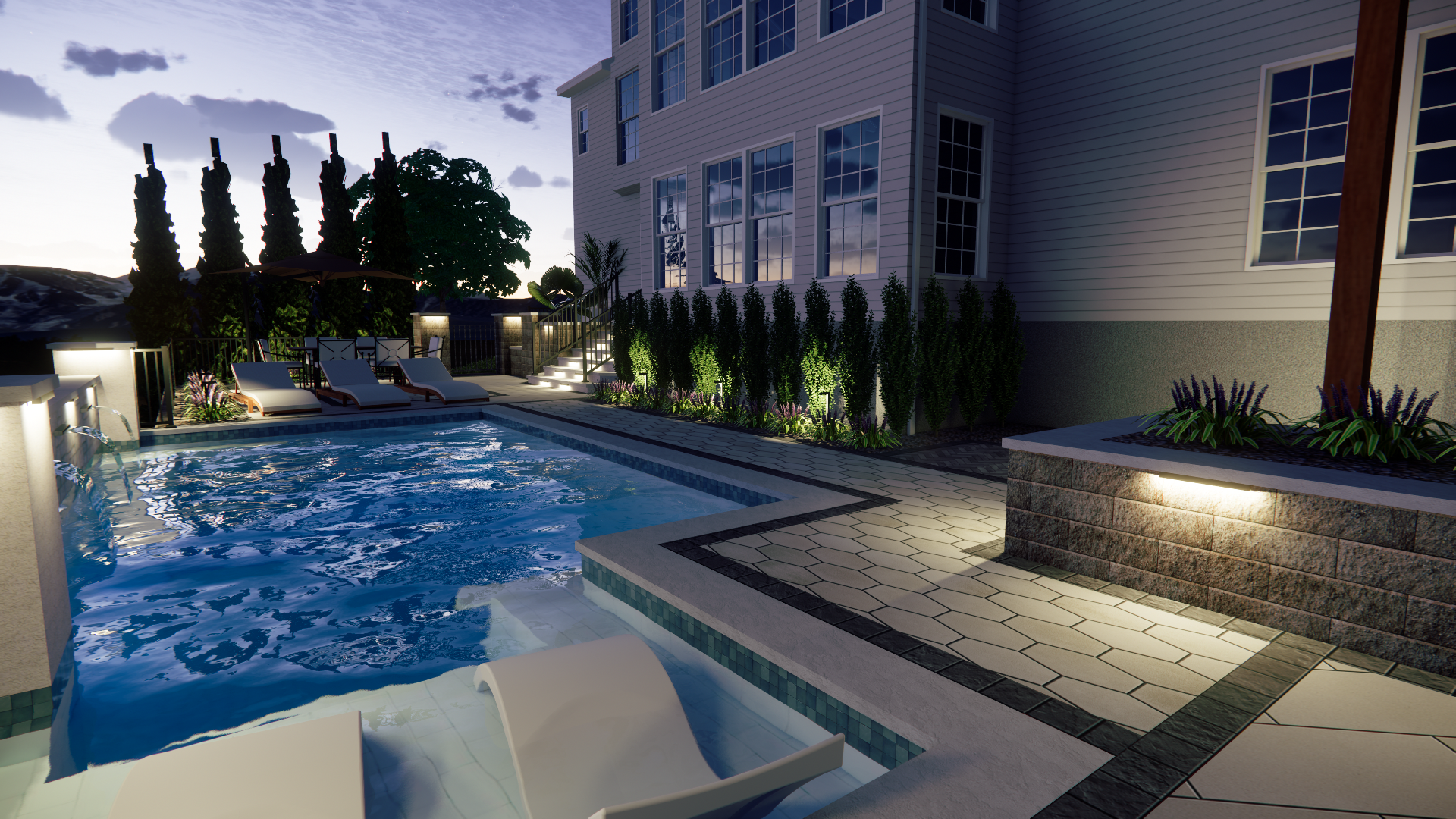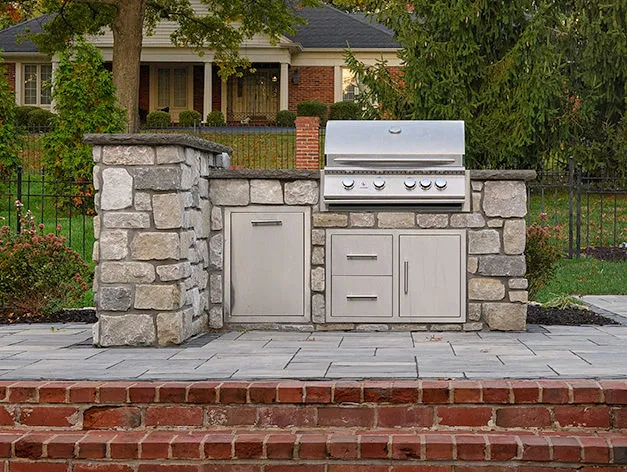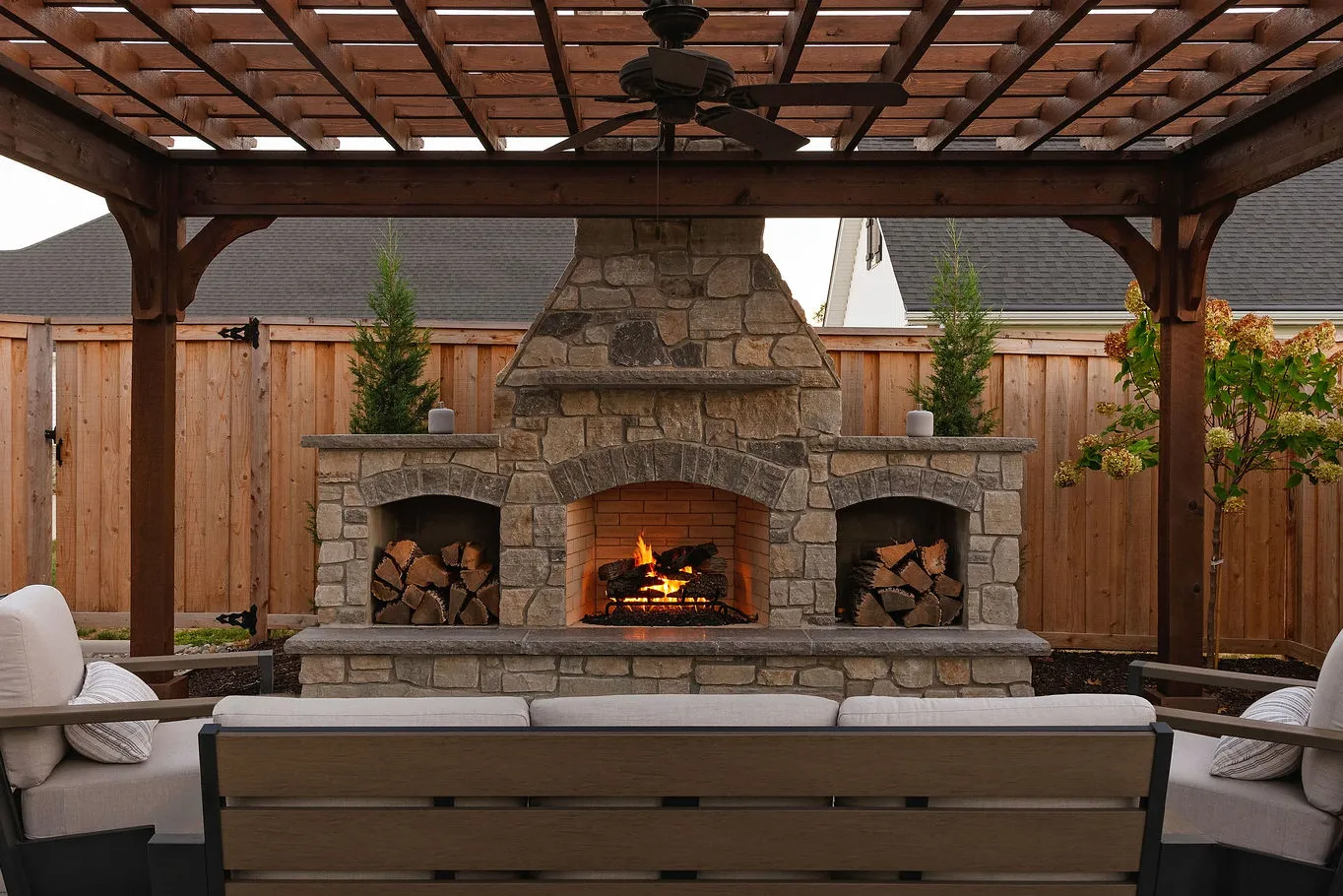

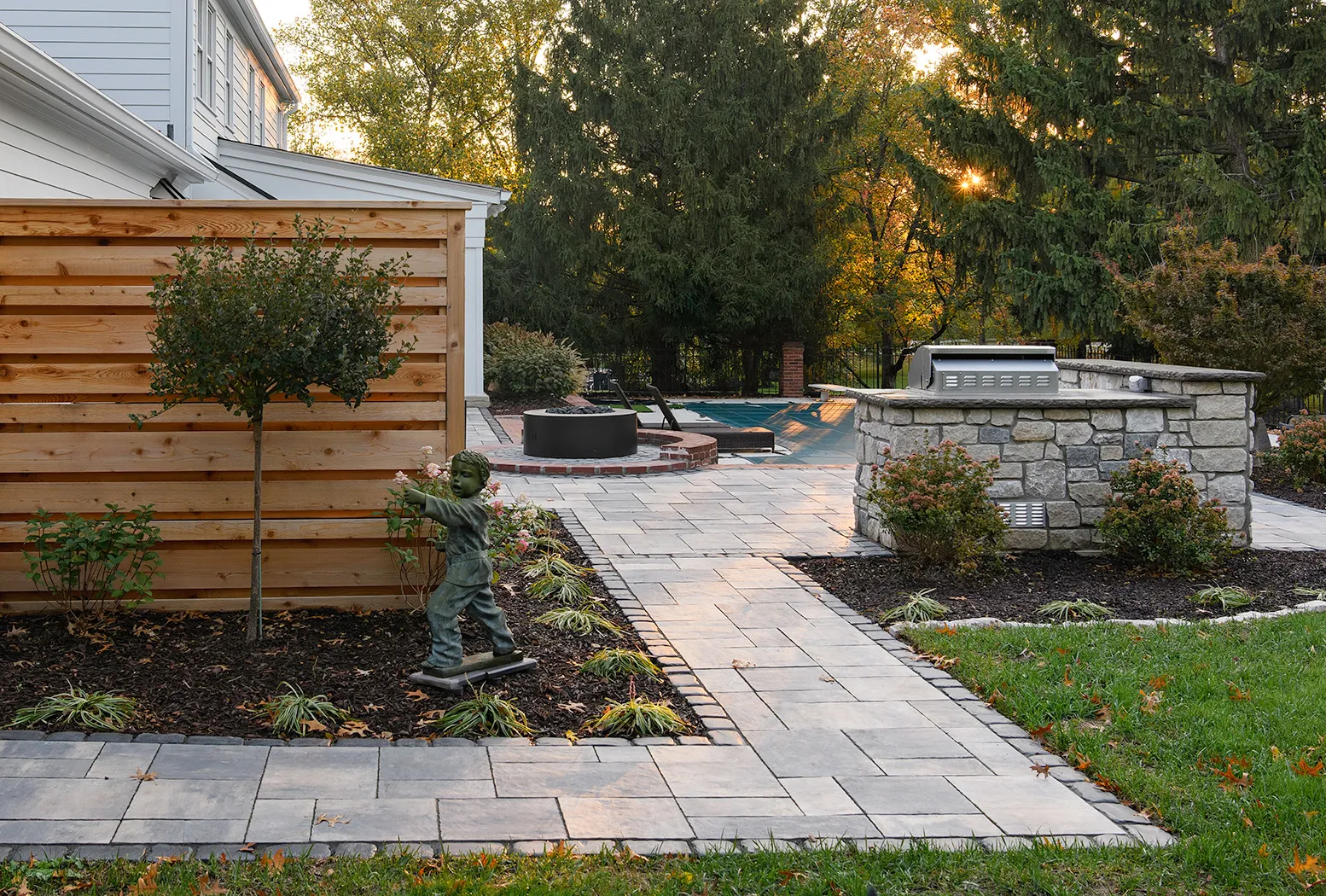
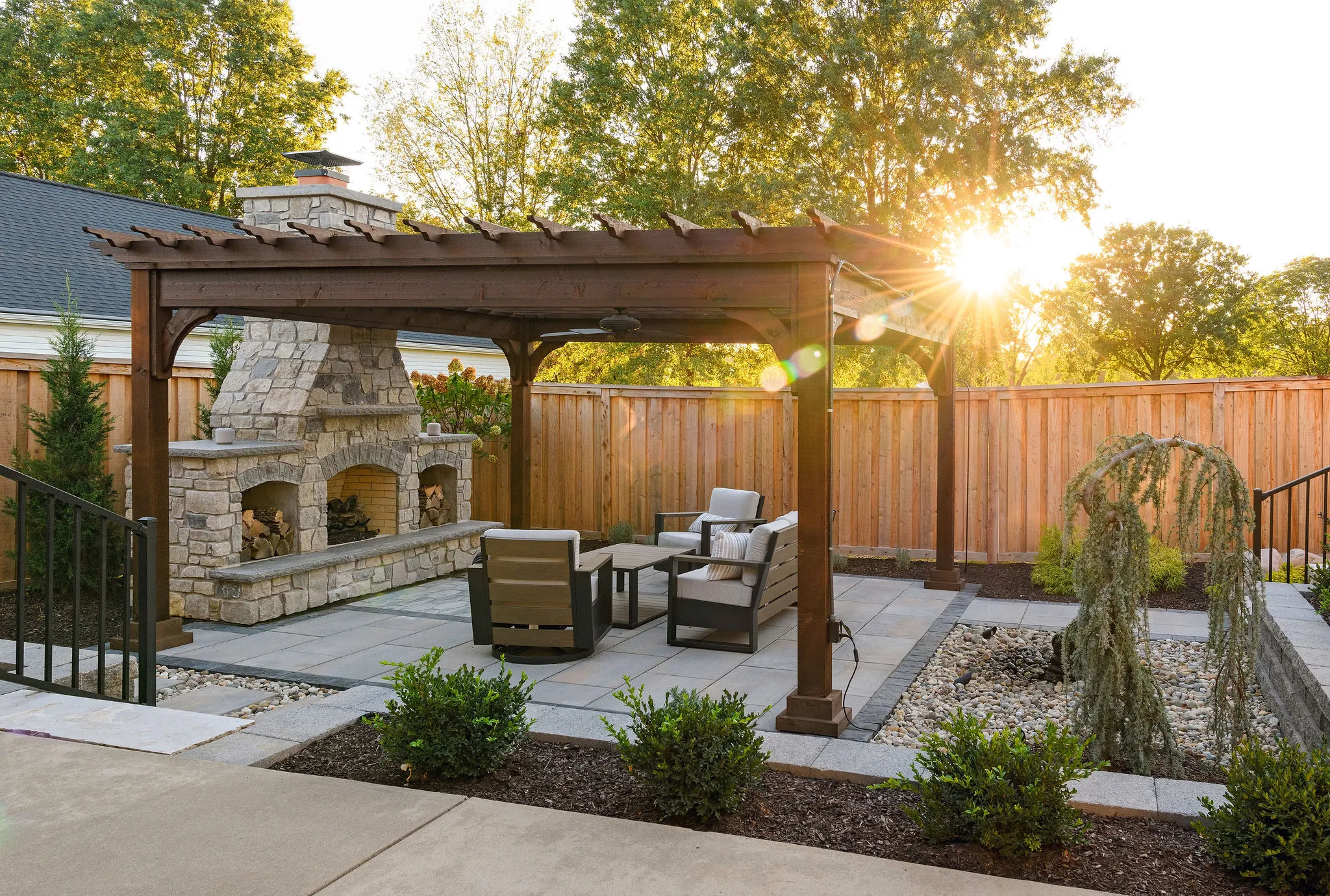
A patio is the foundation of most outdoor spaces. It’s the floor everything else connects to — seating areas, dining, kitchens, fire features. If you're wanting a gathering space outside, it usually starts here.
But it’s not just a surface. A patio determines how the yard connects to the house. Once it’s in, everything else works off of it.
Patio layout starts with proportion. The size needs to make sense relative to the house and the yard — not just the furniture going on it. Too small feels cramped. Too large feels exposed.
We look at elevation first. Where does it tie into the house? How does it manage water? Does it need to step with grade or be held with a wall? Once the surface goes in, it sets the reference point for everything else — kitchens, fireplaces, seating walls, lighting, even planting depth.
Material choice matters too. Color, joint pattern, texture — all of it affects how the space feels next to brick, siding, or stone on the home.
Every patio starts below the surface. We excavate to account for finished elevation, base depth, and slope — not just to “make it flat.” What happens underneath determines whether the surface above lasts five years or twenty.
For paver patios, we typically install 4–6 inches of clean ¾” open-graded gravel base, compacted in lifts. We don’t use sand bedding. The open-grade system allows water to move through the base instead of trapping it, which is one of the most common long-term failure points in paver installations. Once the base is stable and properly sloped — about 2% (¼” per foot) away from the house — pavers are set, restrained with rail systems or Perma-Edge, and compacted into place. Most failures we see in paver patios trace back to underbuilt base layers, not the surface material itself.
For concrete patios, preparation is just as critical. Subgrade is compacted properly, and base thickness is adjusted based on soil conditions. Control joints are planned intentionally, not randomly placed after the fact, to manage cracking. When stamping is involved, timing, weather conditions, and finishing technique matter. Concrete is less forgiving during install, which means coordination and sequencing are tighter.
Both systems require the same early decisions: elevation, drainage, and how the patio connects to the house. We establish roughly a 2% slope away from structures to manage water while keeping the surface comfortable under furniture. Where patios meet steps, retaining walls, seating walls, kitchens, or pergolas, elevations are coordinated before the surface goes in. Once that plane is set, everything else works off it.
We don’t have a preference between pavers and concrete. Both can perform well when built correctly. The choice usually comes down to aesthetics, maintenance expectations, and how the patio integrates with the rest of the project.
Most patios begin around $18,000. Entertaining-sized patios commonly range from $25,000–$60,000, with multi-level layouts, natural stone, and integrated wall work exceeding $70,000+ depending on materials and site conditions.
Primary cost drivers include paver vs. stamped concrete, size, and site access.
Design Considerations
Consider how large it needs to be for real furniture, how it steps with the grade, and whether it feels connected to the home or set apart.
Common Pairings
Outdoor kitchens, seating walls, fireplaces, putting greens, and landscape lighting.
Pricing Factors
Typically $18k–$65k+. Size, access, base prep, and integrated features drive the range.
Service hero background image only maybe vh67 and since the content overlaps it some making it the level
Similar look where it looks like a page that overlaps the hero some. background black. Contains a left side for a rich text element for the content, a section for service specific FAQ, and on the right side a "at a glance" card with a rich text element. We need to find a way to show projects that feature this service. I added service tags to the portfolio cms.
H1 within the second section. hero only has image. so H1 is still first words on the page.
Rich Text for:
"What is it"
intro description explaining the problems the service solves, situations where it makes sense. Functinoal improvements, clarifies use cases and the value it brings to a space.
"Design Considerations" + Oten paired with
this talks about how its used and design in a space. other elements to consider mixiing this with. typical site constraints, scale etc. Talk about the kinds of materials used.
"How it's built"
talk about what goes into building this element. This could be as simple as describing the trenching for the gas line or complicated as the steps to a pool build. Talk about the the base that makes it last, the framing that gives it shape, and the finishes that make details count. Things like utilities, code restrictions and typical permiting requirements.
"Pricing Factors"
Talk about typical pricing ranges, what conditions affect the price more or less than others. Things that people "think is expensive but isnt" and "what peopled dont think is expensive but is." Scale obviously impacts price but so does installation complexity. talk about what that complexity looks like for each service.
"Service FAQ"
a service specific faq based on the faq cms filtered to the service. include the featured faqs at the end. I plan to have 2-3 featured ones about getting started.
"At A Glance"
floating card on the right
- Considerations: 2-3 sentences about its value, use in designs, and pairings.
- Pricing: 2 ranges with descriptions
- Featured projects: Is there a way to make a mini slider with the project name? Is that too much and just list 3-4 project names with the arrow icon?
- CTA to portfolio & get Started
"Photos of Service"
Condense the current 3 photos into a multi photo
"Related projects"
Some kind of ribon or grid showing related projects. The projects cms have a multi-picklist to tag services used on that project and can be used to filter matching projects here. The challenge


.webp)